Wool Polishing Pads: 3, 5 or 6 Inch for Cutting & Finish
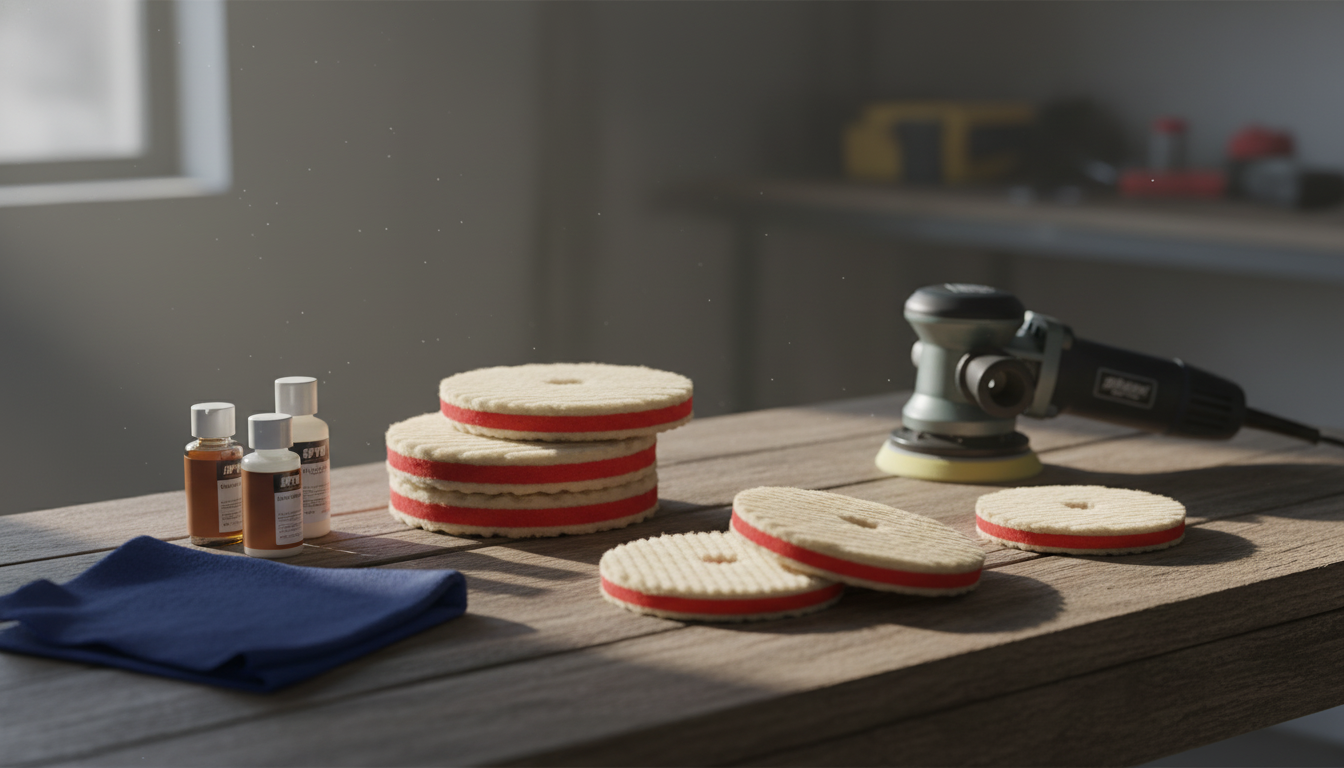
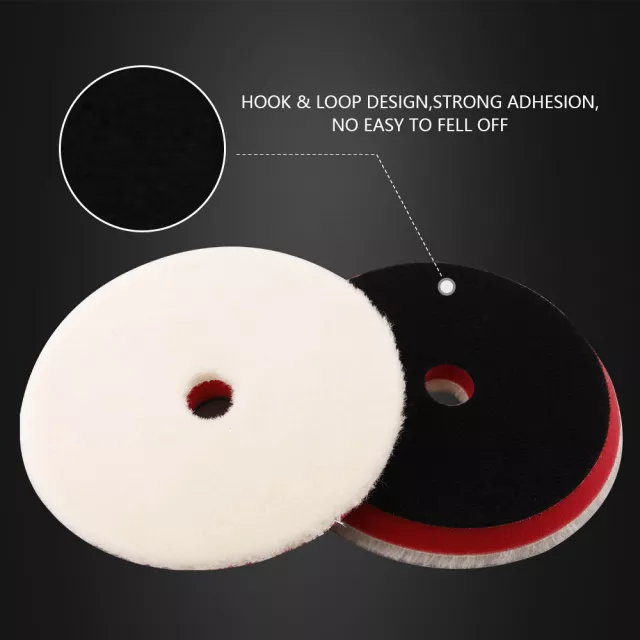
Polishing Wool Pad for Car Detailing – 3″/5″/6″ Scratch Removal & Finishing Pad
A wool polishing pad can speed up correction work while still leaving a refined finish when paired with the right compound, polish, and technique. Wool behaves differently than foam: it tends to level defects quickly, stays responsive when cleaned often, and can finish better than many people expect on modern clear coat. If you’re shopping for a versatile option, the Polishing Wool Pad for Car Detailing – 3″/5″/6″ Scratch Removal & Finishing Pad is designed to cover everything from targeted scratch improvement to efficient panel correction. For more guidance, see 7 Best Buffing Pads (2026 Review Guide).
What a wool polishing pad does well
Efficient defect removal
Wool fibers create a high number of microscopic contact points, which increases cutting ability compared with many foam pads. That extra “bite” can make a noticeable difference on oxidation, moderate swirls, and etched water spots (when the paint thickness allows safe correction). For further reading, see Wool Pads I | Autopia Forum-Auto Detailing & Car Care Discussion ….
Cooler operation when used correctly
Wool can run cooler than expected because air can move through the fibers. The key is technique: keep the pad clean and avoid excessive pressure that collapses fibers and traps heat.
A strong cut-to-finish balance
Depending on fiber type, density, and the product you choose, wool can correct quickly while still finishing down impressively on many clear coats. On darker or ultra-soft paints, it may leave light haze—often easy to refine with a finishing step.
Compatibility with common machines
Wool pads are used on both rotary and dual-action (DA) polishers. Machine stroke, speed settings, pad size, and pressure all influence whether you get crisp correction or unwanted micro-marring. For manufacturer guidance on pairing pads, liquids, and tools, resources from 3M Automotive Refinishing, Meguiar’s, and RUPES are helpful references.
Choosing the right size: 3″ vs 5″ vs 6″
Pad diameter changes control, correction consistency, and how easily a DA keeps rotating on curved panels. Selecting the right size also reduces edge-lift and helps prevent the pad from catching trim.
| Pad size | Best for | Typical tool feel | Notes |
|---|---|---|---|
| 3″ | Spot correction, bumpers, A/B/C pillars, around badges | Precise, easy to control | Great for localized scratches; keep speeds moderate near edges |
| 5″ | Most panels (doors, quarter panels, hood sections) | Balanced | Often the easiest size for consistent results on a DA polisher |
| 6″ | Large flat areas (hood/roof), production work | Fast coverage | Use careful pressure control; clean pad often to prevent haze |
Match the pad to the backing plate
Use a backing plate that fits the pad size properly. A stable match improves balance, keeps the pad flat, and reduces the risk of the pad edge overhanging and grabbing adjacent trim or rubber seals.
Smaller pads can help on “sticky” or hard clears
On some hard or grabby clear coats, a smaller pad maintains DA rotation more easily, which improves consistency. When a larger pad starts stalling, correction becomes uneven and the finish can look blotchy under inspection lighting.
Scratch removal vs finishing: pairing pad and product
For scratch removal (cutting)
Pair wool with a compound intended for your machine type (DA vs rotary) and the paint’s hardness. Work small sections to keep the abrasive cycle consistent and to avoid drying the product before it finishes correcting.
For finishing (refining)
To improve finish quality, switch to a finer polish, reduce pressure, and extend your working time slightly. Wool can finish surprisingly well when the pad is clean and the polish is worked until it turns clear or begins to wipe clean.
Avoid product overload
Too much compound or polish mats the fibers, reduces cut, and increases the chance of haze. Lightly prime the pad, then use a few small drops per section. If residue builds quickly, you’re usually using too much product—or not cleaning often enough.
Know when to stop chasing a scratch
If a scratch catches a fingernail, it may be too deep to safely remove completely. In many cases, the best result is improving its appearance rather than risking thinning the clear coat too far.
Step-by-step use on clear coat (safe, repeatable process)
1) Prep and decontaminate
Wash thoroughly, then remove bonded contamination with an iron remover and/or clay. A clean surface keeps the pad from grinding grit into the paint during correction.
2) Mask sensitive areas
3) Do a test spot
4) Prime, spread, and polish
5) Clean the pad after each section
6) Inspect honestly
7) Refine when required
Common issues and quick fixes
Haze or micro-marring
DA stalling or pad hopping
Excessive dusting
Edge risks and sling
Care and reuse: cleaning a wool pad
When a wool pad is the right choice (and when it isn’t)
After correction, lock in your results with a protectant. If you also like subtle interior upgrades, a small add-on like Crystal Moon & Star Car Vent Clips can add a clean finishing touch without affecting your detailing workflow.
FAQ
Can a wool pad be used for finishing, or is it only for cutting?
Wool can finish well with a fine polish, light pressure, and frequent pad cleaning. Some paints may still benefit from a final foam finishing step to maximize clarity.
Which size pad should be used for a dual-action polisher: 3″, 5″, or 6″?
A 5″ pad is the most versatile default for consistent DA results, while 3″ is best for tight areas and spot correction. Use 6″ mainly on larger, flatter panels, and always match the backing plate to avoid stalling and edge lift.
How often should a wool pad be cleaned while polishing?
Clean it after every section or whenever the fibers look matted. Brushing or blowing out the fibers maintains cut, reduces heat, and helps minimize haze.














Leave a comment