Soft-Edge Backing Plate (1–3 in) for Mini Pads & Drills
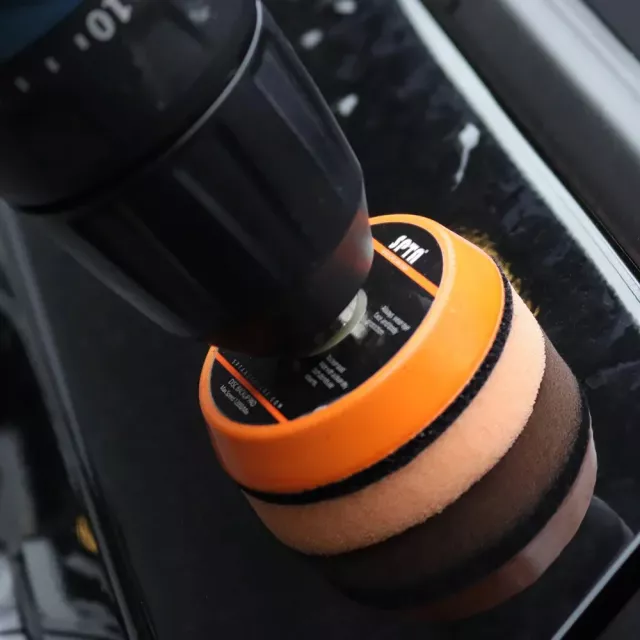
1”–3” Soft Edge Hook & Loop Backing Plate for Mini Polishers & Drills
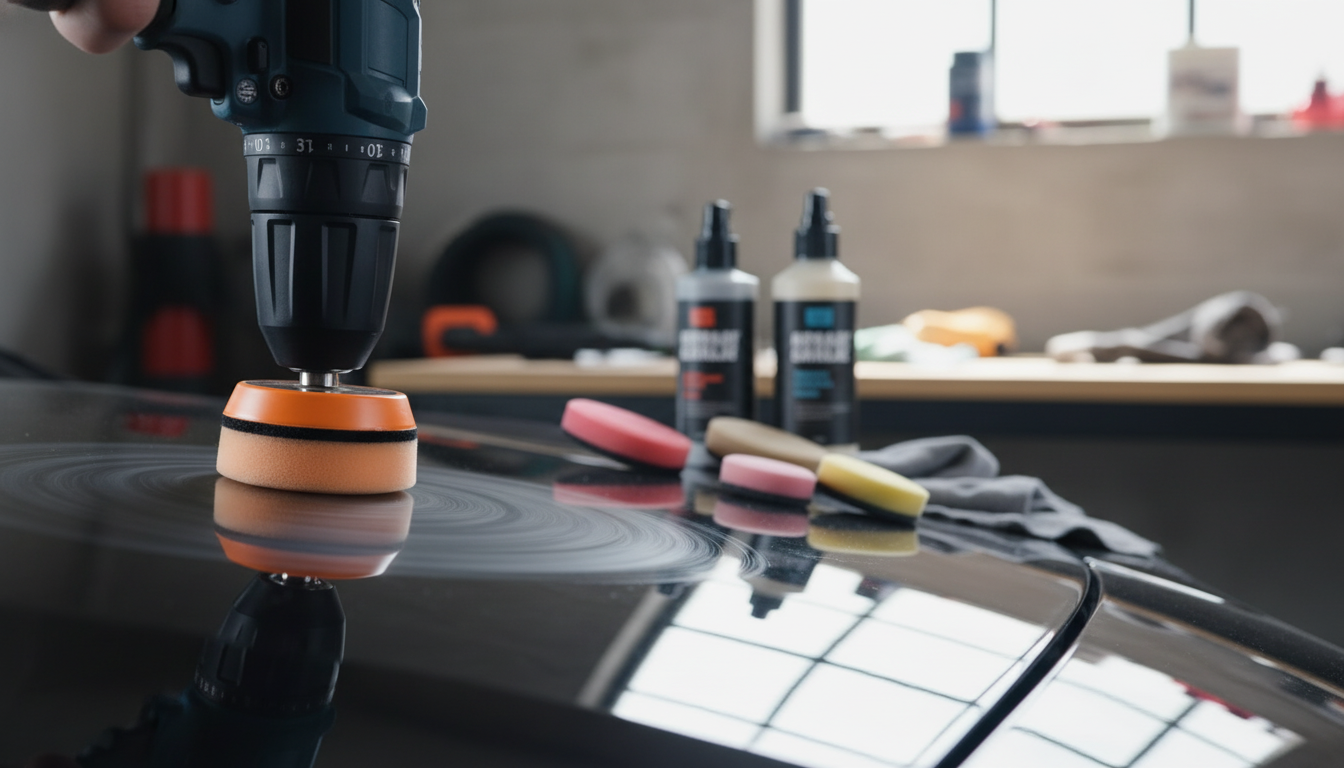
Small pads make it possible to correct paint and polish tight areas—pillars, bumpers, mirror caps, wheel spokes, and interior trim—without fighting a full-size machine. A soft-edge hook & loop backing plate adds control by cushioning the outer edge, helping reduce accidental “edge digging” while keeping mini foam or microfiber pads secure during spot correction and finishing. For more guidance, see 7 Best Buffing Pads (2026 Review Guide).
What a soft-edge backing plate changes in real use
When polishing small, complex surfaces, the backing plate matters as much as the pad and liquid. A soft-edge design adds a little compliance around the perimeter, which can make the tool feel calmer and more predictable where panels curve, taper, or transition near trim. For further reading, see Edge 2000 Pads review.
- Softer perimeter helps the plate glide over curves and contours with less chance of catching an edge.
- Hook & loop face makes pad swaps fast for multi-step work (compound → polish → finishing).
- Smaller diameter support improves access around badges, grilles, door cups, and wheel barrels.
- Useful for targeted defect removal and blending, especially after touch-ups or sanding marks in small zones.
Sizing and compatibility for 1”–3” pads
Small pads behave differently than 5–6 inch systems. Getting the plate size right helps keep rotation stable, reduces vibration, and improves the finish—especially when working close to body lines.
- Choose a plate size that matches the pad’s backing: the pad’s hook & loop area should fully contact the plate for stable rotation.
- A slightly smaller plate than the pad’s outer diameter can help protect paint edges by keeping the hard plate away from the panel.
- Mini polishers, drill adapters, and compact rotary/DA tools vary by thread size—confirm the tool’s spindle/thread spec before ordering.
- Keep pad thickness and stiffness in mind: firmer pads transmit more cut; softer pads pair well with a soft-edge plate for finishing on curves.
Quick size guide for common small-detail tasks
| Pad size | Where it’s most useful | Typical goal | Notes |
|---|---|---|---|
| 1 inch | Emblems, tight seams, intricate trim, small interior accents | Pinpoint correction/finishing | Use light pressure; heat builds quickly in tiny contact patches |
| 2 inch | Pillars, mirror caps, door cups, wheel spokes | Spot correction and blending | Good balance of control and coverage |
| 3 inch | Bumpers, A/B/C pillars, smaller panels, headlight edges | Faster coverage on compact areas | Maintain a flat pad angle to avoid “hopping” on curves |
Best use cases on cars, trucks, and motorcycles
A 1”–3” backing plate setup shines where full-size machines feel bulky or risky. It’s not just about reaching the spot—it’s about controlling the contact patch so you can refine the surface without bumping nearby trim, emblems, or rubber seals.
- Paint correction in tight areas: blend defects without dragging a large pad into adjacent trim.
- Headlight and fog light polishing: improved control around lenses and surrounding paint/trim.
- Wheels: reach between spokes and around lug areas with less interference from the tool body.
- Gloss refinement on curves: the soft edge helps maintain contact on rounded panels and fairings.
For additional technique guidance from established manufacturers, reference finishing resources from 3M Automotive and pad/backing-plate selection notes from RUPES USA.
Setup and installation on a drill or mini polisher
Most problems with small pads (wobble, chatter, uneven cut) start with setup. Take a minute to prep the backing plate and center the pad—mini tools amplify small mistakes.
- Inspect the backing plate face: hook & loop should be clean and free of debris for maximum pad grip.
- Thread the plate on by hand first to avoid cross-threading; snug it per the tool manufacturer’s guidance.
- Center the pad carefully: misalignment can cause vibration, uneven correction, and premature pad wear.
- Run a short test at low speed to confirm smooth rotation before increasing speed or applying product.
If using a drill, consider a dedicated polishing adapter/arbor designed for that chuck type. For compact DA or rotary units, confirm the spindle/thread spec and avoid forcing mismatched hardware.
Technique tips: control, pressure, speed, and heat
Small-diameter polishing is all about restraint. Because the contact patch is tiny, pressure and heat concentrate quickly—especially with 1” pads on curves, edges, and tighter body lines.
Care and longevity
Product options in stock
- 1”–3” Soft Edge Hook & Loop Backing Plate for Mini Polishers & Drills — a practical add-on for mini pads on tight zones, with a cushioned perimeter for better edge control.
- Crystal Moon & Star Car Vent Clips — a simple add-on to dress up the vents once the detail is done.
FAQ
Will a soft-edge backing plate fit any drill?
Not always. Fit depends on the drill’s adapter/arbor and the backing plate’s thread size, so it’s best to confirm your tool’s spindle/thread specs and use the correct adapter rather than forcing a match.
Should the backing plate be the same size as the pad?
Match the pad’s hook & loop contact area so it fully grips the plate, and many detailers choose a plate that’s slightly smaller than the pad’s outside diameter for safer edge control. Oversized or undersized pairings can lead to instability and uneven correction.
Why does a small pad sometimes vibrate or “hop”?
The most common causes are an off-center pad, imbalance, too much speed, too much pressure, or working across sharp curves. Re-center the pad, reduce speed and pressure, and keep the pad flatter to restore smooth operation.














Leave a comment