L-Shaped Cat Scratcher: Recyclable 23.6″ Cardboard Pad
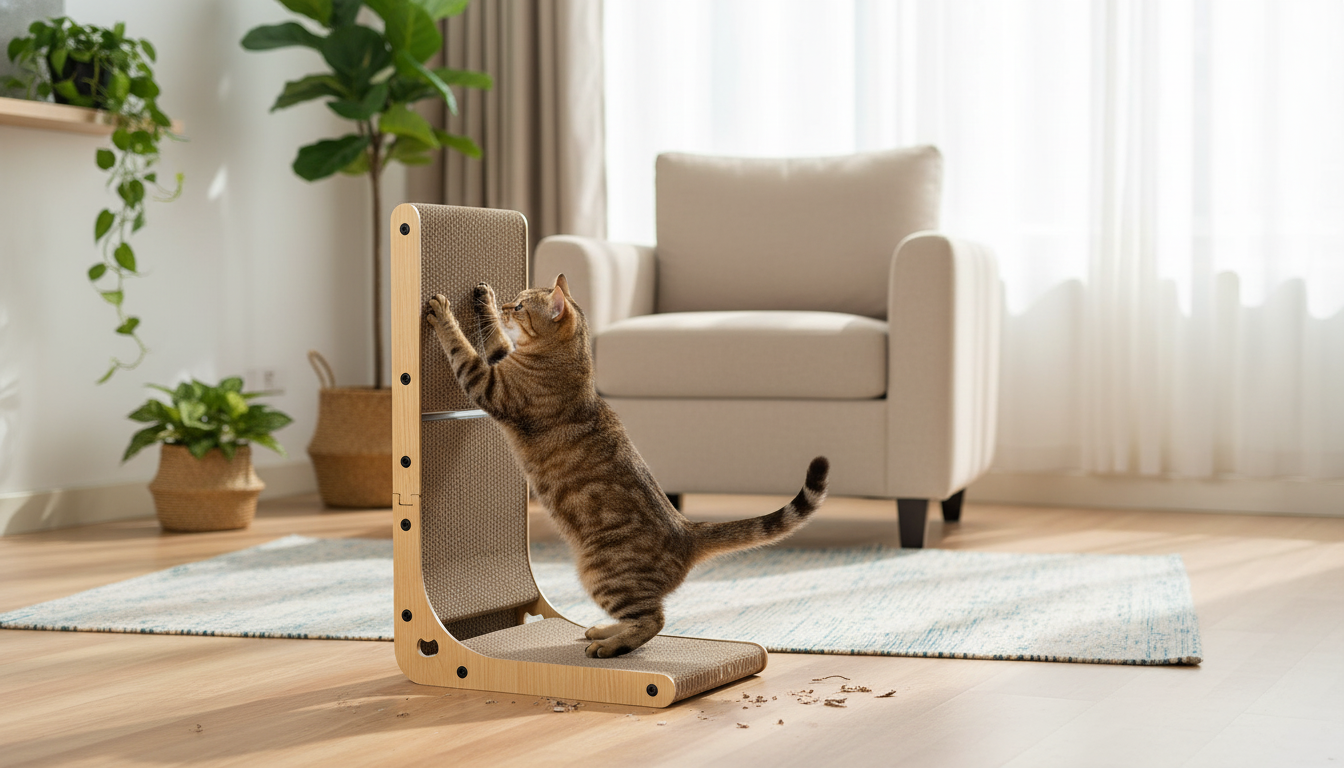
Indoor cats need a reliable place to scratch, stretch, and unwind without sacrificing furniture. An L-shaped cardboard scratcher combines a long scratching runway with an angled surface that supports natural postures, from horizontal raking to upright stretching. This guide breaks down what makes an L-shaped recyclable cardboard pad practical for everyday use, where to place it, and how to keep it appealing to cats over time.
Why an L-Shape Works for Indoor Cats
Many scratchers are either flat loungers or vertical posts, but an L-shaped design covers the in-between behaviors most cats naturally cycle through during the day.
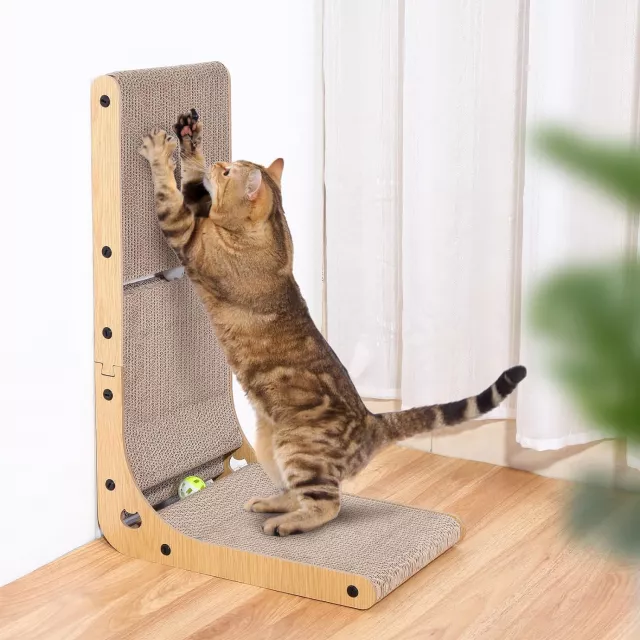
- Supports multiple scratching styles: horizontal raking on the long pad and angled scratching for a more upright stance.
- Encourages a full-body stretch, which is common when cats mark territory and keep claws in good working order.
- Helps redirect scratching away from rugs, sofas, and door frames by offering a more “complete” scratching experience (texture plus angle).
- Doubles as a scratch zone and a lounge spot for cats that love the feel of cardboard under their paws.
Behavior experts commonly note that scratching is a normal, healthy behavior tied to stretching, claw maintenance, and communication. For deeper background, see guidance from International Cat Care and the ASPCA.
Key Features at a Glance
For cats that like longer scratch strokes (or simply want more surface area), the right dimensions and materials matter as much as the shape.
- 23.6-inch length provides a longer runway for bigger cats or cats that like extended strokes.
- Recyclable cardboard offers a scratchable texture many cats instinctively enjoy.
- L-shaped profile fits neatly along walls, corners, or beside furniture—useful for small apartments.
- Lightweight design makes it easy to reposition to the spots a cat already prefers.
Quick specs and what they mean at home
| Feature | What it helps with | Tip for best results |
|---|---|---|
| L-shaped design | Upright stretching plus long horizontal scratching | Place the vertical side near a wall or furniture edge your cat already targets. |
| 23.6″ length | Longer scratch strokes; comfortable for medium/large cats | Center it in a play zone or near a sunny window so it becomes part of your cat’s daily route. |
| Cardboard pad | Satisfying claw engagement; helps shed nail sheaths | Sprinkle catnip lightly (if your cat responds) and refresh about once a week. |
| Recyclable material | Easier end-of-life disposal vs. many plastic options | Check local recycling rules; remove tape/labels if required. |
If you want a simple scratch-and-stretch station with a long runway, see the L-Shaped Cat Scratcher for Indoor Cats – 23.6″ Recyclable Cardboard Pad.
Best Places to Put an L-Shaped Scratcher
Placement is often the difference between a scratcher that gets ignored and one that becomes a daily habit. Cats don’t scratch “randomly”—they scratch where it feels meaningful or convenient.
- Near sleeping spots: many cats scratch after waking to stretch and loosen muscles.
- Beside high-traffic paths: cats often scratch where they pass frequently to mark territory.
- Next to furniture corners: position the scratcher as a “legal” alternative where scratching already happens.
- By a window perch: scratching and lounging often pair well with sunbathing and bird-watching.
When you’re redirecting from a couch arm or doorway trim, make the scratcher the first thing your cat meets in that spot—close enough that using the furniture is less convenient than using the cardboard.
Getting a Cat to Use It (Without a Battle)
Most cats take to cardboard quickly, but a few need a little help connecting the new scratcher with “this is mine.” Keep it low-pressure and reward-based.
- Make it the easiest option: place it directly where unwanted scratching is occurring before trying to move it elsewhere.
- Add scent cues: a pinch of catnip or silvervine can increase initial interest for responsive cats.
- Reward the moment: offer a treat or a quick play session after use to reinforce the habit.
- Avoid punishment: scolding can increase stress and doesn’t teach a preferred scratching location.
If you’re also trying to prevent destructive scratching long-term, professional organizations like the American Veterinary Medical Association (AVMA) emphasize non-surgical strategies and environmental management as the foundation for addressing scratching behaviors.
How to Keep the Cardboard Pad Lasting Longer
Cardboard scratchers are meant to be “worked,” so visible wear is normal. The goal is to keep the surface stable and satisfying, so your cat doesn’t go looking for a new (and usually upholstered) alternative.
Recyclable Cardboard: Practical Notes for Pet Homes
When to Consider a Different Scratcher Style
Small Add-Ons That Make Daily Cat Care Easier
- Spring Plaid Wide Padded Headband – Chic Cotton Blend Hair Accessory
- Retro Corduroy Hair Scrunchies & Headbands – Large, Soft & Stylish
FAQ
How long does a cardboard cat scratcher typically last?
Most cardboard scratchers last anywhere from a few weeks to a few months depending on how often your cat scratches and how many cats share it. Rotating the scratcher, keeping it dry, and cleaning out debris can extend its life; replace it when it becomes unstable or heavily shredded.
Where should an L-shaped scratcher be placed for the best results?
Start by placing it exactly where your cat already scratches (like near a couch corner), then add additional scratchers near sleeping areas, along common walking routes, or by a window. Once your cat uses it consistently, you can shift it gradually to a more convenient spot.
Is recyclable cardboard safe for cats to scratch and bite?
Recyclable cardboard is generally safe for scratching, which is normal behavior. Monitor cats that chew and remove loose chunks to reduce the chance of swallowing large pieces, and replace the pad if it breaks down or becomes unstable.













Leave a comment