2.5-Ton Scissor Car Jack: Wide Lift Range & Safety Tips
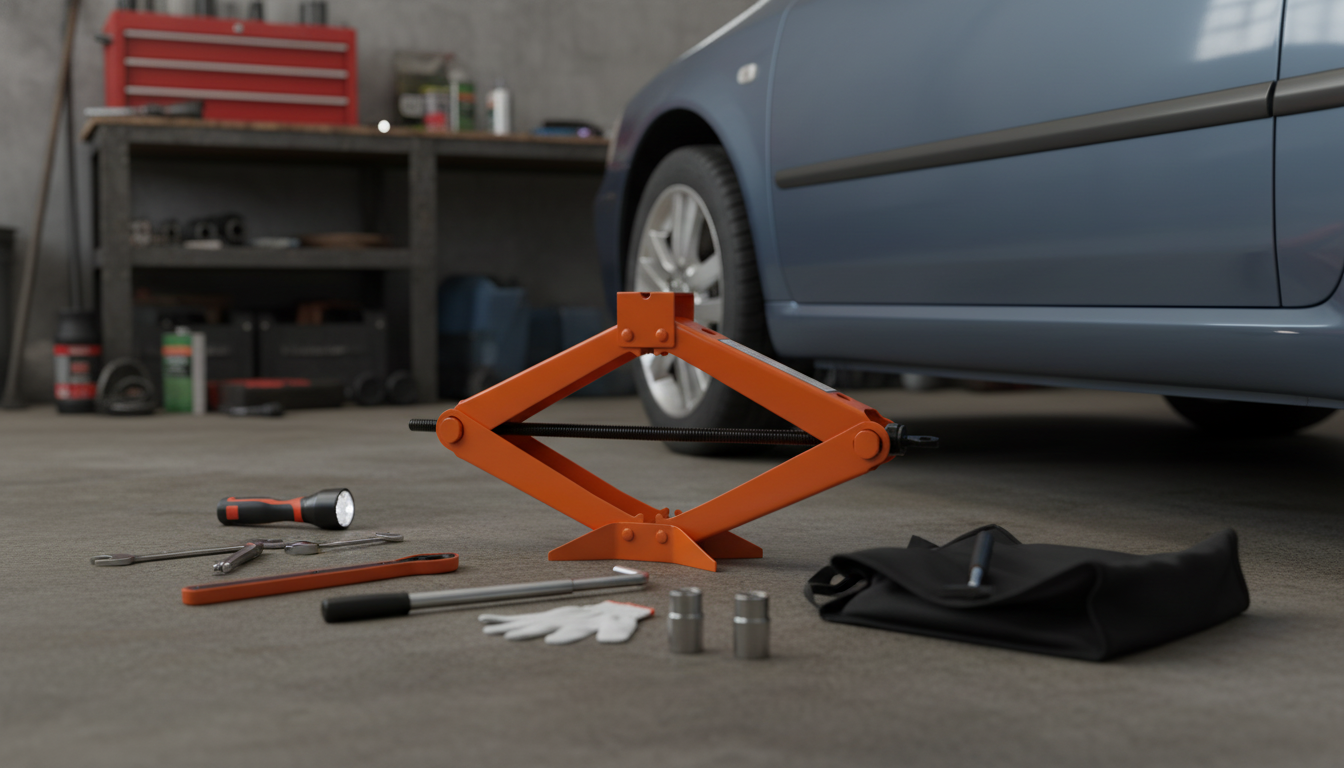
2.5 Ton Heavy-Duty Scissor Car Jack with Wide Lifting Range
A reliable scissor jack can turn a tire change from a stressful roadside task into a controlled, predictable lift. A 2.5 ton heavy-duty scissor car jack is built for drivers who want a compact tool with a wider lifting range to better match different vehicle ride heights—from lower passenger cars to higher-clearance setups when used correctly with proper support and careful safety steps. It’s an especially practical option when a full-size floor jack isn’t available, but you still need a steady, manual way to get a wheel off the ground.
What This Jack Is Best For
- Emergency tire changes and basic roadside lifting when a full-size floor jack is not available
- Compact storage in trunk compartments, under-floor storage, or garage bins
- Vehicles that benefit from a wider lifting range to reach approved lift points more easily
- Drivers who prefer a manual jack that does not rely on air, hydraulics, or batteries
If you’re building a simple trunk kit, consider pairing a dependable jack with small cabin essentials. For example, the 2.5 Ton Heavy-Duty Scissor Car Jack with Wide Lifting Range can be the core tool, while accessories like Crystal Moon & Star Car Vent Clips add a low-profile interior refresh without taking up meaningful space.
Key Capacity and Fit Considerations
A “2.5-ton” rating can cover many passenger vehicles when lifting one corner at a time—on level ground—at the manufacturer-approved jacking point. The rating does not mean the jack should lift the entire vehicle at once, and it doesn’t override the need to follow your owner’s manual.
A wider lifting range is helpful for cars with different ride heights (stock vs. slightly taller tires), seasonal wheel changes, and the real-world variation of roadside situations. Even then, a stable, as-level-as-possible surface is still critical to reduce slipping or shifting.
Quick Compatibility Checklist
| Check | Why it matters | What to do |
|---|---|---|
| Vehicle weight | Ensures the jack is appropriate for lifting one corner safely | Verify curb weight and follow the owner’s manual guidance for jacking |
| Jacking points | Prevents damage to pinch welds, battery trays, and underbody panels | Use only designated lift points; avoid plastic covers and thin sheet metal |
| Minimum height clearance | Determines whether the jack can slide under the lift point when the tire is flat | Test fit in the driveway; consider a small ramp block if clearance is tight |
| Maximum lift height | Determines if the wheel can clear the ground for removal | Confirm the wheel lifts fully with suspension droop on level ground |
| Surface stability | Reduces slipping, sinking, or shifting under load | Use a flat, hard surface; add a sturdy base plate if ground is soft |
Construction and Stability Features to Look For
- Heavy-duty steel structure helps resist twisting under load when positioned correctly
- Wide base and stable footprint help reduce side-to-side wobble compared with narrower compact jacks
- A secure saddle/contact point helps keep the jack aligned with the vehicle’s lift point
- Manual scissor mechanism offers predictable lifting control, especially for slow, incremental adjustments
One overlooked advantage of a manual scissor jack is feedback: you can feel resistance changes as the load comes on. That tactile “signal” makes it easier to pause, re-check alignment, and correct the setup before lifting higher.
Safe Setup Before Lifting
- Park on a level surface away from traffic; avoid slopes and soft shoulders when possible
- Engage the parking brake and shift into Park (automatic) or first gear (manual)
- Chock the wheel diagonally opposite the lift (for example, lifting front-left: chock rear-right)
- Loosen lug nuts slightly before lifting the tire off the ground (do not remove yet)
- Locate the correct jacking point from the vehicle manual; align the saddle squarely beneath it
For general vehicle safety guidance and roadside practices, you can reference resources from the National Highway Traffic Safety Administration (NHTSA). For workplace-style lifting precautions and general jack safety concepts, OSHA guidance can be a helpful baseline: OSHA.
Step-by-Step: Lifting and Changing a Tire
- Position the jack so the saddle sits centered under the approved jacking point; keep the jack straight and aligned.
- Raise the jack slowly, watching for any shifting; stop immediately if the base starts to slide.
- Lift only until the tire clears the ground enough to remove it; avoid unnecessary height.
- Remove lug nuts fully, swap the wheel, and hand-thread lug nuts in a star pattern.
- Lower the vehicle until the tire contacts the ground and cannot spin, then snug lug nuts in a star pattern.
- Lower fully and torque lug nuts to spec using a torque wrench as soon as practical.
Roadside Practicality and Storage Tips
Care, Inspection, and When to Upgrade Tools
FAQ
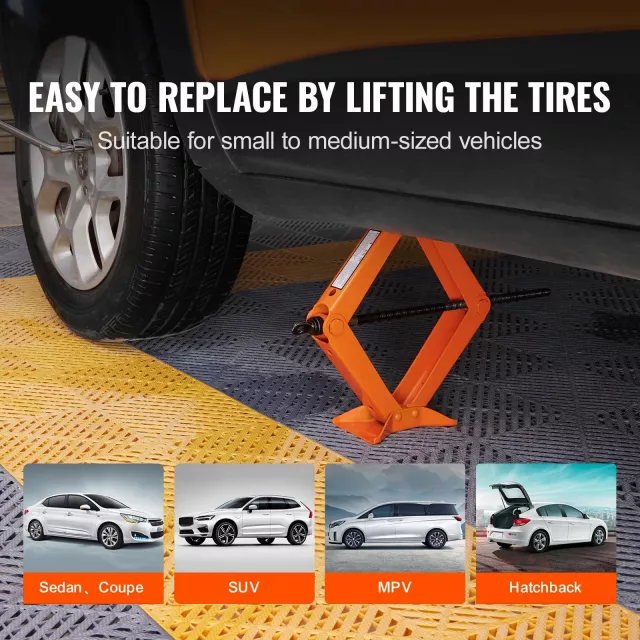
Can a 2.5 ton scissor jack lift an SUV?
Many SUVs may be within a 2.5-ton rating for lifting one corner, but you still need to confirm the correct jacking point, ground clearance, and required lift height in your owner’s manual. If the jack can’t sit squarely under the approved point or the surface isn’t stable, don’t lift.
How do you keep a scissor jack from sinking or slipping?
Use a flat, hard surface whenever possible, and place a wide, sturdy board or base plate under the jack on softer ground. Keep the saddle centered on the correct jacking point, lift slowly, and stop immediately if you see any shifting.
Is it safe to work under a car supported only by a scissor jack?
No—working under a car supported only by a scissor jack is not recommended. For any under-vehicle work, support the vehicle with properly rated jack stands on solid ground; the scissor jack is primarily for lifting during a tire change.















Leave a comment