Adjustable Cat Tree Tower with Condo, Hammock & Posts
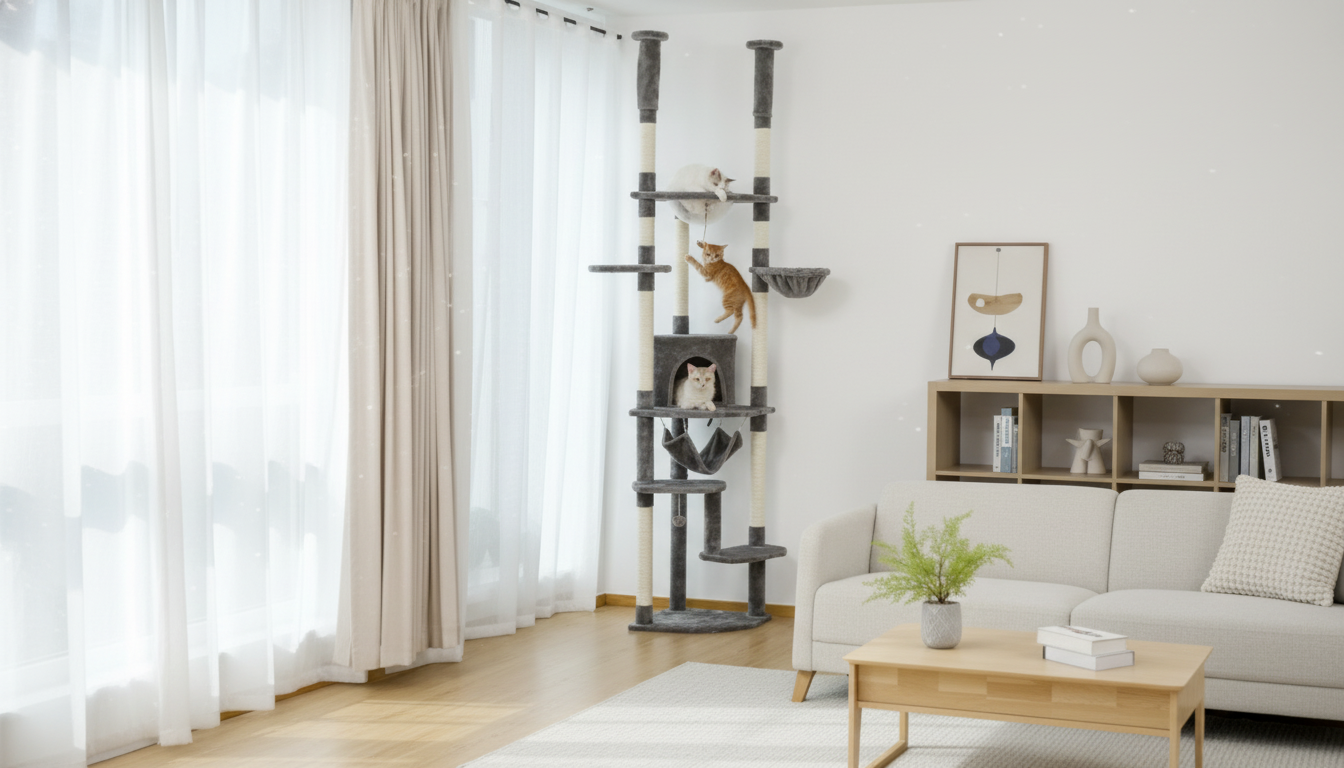
Adjustable Cat Tree Tower with Scratch Posts, Condo, Hammock & Perches
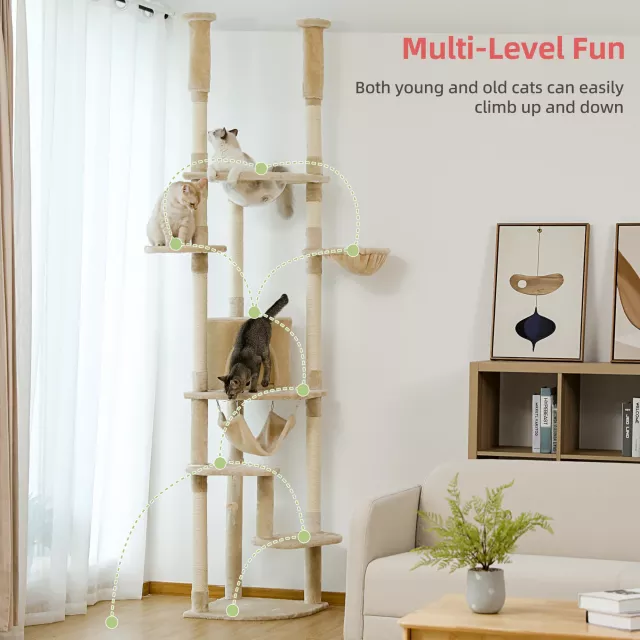
An adjustable cat tree is a practical way to add vertical territory, lounging spots, and scratch-friendly surfaces without constantly rearranging furniture. This tower combines a stable climbing layout with a hideaway condo, a hammock-style rest, and multiple perches—supporting daily play, rest, and scratching routines in one footprint. For indoor cats especially, building “up” helps turn a single corner of a room into an engaging home base.
What This Tower Adds to a Cat’s Daily Routine
- Vertical space for climbing and surveying, which can help reduce boredom and encourage natural exploration indoors.
- Dedicated scratching posts that support claw care and help redirect scratching away from carpets, doorframes, and sofas.
- Multiple resting zones (perches, condo, hammock) so cats can rotate between open lounging and covered, secure naps.
- A single “cat zone” that helps keep toys, fur, and scratch debris more contained to one area.
International Cat Care highlights the value of territory, choice, and environmental complexity for cats, and vertical options are a simple way to deliver that indoors (International Cat Care: Environmental Needs).
Key Features at a Glance
- Adjustable height design suited to different room layouts (follow the included instructions for safe setup).
- Scratch posts along the climbing path to make scratching a “built-in” habit rather than an afterthought.
- Condo-style enclosed space for hiding, napping, and decompression.
- Hammock-style sling for curled-up lounging.
- Perches at different levels for variety and easier sharing in multi-cat homes.
| Component | What it’s for | Helpful placement tip |
|---|---|---|
| Scratch posts | Claw maintenance and marking behavior | Place the tower near a favorite scratch spot to ease the switch |
| Condo | Private, enclosed rest | Position away from heavy foot traffic for calmer naps |
| Hammock | Snug lounging and warmth retention | Best near a window (avoid direct heater airflow) |
| Perches | Observation and high resting | Keep clear landing space around the tower |
| Adjustable height | Fit to room height and stability needs | Confirm secure tension/locking before allowing jumping |
Scratching is a normal feline need, not “bad behavior.” When cats have a stable, satisfying scratch surface, it’s often easier to protect household items through consistent redirection. The ASPCA’s overview is a helpful reference for why cats scratch and how to manage it constructively (ASPCA: Cat Scratching Behavior).
Where It Fits Best at Home
- Near a window for bird-watching and sunbathing (leave safe clearance from blind cords).
- Close to social areas if your cat likes being near people; choose quieter corners for shy or easily startled cats.
- Away from wobbly furniture that could become an unintended “launch ramp” into the tower.
- On a flat surface; consider a rug or mat underneath to reduce sliding and to catch loose fur and scratch dust.
If your cat already has a preferred nap zone, placing the tower within that “comfort radius” can speed up adoption. A light sprinkle of catnip (where appropriate) or a familiar blanket in the condo can make the new setup feel immediately safe.
Comfort and Cat-Friendly Design Details to Look For During Setup
- Step spacing: confirm your cat can move between levels without awkward leaps or twisting midair.
- Stable base contact: check for rocking before letting your cat climb to upper perches; tighten and re-check after initial use.
- Scratch surface access: posts should be reachable from the floor and from mid-level platforms so scratching can happen naturally during play.
- Resting variety: some cats rotate between open perches, enclosed condos, and hammock-style spots throughout the day—multiple “moods” in one tower helps.
For cats that scratch furniture, avoid punishment and focus on making the tower more rewarding: place it close to the old scratch target, encourage a few scratches with a teaser wand, then reward. Over time, you can gradually move the tower to the preferred permanent location if needed.
For Kittens, Seniors, and Multi-Cat Homes
- Kittens: use toys and treats to guide exploration; supervise early climbs until they’re confident with the routes.
- Seniors: prioritize easier routes and lower perches; a small step stool nearby can help cats with limited mobility participate without strain.
- Multi-cat: multiple resting zones can reduce crowding; placing a second scratcher elsewhere can prevent bottlenecks around the posts.
- Resource guarding: if any cat guards spaces, keep key resources (litter, food, water) separate from the tower area to reduce tension.
When cats have appropriate outlets for scratching, climbing, and retreating, they’re often less likely to develop conflict around “who owns the couch.” For additional perspective on humane management choices, the AVMA’s policy discussion on declawing provides useful context (AVMA: Declawing of Domestic Cats).
Care, Cleaning, and Longer-Lasting Use
Product Details and Ordering
- Product: Adjustable Cat Tree Tower with Scratch Posts, Condo, Hammock & Perches
- Category: Cat Towers
- Availability: In stock
- Price: $545.01 USD
More in-stock picks
- Crystal Moon & Star Car Vent Clips
- Spring Plaid Wide Padded Headband – Chic Cotton Blend Hair Accessory
FAQ
How tall should an adjustable cat tree be?
Choose a height that matches your room and your cat’s mobility; taller isn’t always better. Prioritize stability and easy step-to-step movement, and follow the manufacturer’s setup instructions for safe adjustment.
Will a condo and hammock actually get used?
Many cats rotate between open and enclosed resting spots. Place the tower where your cat already likes to relax (by a window, in a quiet corner, or near family activity) and add a familiar blanket or a pinch of catnip to encourage first use.
How can scratching be redirected to the posts?
Put the tower near the current scratch target and reward scratching on the posts with praise or treats. Keep alternative scratch surfaces available temporarily, and focus on consistent redirection rather than punishment.















Leave a comment