Bouncing Cat Toy for Indoor Hunting Play
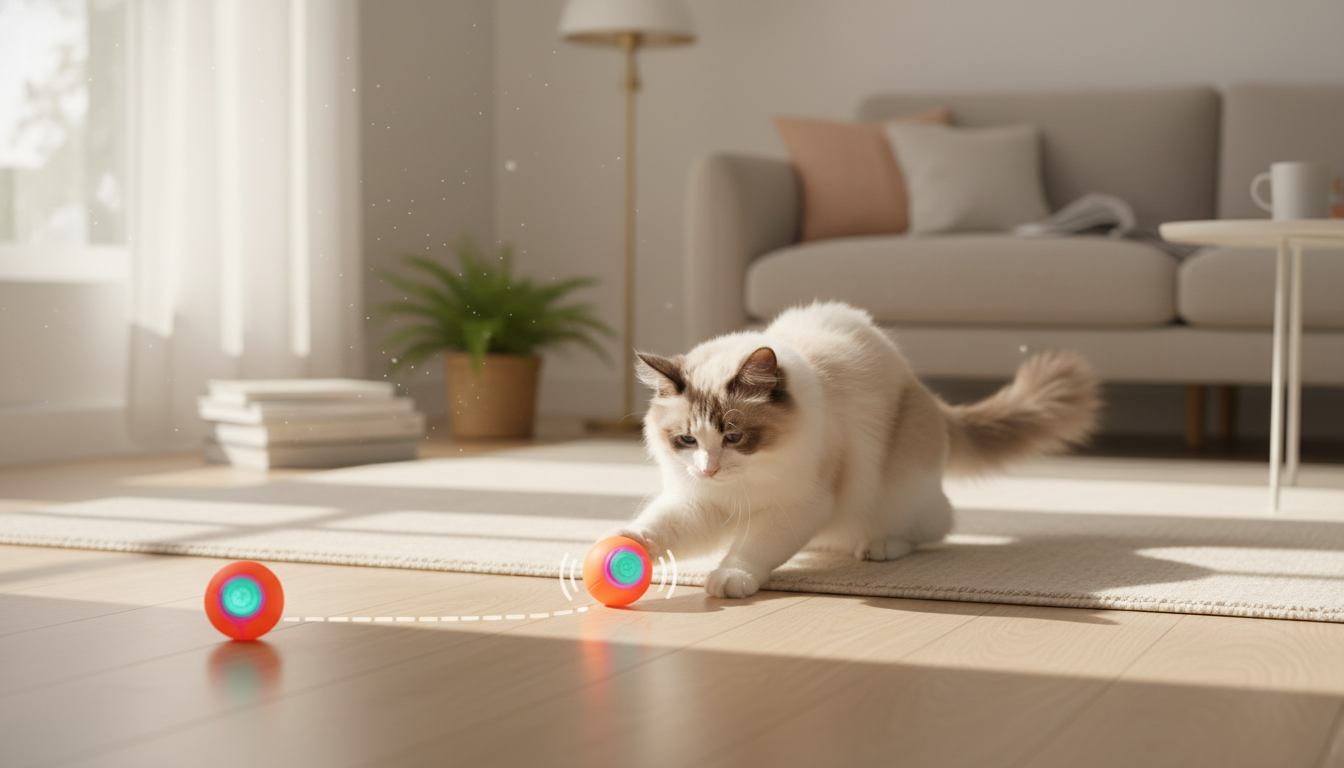
Interactive Bouncing Cat Toy: Fast-Paced Indoor Play for Curious Cats
Cats thrive on short bursts of movement, pouncing practice, and novelty. An interactive bouncing toy adds unpredictable motion that encourages stalking, chasing, and batting—helpful for indoor enrichment and for cats that get bored with static toys. This guide covers what the toy does well, how to use it safely, and how to keep play sessions engaging.
What makes bouncing play so engaging
Bouncing toys tap into the parts of feline behavior that “wake up” when something moves like prey. Unlike a ball that rolls predictably, a bounce creates quick changes in speed and direction that keep your cat scanning, reacting, and re-approaching.
- Unpredictable movement triggers natural hunting sequences: watch, stalk, chase, swat, and “capture.”
- Quick direction changes can hold attention longer than toys that move in a straight line.
- Short, high-energy sessions can help reduce restlessness, nighttime zoomies, and attention-seeking behaviors.
- Interactive play is especially useful for indoor cats with limited climbing or outdoor stimulation.
For guidance on matching enrichment to age and activity needs, reputable veterinary organizations offer helpful baselines, including the AAHA Feline Life Stage Guidelines and the ASPCA’s cat care resources on play and enrichment.
Interactive Bouncing Cat Toy at a glance
If you’re building a toy rotation, a bouncing toy is a simple way to add variety without adding complexity. It’s best used in quick “bursts,” then put away so it stays interesting.
- Designed for active batting and chasing on common indoor surfaces (tile, wood, low-pile rugs).
- Works well for solo bursts of play and for supervised, guided play where the toy is reintroduced to reset interest.
- Budget-friendly option for adding variety to a toy rotation.
- Best results come from pairing with a routine: play, reward, then rest.
| Detail | Info |
|---|---|
| Product | Interactive Bouncing Cat Toy |
| Price | $5.51 USD |
| Availability | In stock |
| Category | Pet Toys |
Who it’s best for (and when to skip it)
Bouncing play tends to reward cats that like quick motion and “snap” reactions. That said, the right setup matters—especially for cats that are anxious or mouthy with toys.
- Great for kittens and high-energy adult cats that enjoy fast movement and quick pounces.
- Helpful for cats that lose interest in plush toys or stationary kickers.
- For shy or noise-sensitive cats, start with brief, calm sessions and allow retreat space.
- Skip unsupervised use if your cat is known to chew and ingest toy parts; choose sturdier, larger-format toys and supervise closely.
How to introduce it for longer, safer play
The goal is controlled excitement: enough intensity to satisfy the chase, but not so much arousal that your cat starts nipping hands or ricocheting into furniture. Keep sessions short, then repeat later—cats often prefer multiple mini “hunts” throughout the day.
- Start with 2–5 minute sessions to avoid overstimulation; repeat 1–3 times daily based on energy level.
- Begin in a low-clutter area so the toy stays visible and your cat can complete a full chase sequence.
- Use “reset moments”: if your cat pauses, gently re-bounce or reposition the toy to restore novelty.
- End on a win: let your cat catch the toy, then offer a small treat or meal to mirror hunt–eat–groom–sleep patterns.
- Store the toy between sessions so it stays interesting and doesn’t become background noise.
| Cat type | Session plan | Tip |
|---|---|---|
| Kitten | 3 x 5 minutes daily | Use a short hallway for safe, straight chases |
| Adult indoor cat | 2 x 7 minutes daily | Alternate with a wand toy every other day |
| Senior (active) | 2 x 3–5 minutes daily | Keep bounces low and pace slower |
Placement, surfaces, and home setup
Where you play matters almost as much as what you play with. A bouncing toy can be thrilling on slick floors and more “catchable” on carpet—use that to match your cat’s confidence and coordination.
- Smooth floors typically produce the most lively bounces; rugs can slow motion for cats that prefer easier catches.
- Create “play lanes” by moving breakables and reducing tight under-furniture gaps where the toy can get trapped.
- If the toy tends to disappear under couches, block access during play or use a playpen-style area.
- Rotate locations to prevent pattern learning: a different room can make the same toy feel new.
If your cat tends to sprint hard, prioritize traction and clear turning space to reduce slips. You can also “aim” bounces away from stairs, food bowls, or glass décor so your cat stays focused on the chase, not the obstacles.
Care, inspection, and safe storage
A small toy can take a lot of impact and teeth contact over time. A quick check before each session is the easiest way to prevent problems.
Common issues and simple fixes
Shop the featured toy (plus a couple of quick add-ons)
- Interactive Bouncing Cat Toy
- Crystal Moon & Star Car Vent Clips
- Retro Corduroy Hair Scrunchies & Headbands – Large, Soft & Stylish
FAQ
How long should a play session last with a bouncing toy?
Aim for short, frequent sessions—about 5–10 minutes—ending while your cat is still interested rather than overstimulated. Kittens may do multiple mini-sessions, while seniors often prefer slower, shorter bursts.
Is this kind of toy suitable for kittens?
Yes, with supervision. Start gently in a clear area, keep sessions brief, and inspect the toy often since kittens are more likely to chew or test objects with their mouths.
How do you keep a cat from getting bored of it?
Rotate it with other toys, store it between sessions, and change rooms or surfaces so the movement feels “new” again. Pairing play with a small treat or meal can also make the routine more rewarding.















Leave a comment