145W 20800mAh Power Bank With Smart Display (USB-C)
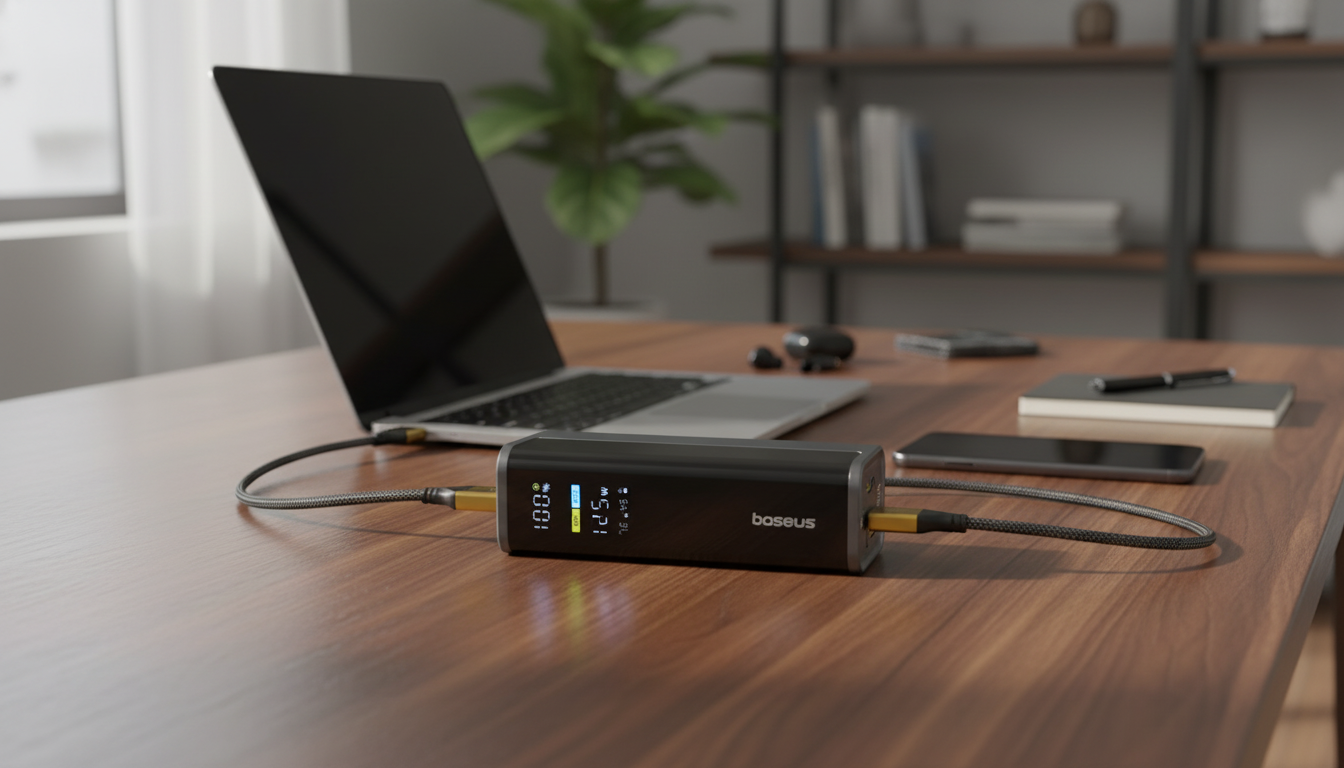
145W Fast Charging Power Bank 20800mAh with Smart Display
A high-output power bank can keep phones, tablets, and even USB‑C laptops running through travel days, commutes, and long work sessions away from an outlet. With a 20800mAh capacity, up to 145W fast charging, and a smart display for real-time power details, this model is built for users who want speed, visibility, and fewer charging compromises.
What a 145W, 20800mAh power bank is designed to handle
A 145W power bank sits in the “serious portable power” category. It’s meant to do more than just top off a phone—it can support multiple device types and handle higher-drain scenarios where smaller banks can’t keep up.
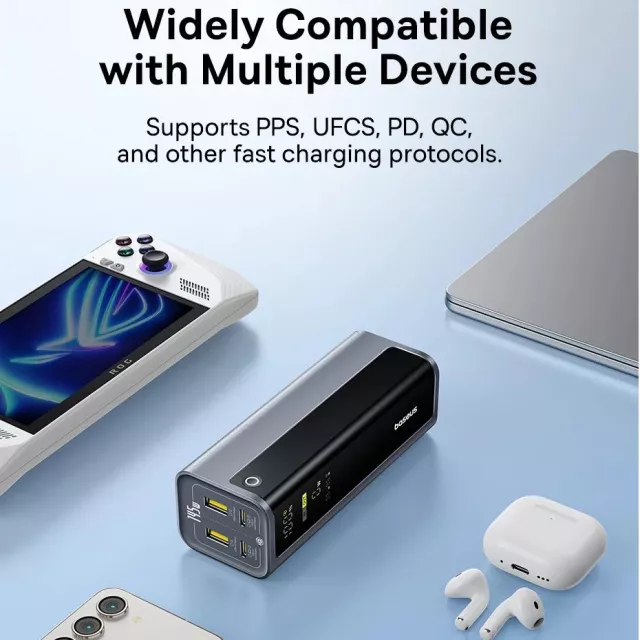
- Supports fast charging for multiple device types: phones, tablets, handheld consoles, earbuds, and USB‑C laptops (device must support compatible fast-charge standards).
- 20800mAh capacity targets all-day portability: enough energy for several phone top-ups or meaningful laptop extension, depending on device battery size and charging efficiency.
- 145W output is most useful for power-hungry devices and for maintaining performance during use (video calls, navigation, tethering, gaming).
- Smart display helps reduce guesswork by showing charging status and remaining power details at a glance.
Quick capacity expectations (real-world ranges vary by device and settings)
| Device type | Typical battery size | What 20800mAh can feel like | Notes |
|---|---|---|---|
| Smartphone | 4000–5000mAh | About 2–4 recharges | Higher screen brightness and 5G use reduce total recharges |
| Tablet | 7000–10000mAh | About 1–2 recharges | Large tablets may charge slower if limited to lower wattage input |
| USB‑C laptop | 45–70Wh class | Partial refill or meaningful extension | Best results when laptop supports USB‑C Power Delivery at higher wattages |
| Accessories (earbuds/smartwatch) | Small | Many top-ups | Use a low-power port/mode if available for tiny devices |
Smart display: what it adds to everyday charging
A built-in smart display is one of those features that becomes hard to give up once you’ve used it. Instead of guessing whether you’re actually fast charging, you can see what’s happening in real time.
- Real-time visibility: confirms whether a device is actually fast charging or falling back to a slower mode.
- Better planning: remaining battery and power flow info can help decide when to recharge the power bank before leaving home or the car.
- Multi-device awareness: easier to spot when adding a second device reduces overall speed (shared power budget).
- Troubleshooting help: quickly indicates cable/port issues when wattage unexpectedly drops.
Ports, fast-charge behavior, and getting the fastest speeds
Fast charging is a “full chain” experience: the power bank’s output is only one piece. To hit the highest speeds, the connected device needs to accept the right protocol, the selected port must support it, and the cable must be rated for the wattage.
- Fast charging depends on the full chain: device support + correct port + capable cable + compatible charging protocol.
- Use USB‑C for higher-wattage devices: many laptops and newer tablets require USB‑C Power Delivery to reach top speeds.
- Choose e‑marked USB‑C cables for high power: high-wattage charging needs cables rated for the load to avoid throttling.
- When charging multiple devices, expect total output to be shared; the highest wattage is typically achieved with a single compatible device.
For a quick standards refresher, USB Power Delivery is the common framework behind modern high-watt charging over USB‑C. The USB-IF overview is a helpful reference: USB-IF (USB Power Delivery overview).
Use cases that benefit most from 145W output
Higher wattage matters most when a device is actively working while charging. That’s where a basic 18W–30W power bank can fall behind, especially with laptops or handheld gaming devices.
- Travel days: keeps a phone and a laptop topped up during airport waits, train rides, or layovers without hunting for outlets.
- Mobile work: supports high-drain tasks like hotspot use, video calls, or field apps while maintaining battery level.
- Car and ride-share readiness: pairs well with a fast car charger for quick top-ups between stops (charger sold separately).
- Emergency backup: enough output for power-hungry devices that smaller power banks can’t charge effectively.
Safety, airline considerations, and battery care
High-output power banks are safe when used properly, but they demand a little more common sense—especially at higher wattages where heat can build up during fast charging.
For air travel, review current guidance and restrictions before packing: FAA guidance on lithium batteries in baggage.
Specs to confirm before pairing with a laptop or tablet
Product options in stock
- 145W Fast Charging Power Bank 20800mAh with Smart Display ($63.01): a compact, high-output option for fast charging across multiple device categories with real-time display feedback.
- Crystal Moon & Star Car Vent Clips ($10.51): a quick upgrade for keeping your vehicle’s vent area organized and personalized—handy for day-to-day commutes and travel.
- Spring Plaid Wide Padded Headband – Chic Cotton Blend Hair Accessory ($5.97): a simple grab-and-go accessory for travel days and long outings.
FAQ
Will a 145W power bank charge a USB‑C laptop?
Yes, if the laptop supports USB‑C Power Delivery and a compatible PD profile. Use a high-power USB‑C to USB‑C cable and the correct port; some laptops may charge at a lower wattage or not accept USB‑C charging.
Is 20800mAh enough for multiple phone charges?
Often, yes—many phones will get several full recharges once you account for normal efficiency losses. Heavy use while charging and the heat from fast charging can reduce total delivered energy.
Can this power bank be taken on a plane?
Power banks are generally allowed in carry-on with limits based on watt-hours (Wh), but rules vary by airline and country. Check the product’s Wh labeling and confirm your airline’s current policy before flying.















Leave a comment