Squeaky Shoe Rope Toy for Dogs & Cats (Chew & Clean)
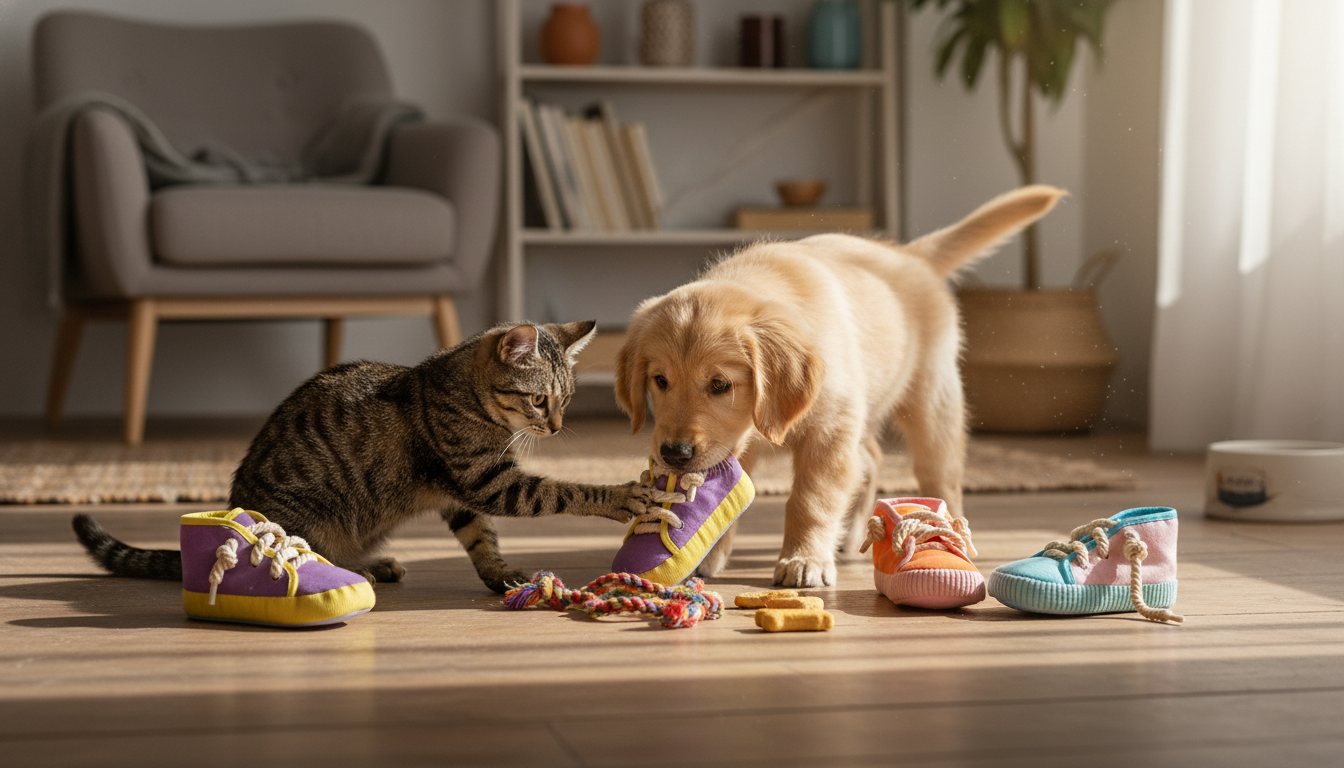
Squeaky Bite-Resistant Rope Shoes Toy for Dogs & Cats – Chew & Clean
A durable, shoe-shaped rope toy adds squeaky excitement to play while supporting everyday chewing and light tooth-scrubbing. Its grippy rope texture is designed for tug, toss, and independent gnawing—great for dogs and cats that stay interested longer when a toy has “something to work on,” not just a smooth surface.
What Makes a Shoe-Shaped Rope Toy Different
Some toys get ignored because they’re hard to pick up, too plain, or don’t “feel” satisfying to bite. A compact rope toy in a shoe-like silhouette is different in a few practical ways:
- Easy to grab and carry: The compact “shoe” shape is simple for many pets to pick up, tote around, and shake.
- Textured chewing that lasts longer: Rope weave can encourage longer chewing sessions than smooth rubber for some moderate chewers.
- Squeaky engagement: A squeaker can boost interest during fetch and solo play, helping reduce boredom between walks or wand-toy sessions.
- Multiple play styles in one: Works for tug, toss, chase, and settle-and-chew—handy when energy levels change throughout the day.
At-a-Glance Details
For quick decisions (especially when building a toy rotation), these are the core points to know:
- Built for interactive play and supervised chewing
- Textured rope surface helps scrub along teeth during gnawing
- Squeaky element supports engagement and play drive
- Suitable for both dogs and cats that enjoy chewable toys
Quick Feature Guide
| Feature | Why it matters | Best for |
|---|---|---|
| Rope weave texture | Adds grip and friction for chewing; can help reduce light surface buildup | Chewers who like fabric/rope textures |
| Squeaker | Keeps attention during fetch and shake play | High-energy play sessions |
| Shoe-like shape | Easy to pick up and carry; encourages pawing and pouncing | Small to medium pets; playful cats |
| Bite-resistant build (relative) | Holds up better than many soft plush toys under normal use | Moderate chewers (supervised) |
| Chew-and-clean use | Textured chewing can support everyday oral hygiene routines | Pets needing enrichment plus light dental support |
Chew & Clean Benefits (What to Expect)
Rope toys are sometimes described as “cleaning” toys, but it helps to set realistic expectations. The benefits are mostly mechanical and routine-based:
- Light scrubbing during play: Chewing textured rope can help mechanically scrub tooth surfaces, especially along the outer edges that contact the weave.
- Saliva support: Chewing often increases salivation, which can help with oral freshness as part of a larger care routine.
- Calmer downtime: Many pets find chewing soothing; it’s an easy enrichment activity that can reduce restless pacing or bored “troublemaking.”
- Best as a companion to real dental care: Pair with brushing and vet-recommended dental products for better long-term results. AAHA’s overview of dental care is a helpful baseline for both dogs and cats: https://www.aaha.org/your-pet/pet-owner-education/ask-aaha/dental-care-for-dogs-and-cats/
- Not a fix for dental disease: If tartar, bad breath, or gum irritation is present, a toy isn’t a substitute for professional evaluation and cleaning. AVMA’s notes on periodontal disease can help clarify why early care matters: https://www.avma.org/resources/pet-owners/petcare/periodontal-disease-dogs
Who This Toy Fits Best
This style tends to work best for pets that enjoy texture and interaction without instantly shredding rope. Consider it a strong match for:
- Dogs that enjoy tug, fetch, and textured chew toys
- Cats that like kicker toys, pouncing, and grabbing with front paws
- Moderate chewers who destroy plush quickly but still prefer fabric-like textures
- Households that want a low-fuss toy for short play breaks throughout the day
It’s not ideal for aggressive power chewers that fray rope rapidly—especially if rope fibers are swallowed. If rope is being shredded or consumed, switch to a heavier-duty option and consult your vet if you suspect ingestion.
Safe Play Tips for Rope Toys
Rope toys can be excellent, but they do best with a few common-sense safety habits:
- Supervise chewing: Especially for pets that fray rope quickly or try to swallow fibers.
- Inspect often: Check seams, rope strands, and the squeaker area; remove the toy if pieces loosen.
- Keep tug appropriate: Limit tug intensity for very small pets or seniors to reduce strain on neck and teeth.
- Rinse and dry: Spot-clean or rinse as needed and let it fully air-dry to keep it fresher between sessions.
- Rotate toys: Rotation keeps novelty high and can reduce obsessive chewing on a single item.
For additional general toy safety reminders, ASPCA’s guidance is a solid reference: https://www.aspca.org/pet-care/general-pet-care
How to Introduce It (Dogs & Cats)
Price, Stock, and What’s Included
Item: Squeaky Bite-Resistant Rope Shoes Toy for Dogs & Cats – Chew & Clean
Price: $5.51 (USD)
Availability: In stock
More In-Stock Finds (Add-Ons)
- Crystal Moon & Star Car Vent Clips (a simple car add-on for road trips and errands)
- Spring Plaid Wide Padded Headband – Chic Cotton Blend Hair Accessory (a cute personal accessory for everyday outings)
FAQ
Is a rope toy safe for dogs and cats to chew?
Rope toys are generally safe when pets are supervised and the toy stays intact. If you notice heavy fraying or your pet swallowing strands, remove the toy and switch to a safer option for their chewing style.
Does chewing rope toys actually clean teeth?
Chewing textured rope can provide mild mechanical scrubbing that may help with light surface buildup. It doesn’t replace tooth brushing or veterinary dental care, especially if there’s tartar, bad breath, or gum irritation.
How do you clean a squeaky rope toy?
Spot-clean or gently rinse to remove debris, then air-dry completely. Avoid harsh chemicals, and discard the toy if odor persists or the structure weakens around seams or the squeaker area.















Leave a comment