4-Week Puppy Training Schedule for a New Puppy
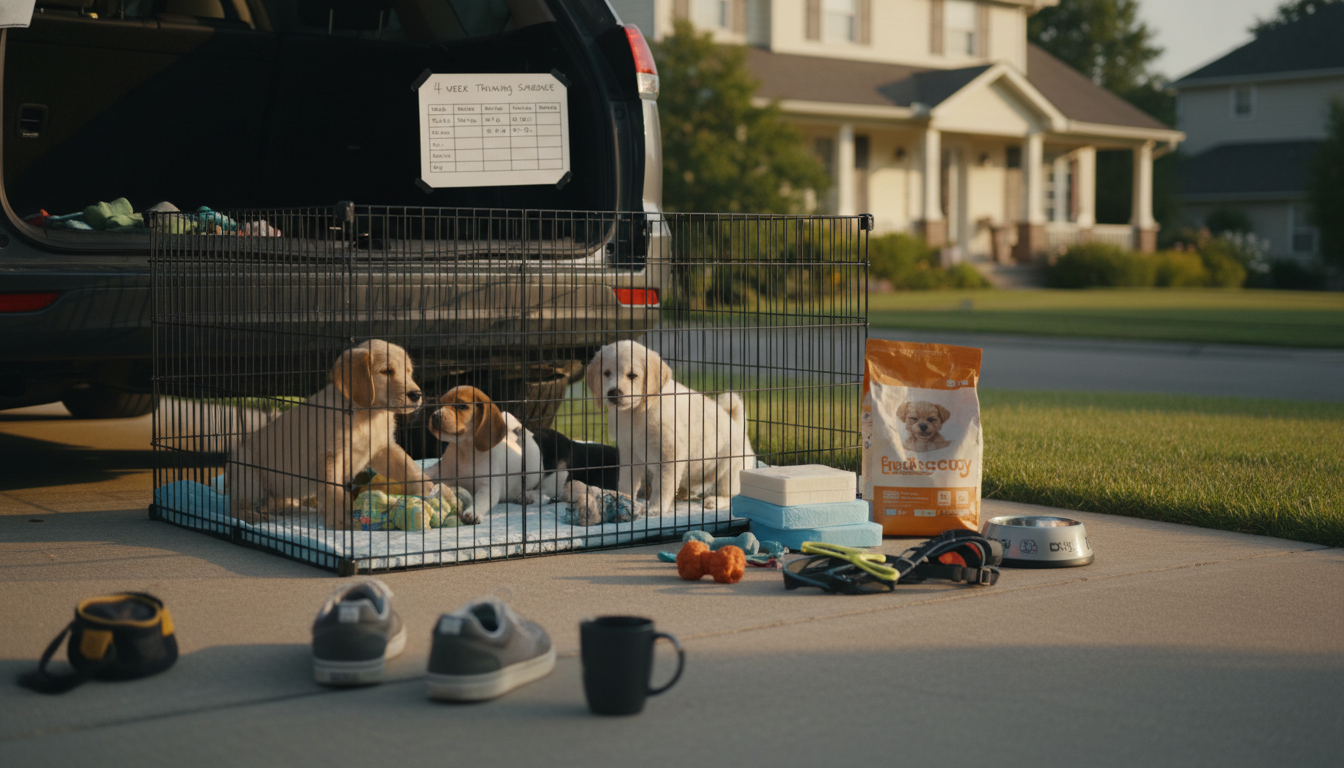
What should a 4-week puppy training schedule look like for a brand-new puppy?
A solid 4-week puppy training schedule focuses on a few basics done consistently: potty training, crate comfort, bite inhibition, simple cues, and calm socialization. Keep sessions short (1–3 minutes at first), repeat them several times daily, and build your day around predictable cycles of potty breaks, meals, play, training, and naps.
Week 1: Set routines and prevent accidents
Start with structure. Take your puppy out first thing in the morning, after every meal, after naps, after play, and right before bedtime. Reward immediately after they finish outside. Introduce the crate as a safe “den” using treats and a stuffed food toy, and practice brief door-closed moments while you’re nearby. Begin name recognition and “come” by rewarding any quick attention and movement toward you.
Week 2: Add foundation cues and extend crate time
Keep potty timing tight, but begin spacing breaks slightly if your puppy is staying dry. Add simple cues: “sit,” “down,” and “touch” (nose to hand). Pair gentle handling (ears, paws, mouth) with treats to prepare for grooming and vet visits. Gradually increase crate duration with calm, predictable release—only when quiet.
Week 3: Leash basics and polite behavior
Practice leash walking indoors first: reward for staying near you and for checking in. Add “leave it” using low-value items and fast rewards for disengaging. Start working on “drop it” during tug or toy play. Continue socialization with safe, positive exposures (friendly people, common sounds, different surfaces), keeping interactions short and upbeat.
Week 4: Build reliability and real-life skills
Increase distractions slowly: practice cues in different rooms, then outside. Begin short “stay” or “wait” (1–3 seconds) and reward often. If accidents happen, tighten supervision and potty frequency rather than punishing. For a detailed day-by-day plan that combines potty training, crate training, commands, and socialization, follow the full guide here: 4-week puppy training plan.
FAQ
How many training sessions should I do with a young puppy each day?
Aim for 5–10 micro-sessions daily, each 1–5 minutes long. Spread them out around potty breaks, meals, and play so your puppy stays fresh and successful.
















Leave a comment