4500 PSI Portable Air Compressor: Auto-Stop, Water-Cooled
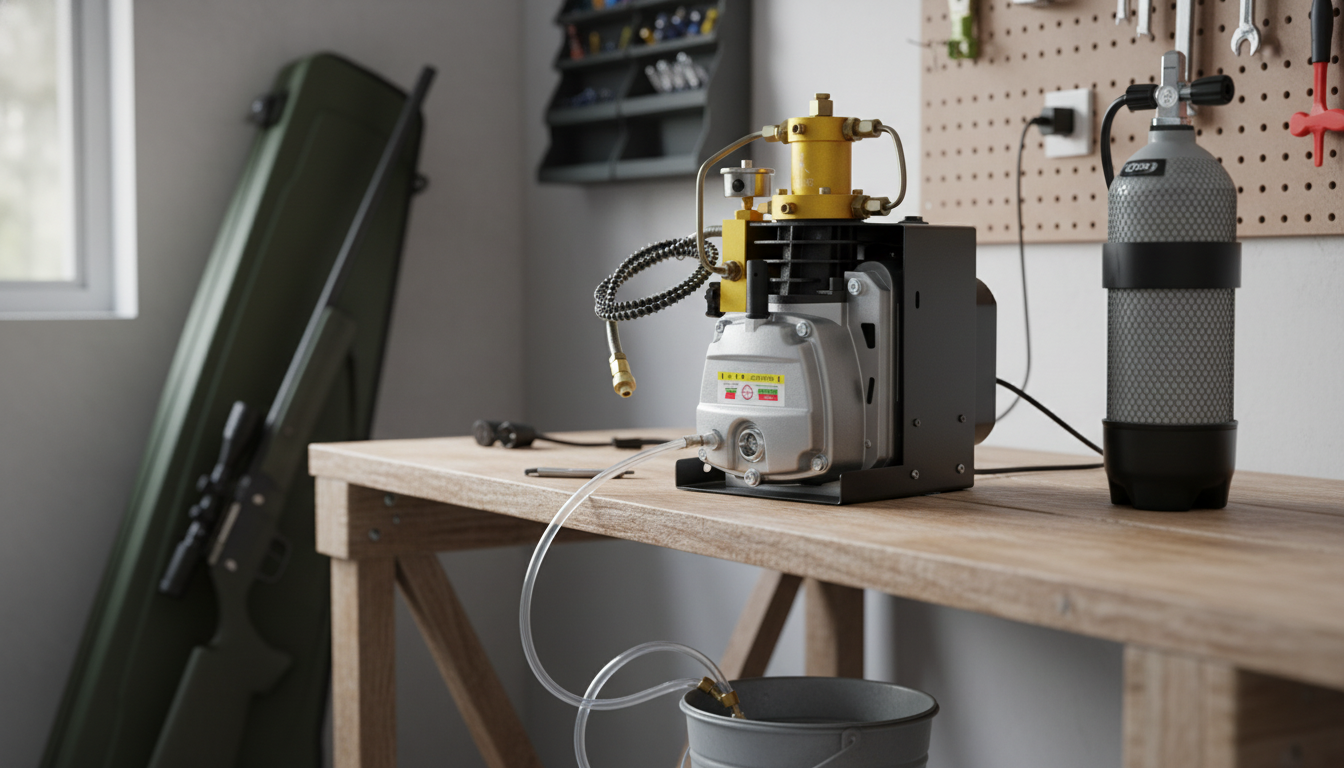
High-Pressure Convenience Without the Shop Run
A portable high-pressure compressor can turn long trips to the dive shop or constant hand-pumping into a faster, more controlled routine. This 4500 PSI unit combines auto-stop and water cooling to help manage heat and pressure while filling PCP airgun cylinders, paintball/HPA tanks, and other high-pressure air storage (with proper fittings and rated equipment).
What This Compressor Is Built to Do
Standard garage inflators are great for car tires, but they aren’t designed for the pressure levels demanded by PCP airguns and many HPA setups. A purpose-built high-pressure compressor focuses on controlled, repeatable fills and the thermal management needed to get there safely.
- Generate high pressure up to 4500 PSI for applications that exceed typical garage/12V tire inflators.
- Support repeatable fills with an auto-stop function to reduce overfill risk and constant monitoring.
- Use water cooling to help manage operating temperature during longer run times or multiple fills.
- Serve as a portable option for owners of PCP airguns, HPA setups, and select scuba-related use cases where appropriate adapters and rated cylinders are used.
Key Features That Matter During High-Pressure Fills
Auto-stop for more controlled top-offs
Auto-stop lets you set a target pressure and have the unit shut off at the threshold. It’s a practical safeguard against “just a little more” overfilling, but final pressure should still be verified with a reliable gauge and kept under the cylinder’s stamped working pressure.
Water cooling to help manage heat buildup
Compressing air to thousands of PSI creates heat—often the biggest limiter during extended fills. Water cooling helps stabilize temperatures, which can support more consistent performance across consecutive fills and reduce stress on internal components when used within the compressor’s duty-cycle guidance.
Portable form factor for range days and home setups
Portability matters when the alternative is hauling multiple tanks for refills or relying on manual hand pumps. A compact, move-with-your-kit design fits well for garage benches, field use, and range trips where a large stationary compressor isn’t practical.
High-pressure headroom up to 4500 PSI
A 4500 PSI ceiling aligns with many PCP reservoirs and common HPA cylinder ranges. Headroom is helpful, but the correct fill target is always the working pressure marked on the cylinder (and the airgun maker’s specified max fill).
Typical Use Cases: PCP Airguns, HPA Tanks, and Scuba Considerations
High-pressure compressors tend to earn their keep when you refill frequently, want consistent pressure before each session, or need a more convenient alternative to trips for fills.
- PCP airguns: Convenient for topping off cylinders and airgun bottles, especially when frequent refills are needed.
- Paintball/HPA cylinders: Useful when paired with the correct fill whip, gauge, and fittings; ensure the tank and hose are rated for the target pressure.
- Scuba: Many scuba cylinders are rated around 3000 PSI (and some higher); compatibility depends on having the correct connector standard (DIN/yoke adapters, etc.) and using equipment rated for breathing-air requirements when applicable.
- Shop/garage tasks: Can support other high-pressure air tasks where safe, compatible hardware is used.
Common Fill Targets and Practical Notes
| Application | Typical Pressure Range | What to Double-Check Before Filling |
|---|---|---|
| PCP airgun cylinder/bottle | 3000–4500 PSI (varies by model) | Cylinder rating, compatible fitting, moisture control/filtration if needed |
| Paintball/HPA tank | 3000 or 4500 PSI (by tank) | Tank type and hydro date, fill nipple condition, rated hose/whip |
| Scuba cylinder (standard) | Often ~3000 PSI (service pressure varies) | Correct valve standard, cylinder rating, and air quality requirements for breathing use |
How to Use It Safely (A Practical Workflow)
- Inspect the cylinder: Confirm the working pressure stamped on the tank/cylinder and ensure it is within the compressor’s intended operating range. Check the hydrostatic test status where applicable (the U.S. DOT overview is a helpful reference: PHMSA cylinder requalification guidance).
- Check fittings and seals: Use the correct adapter for the valve type; examine O-rings and connection surfaces for nicks or wear. A tiny cut can turn into a persistent leak under pressure.
- Set the target pressure: Use auto-stop as a backstop, not a substitute for attention—watch the gauge as pressure rises and stop if anything sounds/feels abnormal.
- Manage heat: Allow cooldown between fills when doing multiple cylinders. Water cooling supports temperature control, but duty cycle still matters, especially in hot garages or summer range days.
- Control moisture: For air storage (especially PCP), consider inline filtration/drying appropriate to the application to help reduce internal corrosion and regulator issues.
For broader cylinder safety practices and handling fundamentals, the Compressed Gas Association is a reputable starting point: CGA safety guidance overview. For scuba cylinder care expectations and inspection culture, consult a recognized training organization (for example: PADI).
What to Look For When Matching a Compressor to Your Tank
Product Snapshot
Shop In-Stock Picks
- High-Pressure 4500PSI Portable Air Compressor with Auto-Stop & Water Cooling – Ideal for PCP Airguns, Scuba, and More
- Crystal Moon & Star Car Vent Clips
FAQ
Can auto-stop prevent overfilling completely?
No—auto-stop is a helpful control feature, but it shouldn’t replace monitoring. Always verify the final pressure on a reliable gauge and never exceed the cylinder’s rated working pressure.
Is 4500 PSI necessary for PCP airguns?
Many PCP systems run anywhere from about 3000 to 4500 PSI depending on the cylinder and platform. The right target is whatever your airgun/cylinder specifies; 4500 PSI capacity mainly provides headroom for higher-pressure systems.
What makes water cooling useful on a portable high-pressure compressor?
Heat is a major byproduct of compressing air to high pressure and can limit how long you can run or how quickly you can do repeated fills. Water cooling helps stabilize operating temperatures so the compressor can perform more consistently when used within its duty-cycle limits.















Leave a comment