Dual-Head Car Fan: Plug-In or Battery, Strong & Quiet
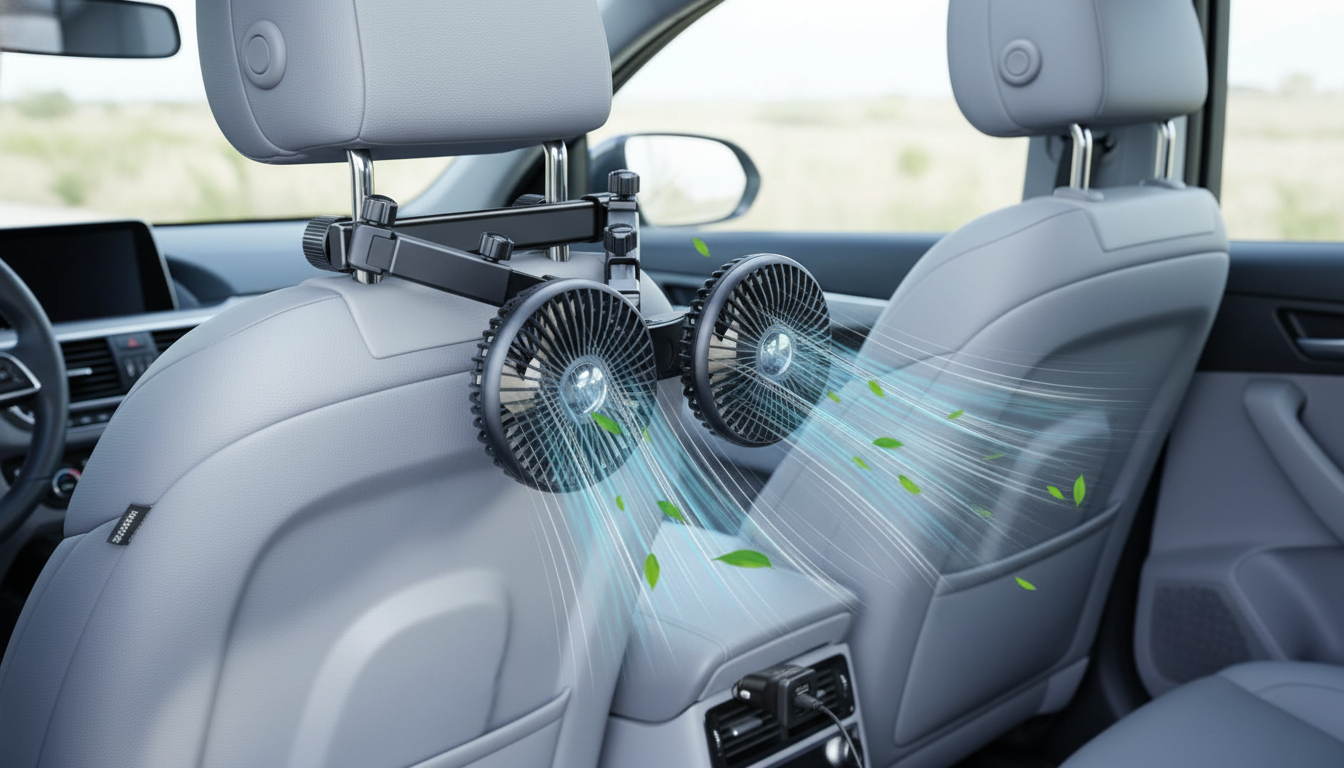
Dual-Head Plug-In or Battery Car Fan with Strong Wind & Quiet Cooling
A hot cabin can make commuting, rideshare shifts, and road trips uncomfortable—especially for back-seat passengers. A dual-head car fan adds targeted airflow where the vehicle’s vents don’t reach well, with the flexibility to run from a plug-in power source or on battery for short stops and parked situations. Instead of trying to “freeze” the whole cabin at once, you can aim cooling exactly where people feel it most—helping everyone ride more comfortably, sooner.
Why a Dual-Head Car Fan Makes a Noticeable Difference
Single fans can help, but dual heads are where you start to feel a real upgrade in day-to-day comfort. With two adjustable fan heads, airflow can be split across seating areas so passengers aren’t competing for the same breeze.
- Directs airflow to two separate zones (front + back seat, driver + passenger, or two kids in the rear).
- Improves perceived cooling faster by moving air across skin, even when the A/C is still catching up.
- Helps reduce “dead spots” in larger cabins, third rows, and vehicles with weaker rear vents.
- Useful year-round: airflow for cooling in summer and circulation to reduce window fogging in damp conditions.
That “feels cooler faster” effect matters: moving air helps sweat evaporate and reduces the stagnant, stuffy feeling that builds up when a vehicle has been sitting in the sun.
Plug-In or Battery: Choosing the Best Power Option for Your Drive
Power flexibility is one of the biggest reasons drivers choose a plug-in or battery car fan. The best choice depends on how long you typically drive, where you want to place the fan, and whether you need airflow when the engine is off.
- Plug-in mode suits longer trips and daily commuting where consistent runtime matters.
- Battery mode is convenient for quick errands, car camping setups, parked breaks, or when moving the fan between vehicles.
- Consider where the fan will be placed: dashboard, headrest area, or center console—power-cable routing should not interfere with pedals, airbags, shifters, or seat rails.
- If the fan is used while the engine is off, keep an eye on vehicle battery health and avoid extended use that could affect starting.
Power options at a glance
| Situation | Plug-In Power | Battery Power |
|---|---|---|
| Daily commute (30–90 minutes) | Best for consistent airflow | Works, but prioritize runtime |
| Long road trip | Recommended | Backup/portable use |
| Parked breaks (short) | May require engine on | Convenient |
| Car camping / tailgating | Depends on available outlet | Useful for flexible placement |
| Moving between vehicles | Cable management needed | Easy to relocate |
Strong Wind Without the Noise: What “Quiet Cooling” Looks Like in Real Use
Strong airflow shouldn’t mean a loud, distracting cabin. “Quiet cooling” is about balance: enough wind to be effective, without creating a constant roar that makes conversation, calls, or music uncomfortable.
- A well-designed car fan balances airflow and sound so conversations, calls, and music remain comfortable.
- Positioning affects noise: aiming the airflow slightly off-center can reduce turbulence while still cooling effectively.
- Two heads allow running one side gentler for a sleeping passenger while keeping stronger airflow for another seat.
- For the quietest feel, keep fan blades/grilles clean; dust buildup can increase vibration and sound over time.
A quick tip that many drivers overlook: if a fan is mounted loosely, even a quiet motor can sound louder due to rattling. A secure mount often “quietens” the setup as much as lowering the speed.
Best Placements and Airflow Tips for Faster Cabin Comfort
Ideal Use Cases: Families, Rideshare, Delivery, and Road Trips
Heat safety matters: even with airflow, parked cars can become dangerously hot quickly. For prevention guidance, see NHTSA’s hot cars heatstroke information and the American Academy of Pediatrics heatstroke prevention tips.
Care, Maintenance, and Everyday Safety
If you’re using any cooling setup during high-heat days, it also helps to know the signs of heat stress; the CDC heat stress guidance provides a clear overview.
Quick Specs Checklist Before Buying
Pre-purchase checklist
| Feature | Why it matters | What to verify |
|---|---|---|
| Dual heads | Targets multiple passengers | Independent angle control |
| Strong airflow | Faster perceived cooling | Multiple speed settings if available |
| Quiet operation | Comfort for calls/sleep | Low vibration, steady mount |
| Plug-in + battery | Flexible use cases | Cable length + battery runtime expectations |
| Safe placement | Avoids hazards | Doesn’t block airbags/pedals/visibility |
In-Stock Picks to Upgrade Cabin Comfort
- Dual-Head Plug-In or Battery Car Fan with Strong Wind & Quiet Cooling ($47.97)
- Crystal Moon & Star Car Vent Clips ($10.51)
- Spring Plaid Wide Padded Headband – Chic Cotton Blend Hair Accessory ($5.97)
FAQ
Can a car fan replace air conditioning?
No. A car fan moves air to improve comfort and help cooled air circulate, but it doesn’t lower cabin temperature the way A/C does. It works best as a supplement—especially for back-seat “dead zones” where vent air doesn’t reach well.
Is it safe to use a car fan while the engine is off?
Battery-powered use is typically the safest option for short periods because it doesn’t draw from the vehicle’s starter battery. If you’re running a fan from the car’s electrical system with the engine off, keep sessions brief and prioritize hot-weather safety since the cabin can heat up quickly.
Where should a dual-head car fan be mounted for back-seat cooling?
Common placements include behind the center console, between the front seats, or near a headrest area so airflow can reach both sides of the rear bench. Aim one head toward the middle and the other toward the far-side passenger or third row, and make sure the mount and cord don’t interfere with airbags or driver controls.















Leave a comment