Manual Truck Tire Mount & Demount Kit (22.5–24.5)
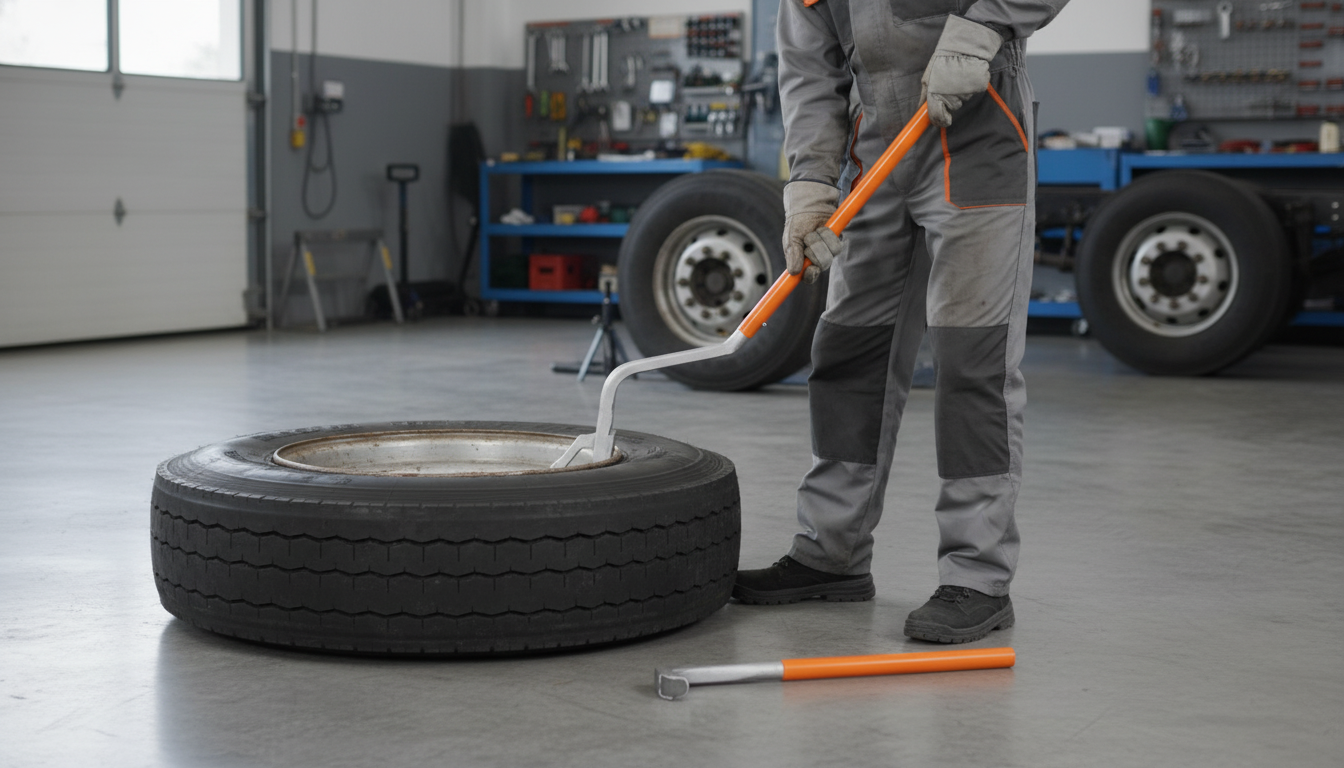
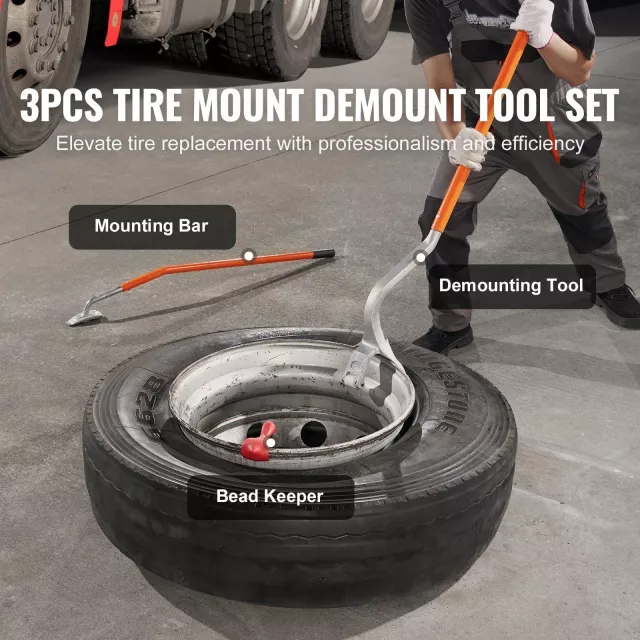
Heavy-Duty Tire Mount & Demount Tool Kit for 22.5″–24.5″ Truck Tires
Mounting and removing large commercial tires takes leverage, control, and the right interfaces to avoid bead damage and wasted time. This heavy-duty kit is built for 22.5″–24.5″ wheels, helping shops and roadside crews handle tough beads with a compact, manual tool set designed for repeat use. When a full tire machine isn’t available (or simply isn’t practical to move), a purpose-built mount/demount kit can help keep work moving—without resorting to improvised pry bars that chew up beads and rim edges.
What This Tool Kit Is Designed To Do
- Supports manual mounting and demounting on common commercial wheel sizes (22.5″–24.5″).
- Helps manage bead movement with controlled leverage to reduce sudden slips.
- Useful for service bays, mobile tire service, fleets, and farm operations running larger trucks or trailers.
- A practical option when a full tire machine is unavailable, impractical, or not portable.
Commercial tire beads can be stubborn, especially after heat cycles, corrosion at the bead seat area, or long intervals between service. The advantage of a dedicated kit is repeatable contact points and a more predictable “step-by-step” approach—working around the rim in small increments instead of forcing the bead in one aggressive motion.
Recommended Products (In Stock)
Fitment and Compatibility Checklist
- Confirm rim diameter range matches the wheel: 22.5″–24.5″.
- Verify the wheel type and bead profile commonly used in your fleet (commercial truck/trailer applications).
- Plan for adequate working space: stable ground, wheel chocks, and access around the tire circumference.
- Pair with appropriate consumables: bead lubricant/soap solution and a valve core tool (if not already in your kit).
Quick Compatibility Reference
| Item to check | What to confirm | Why it matters |
|---|---|---|
| Rim diameter | 22.5″–24.5″ | Tool geometry and leverage points align with commercial wheel sizes |
| Work environment | Flat, stable surface; wheel secured | Improves safety and reduces tool slippage |
| Bead lubrication | Use proper tire lube | Lowers friction and reduces bead/rim scuffing |
| Operator clearance | Room to rotate tools around the wheel | Prevents binding and improves control |
What’s Included and How the Pieces Work Together
- Mount/demount components are designed to guide the bead over the rim edge in steps rather than forcing it all at once.
- Tool shapes are intended to create controlled lift points while keeping contact surfaces predictable.
- A heavy-duty build helps resist bending under the higher loads typical of commercial tire beads.
- Best results come from using the kit as a sequence: prep, break bead as needed, demount, inspect, mount, then inflate following tire manufacturer procedures.
Manual doesn’t have to mean rough. With the right sequence, you’re managing the bead’s path so it follows the rim’s contour. That controlled movement is what helps reduce torn bead bundles, pinched inner liners, and gouged rim flanges—problems that can turn a “quick swap” into an expensive comeback.
Step-by-Step Workflow (Practical Sequence)
- Prepare the wheel: secure the vehicle, remove the wheel assembly if required, and fully deflate (remove valve core).
- Break the bead: as needed using appropriate bead-breaking methods for your setup, then apply bead lubricant around both sides.
- Demount: use the demount tool to lift the first bead over the rim, working around the tire in small increments to maintain control.
- Inspect: check bead condition, rim edge damage, and debris that can cause leaks or tearing.
- Mount: lubricate again, start the bead evenly, then use the mount tool to guide the bead onto the rim gradually.
- Inflate safely: use a clip-on chuck and stand clear; follow applicable tire and wheel safety guidance for seating beads.
Two practical habits make a big difference: keep the bead well-lubricated (reapply when it starts to drag), and commit to small, repeatable bites around the circumference. If the bead starts to fight, forcing a larger section usually increases slip risk and surface damage.
Safety Notes for Commercial Tires
- Always fully deflate before attempting demounting; trapped air can create dangerous rebound.
- Use wheel chocks and a stable work surface to prevent movement during leverage steps.
- Wear eye protection and gloves; bead seating and tool slip are common injury sources.
- If dealing with multi-piece rims or unfamiliar wheel assemblies, follow manufacturer and industry safety procedures before servicing.
For formal guidance on rim wheel servicing and required safe practices in professional environments, review OSHA’s standard for servicing rim wheels: OSHA 29 CFR 1910.177. For broader tire safety best practices, see NHTSA Tire Safety and the Tire Industry Association (TIA) resources.
Who This Kit Fits Best
Care, Storage, and Longevity
FAQ
Will this work on 22.5-inch and 24.5-inch commercial truck tires?
It’s intended for 22.5″–24.5″ rim diameters, which covers many common commercial truck and trailer wheels. Proper technique, adequate lubrication, and having an effective bead-breaking method still play a major role in how smoothly the job goes.
Do bead lubricant and a bead breaker come with the kit?
Bead lubricant and bead-breaking equipment are commonly needed for commercial tires, but they’re often separate items depending on the kit configuration. Plan to have tire lube (or an appropriate soap solution), a valve core tool, and a bead breaker method available for best results.
Is a manual mount/demount kit safe for roadside or mobile use?
It can be safer when used on stable ground with the wheel secured, the tire fully deflated, and the operator wearing proper PPE. If conditions are unstable, visibility is poor, or the wheel type is unfamiliar (especially multi-piece assemblies), it’s safer to defer service to a properly equipped shop or follow formal safety procedures.















Leave a comment