Safe Space Mapping: A Practical Break Plan
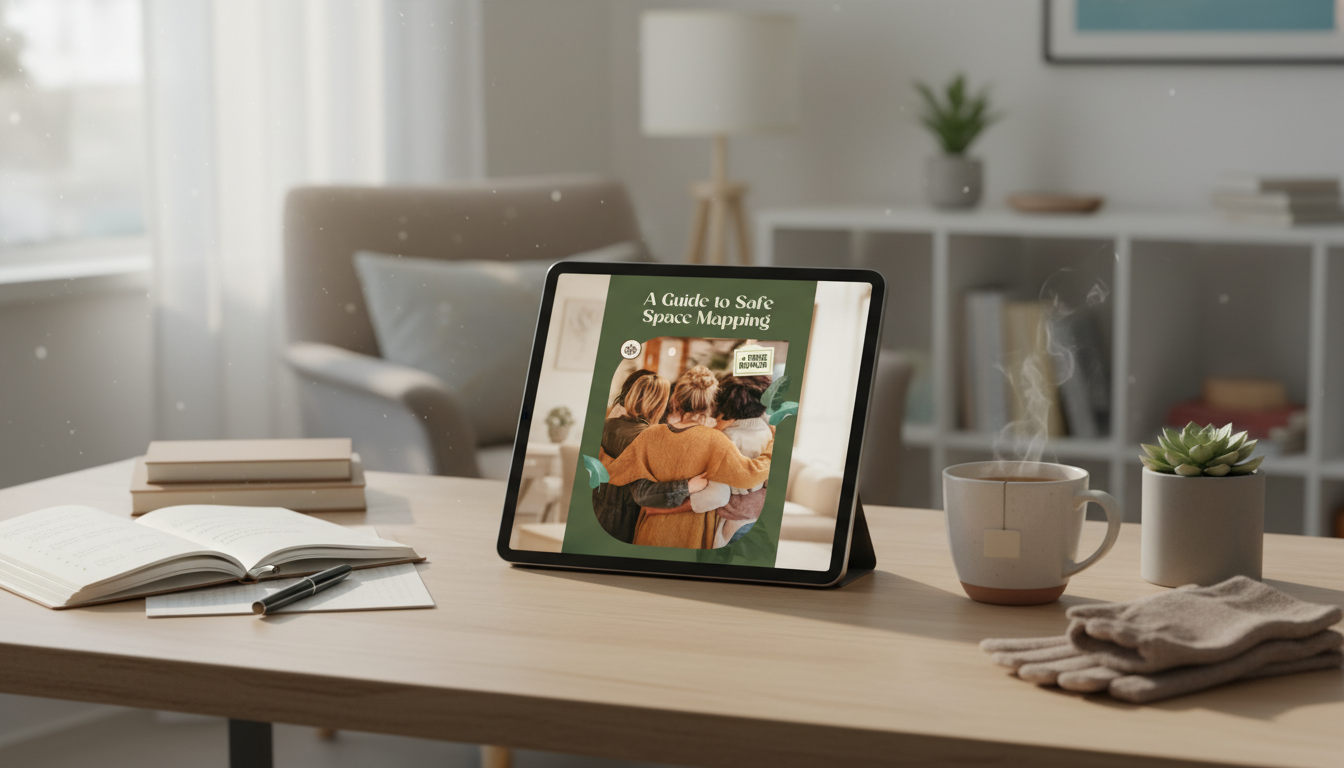
Safe Space Mapping: Turning “I Need a Break” Into a Real Plan
Safe space mapping is a practical way to identify where safety, support, and comfort already exist—and where they need to be strengthened. It helps convert hard-to-name feelings into a clear, usable set of options you can rely on during everyday stress, conflict, or sensory overload. The goal isn’t perfection; it’s having realistic routes back to regulation, dignity, and choice.
What “safe space” means in real life
A safe space is any setting—physical, social, or digital—that lowers risk and supports your ability to stay grounded. “Safety” can mean different things at different times: emotional safety (non-judgment), physical safety (low risk), social safety (belonging), and sensory safety (manageable noise, light, or proximity).
A safe space also isn’t the same as avoiding all discomfort. Life includes challenges, feedback, and hard conversations. A safe space is a recovery point: somewhere you can pause, reduce escalation, and regain capacity so you can return to the situation (or make a thoughtful choice to leave).
Because safety is personal, the same environment can land differently for different people. A quiet room might feel calming and focused to one person, and isolating or “too silent” to another. Mapping works precisely because it makes your patterns visible—without assuming there’s one right answer.
Why mapping matters: patterns, triggers, and recovery routes
When stress is high, the brain tends to speak in absolutes: “I don’t feel safe anywhere,” “Nothing helps,” “I can’t do this.” Mapping gently challenges those statements by collecting specific observations: which places help, which places drain you, and which variables change everything (timing, crowds, a particular person, lighting, or an unclear expectation).
Over time, mapping often reveals “supportive ingredients” you can seek out on purpose—respectful staff, predictable routines, clear exits, a friend who can text back quickly, or a corner seat that reduces sensory load. It can also surface hidden stressors like crowd density, unpredictable interactions, power dynamics, or too many competing noises.
This kind of clarity supports planning: choosing meeting locations that keep conflict lower, building a decompression routine, and reducing the chance that stress turns into shutdown, panic, or explosive arguments. It can be adapted for individuals, families, classrooms, peer groups, and community spaces—so long as consent and privacy are respected.
Core elements to include in a safe space map
A strong safe space map includes more than “where.” It also tracks “who,” “how,” and “what gets in the way.” Consider capturing:
- Locations: home zones, public places, nature spots, workplaces, learning spaces, transit stops, community centers.
- People: who increases safety, who increases risk, who is neutral, and how to contact supportive people quickly.
- Activities and tools: grounding exercises, music, movement, journaling, hydration/snacks, sensory items, prayer/meditation.
- Boundaries: what’s okay, what’s not okay, and what needs negotiation (time limits, topics, touch, privacy).
- Access and barriers: cost, transportation, opening hours, mobility needs, language, confidentiality concerns.
- Signals and early warnings: body cues and thoughts that indicate it’s time to shift to a safer option.
Safe space map checklist
| Map element | What to note | Example |
|---|---|---|
| Place | Where it is and when it’s available | Library reading room, weekdays 10–6 |
| People | Who can help and how to reach them | Friend on text; counselor during office hours |
| Boundaries | Rules that protect wellbeing | No discussing sensitive topics after 9 p.m. |
| Sensory factors | Noise, light, crowding, smells | Low light, quiet corner, predictable foot traffic |
| Exit plan | How to leave quickly and safely | Park near exit; rideshare backup; code word |
| Aftercare | How to recover after a tough moment | Tea + shower + 10-minute breathing exercise |
How to create a safe space map step by step
Keep your first version simple. A map that exists is more useful than a perfect map that never gets finished.
For trauma-informed framing and why safety, choice, and empowerment matter, SAMHSA’s guidance on trauma-informed care is a helpful reference: SAMHSA TIP 57.
Using safe spaces during stress, conflict, or overload
For additional coping strategies during traumatic stress, see: APA: How to cope with traumatic stress. For broader context on mental health and prevention, the WHO overview is also useful: WHO: Mental health—strengthening our response.
Creating safer shared spaces: consent, inclusion, and clear expectations
Recommended tools and resources (in stock)
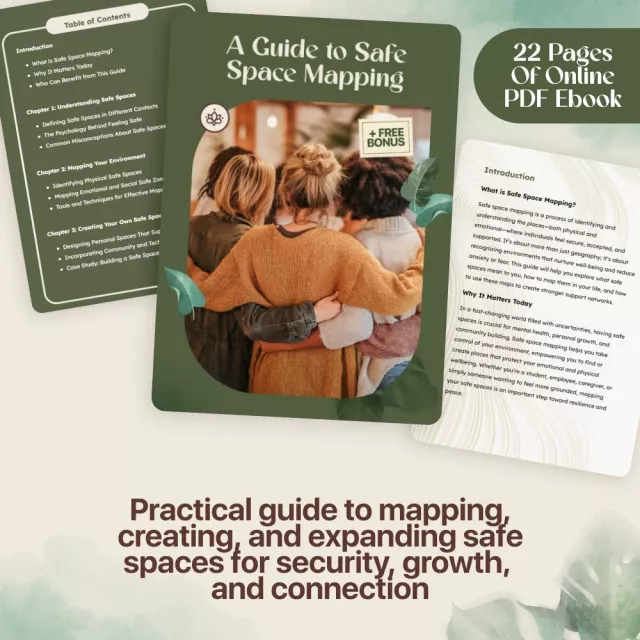
If you want a structured, printable approach to mapping, this downloadable resource keeps everything in one place: A Guide to Safe Space Mapping (Digital Ebook) ($16.99).
Small comfort cues can also help signal “reset time” in everyday settings. A few simple add-ons that some people like for routines and transitions include Crystal Moon & Star Car Vent Clips (a visual anchor during commutes) and Retro Corduroy Hair Scrunchies & Headbands (a quick, tactile “bridge” item for stepping away and regrouping).
FAQ
What is safe space mapping?
Safe space mapping is a structured way to identify the places, people, boundaries, and tools that help you feel more stable and less overwhelmed. It supports planning by showing what reliably helps, what triggers stress, and which “next-best” options you can use when your first choice isn’t available.
Can a safe space be online or digital?
Yes—digital safe spaces can include moderated communities, a curated social feed, a private chat with clear boundaries, or a playlist/app that helps you regulate. Since privacy and harassment risks are real online, it helps to set time limits, tighten security settings, and have an exit plan if a space becomes activating.
How often should a safe space map be updated?
Review it monthly or after major life changes like a move, schedule shift, new job, or relationship changes. Your ratings can change based on health, stress level, who’s present, and practical access like transportation or opening hours.














Leave a comment