Wooden Plate Storage Rack: Space-Smart Kitchen Organizer
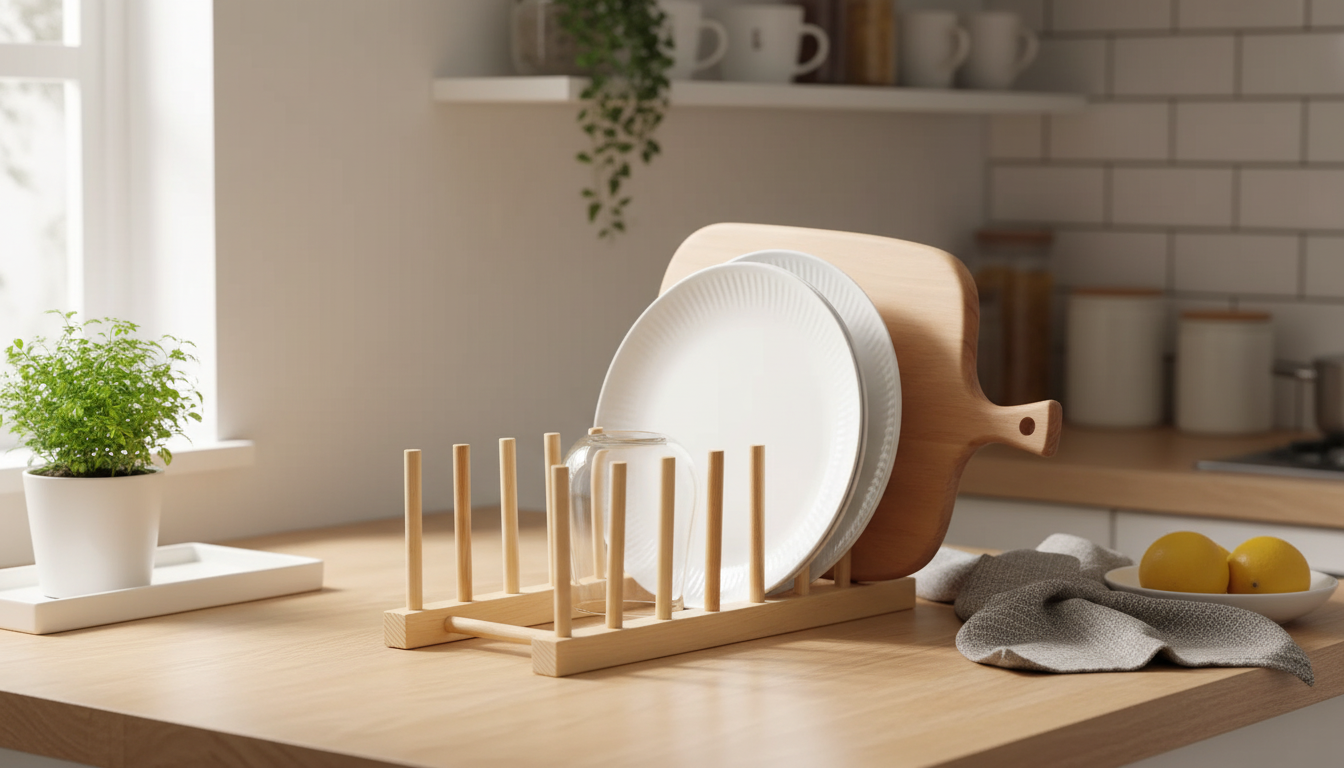
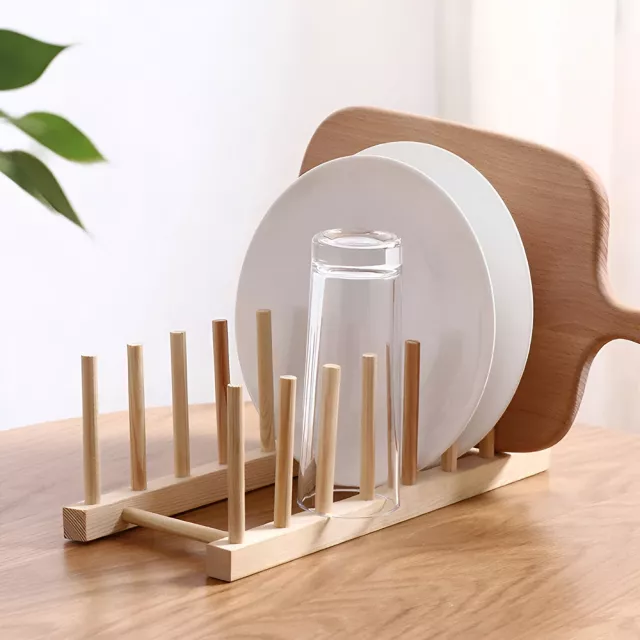
Multifunctional Wooden Plate Storage Rack for a Tidy, Space-Smart Kitchen
A compact wooden rack can turn crowded cabinets and messy countertops into an organized zone for plates, lids, cutting boards, and serving pieces. When items stand upright instead of being stacked in unstable piles, they’re easier to see, faster to grab, and less likely to chip from friction and weight. Below are practical ways to use a wooden plate storage rack, small-space placement ideas, stability tips, and simple care routines that keep it clean and kitchen-ready.
What a wooden plate storage rack helps organize
A well-designed rack acts like a set of vertical “parking spaces” for the items that usually cause cabinet chaos. Because each piece has its own slot, you can pull out exactly what you need without shifting everything else.
- Dinner plates and side plates stored upright to reduce stacking weight and help limit chips along the rim.
- Cutting boards, baking sheets, and trays separated so they slide out without an avalanche of cookware behind them.
- Pot lids and pan lids grouped by size for faster grab-and-go cooking (and fewer mismatched “where’s the lid?” moments).
- Serving platters and baking dishes kept visible, so special pieces don’t disappear into the back of a deep cabinet.
Multifunctional use cases around the kitchen
The beauty of a wooden rack is that it’s flexible: it can live in a cabinet, on a counter, or near a baking station—wherever vertical organization solves your biggest daily bottleneck.
- Inside cabinets: Create vertical zones so plates and boards don’t lean into each other and scrape while you pull them out.
- On countertops: Keep everyday plates and boards near prep areas without overstuffing drawers.
- Near the sink or drying area: Stage clean items briefly before putting them away (avoid leaving wet items long-term on wood).
- Pantry or baking station: Organize sheet pans, muffin tins, and cooling racks by frequency of use.
Common items to store and practical placement
| Item | Best placement | Why it works |
|---|---|---|
| Plates | Cabinet shelf or countertop corner | Vertical storage reduces chipping and makes sizes easy to see |
| Cutting boards | Countertop near prep zone | Faster access and less cabinet digging |
| Pot lids | Lower cabinet near stove | Keeps matching lids together and speeds up cooking |
| Serving platters | Upper cabinet shelf | Prevents heavy stacking and makes entertaining pieces easier to find |
| Baking sheets/trays | Pantry or baking cabinet | Stops warping and keeps edges from scratching |
Where it fits best (small-space friendly layout ideas)
In tighter kitchens, the goal is to reduce “dead space” while keeping the items you use most within easy reach. A rack makes a standard shelf work harder by using vertical clearance you already have.
- Measure first: Check shelf height and depth before choosing a spot, and allow clearance for lifting plates straight up without scraping the cabinet frame.
- Follow the “most-used at hand” rule: Keep everyday plates and boards at waist-to-chest height; store occasional platters higher up.
- Leave airflow: A small gap between the rack and cabinet wall helps moisture dissipate, especially if items might be slightly damp.
- Group by task: Prep zone (boards near knives), cooking zone (lids near the stove), serving zone (platters near dining items).
Wood benefits and what to watch for
Wooden organizers have a warm, clean look that fits modern, farmhouse, and minimalist kitchens—and they can be gentler on dish edges than some hard metal dividers.
- Less clatter, fewer chips: Wood can cushion contact points and reduce the harsh “clang” that happens when plates bump metal.
- Counter-friendly appearance: On open shelving or a countertop corner, wood reads more like décor than hardware.
- Keep away from standing water: If the rack gets splashed, wipe and dry it soon after.
- Skip soaking and dishwashers: A damp-cloth clean is typically safer to help prevent swelling, warping, or finish damage.
For a practical baseline, standard kitchen hygiene guidance emphasizes cleaning and drying surfaces regularly—see USDA FSIS kitchen cleaning guidance and the CDC’s food safety resources.
Stability, safety, and daily-use tips
A rack should feel secure during the most demanding moment: when you pull out one plate with one hand while holding a pot or towel in the other. A few small adjustments make a big difference.
- Load heavy items low and centered: Put larger dinner plates, thick boards, or heavy platters in lower slots or near the middle to reduce tipping risk.
- Add grip when needed: If your shelf is slick, place a thin non-slip liner under the rack to reduce shifting.
- Avoid overpacking: If items are too tight, edges can knock together and chip. Aim for easy in-and-out movement.
- Front-load the frequent picks: Keep daily plates and your primary cutting board toward the front to reduce scraping on cabinet frames.
Care and cleaning for long-lasting use
Wood organizers stay looking fresh with simple, consistent care—no complicated routines required.
A simple way to set it up in 5 minutes
Shop organization favorites
- Multifunctional Wooden Plate Storage Rack for Kitchen
- Crystal Moon & Star Car Vent Clips
- Retro Corduroy Hair Scrunchies & Headbands – Large, Soft & Stylish
FAQ
Can a wooden rack be used for pot lids and cutting boards?
Yes—upright slots work well for flat, rigid items like lids and boards. Keep weight balanced so the rack stays stable, and avoid leaving wet items sitting against wood for long periods.
How should a wooden rack be cleaned in a kitchen?
Wipe it with a damp cloth and mild soap when needed, then dry it right away. Avoid soaking or running it through a dishwasher to help prevent warping or finish damage.
Will storing plates vertically reduce chipping?
Often, yes—vertical separation reduces rubbing from stacked weight and makes it easier to lift one plate without dragging others. Leaving a little space between pieces also helps prevent edge-to-edge contact.













Leave a comment