Tapered-Tail Pet Detangling Comb for Mat-Free Coats

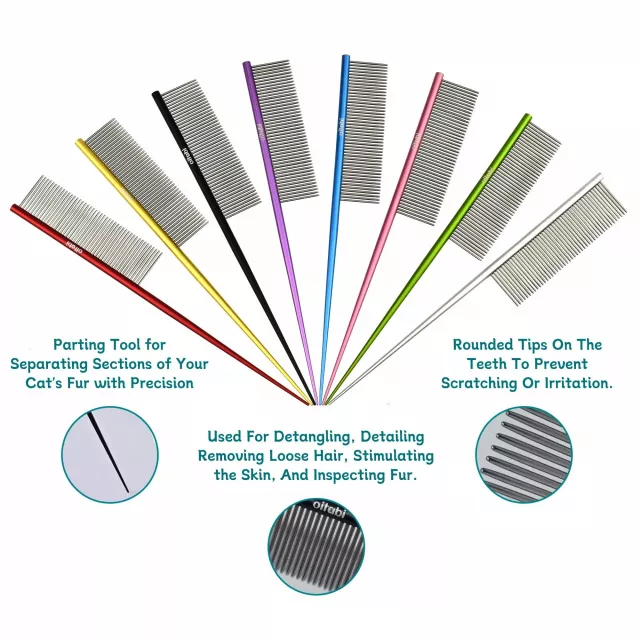
Professional Pet Detangling Comb with Tapered Tail: Smoother Coats for Dogs and Cats
Tangles and mats can pull at the skin, trap dirt, and make grooming stressful for both pets and owners. A detangling comb designed for pets helps separate knots more gently, while a tapered tail can make it easier to part fur, lift sections, and target problem areas without losing control of the tool. With the right technique and a little consistency, a comb like this can keep coats softer, cleaner, and easier to manage between baths and professional appointments. For more guidance, see 7th World Congress for Hair Research Abstracts.
What a detangling comb with a tapered tail does differently
A tapered-tail detangling comb is built for control: it helps you work through small snags methodically and section the coat so you can reach what’s happening beneath the top layer. For further reading, see [PDF] The Complete Poodle Clipping And Grooming Book.
- Separates and loosens knots in small steps instead of ripping through the coat.
- Helps reduce tugging when used with short, controlled strokes from the ends of the hair toward the base.
- Tapered tail helps part fur cleanly to reach the undercoat and isolate mats.
- Useful for grooming around tricky areas like behind ears, under collars/harnesses, armpits, and the base of the tail.
- Supports neat finishing work: creating straight parts for trimming, spotting uneven sections, and checking skin.
For general grooming guidance and handling tips, reputable references like the American Kennel Club and the ASPCA emphasize gentle, regular coat care and watching for discomfort—both especially important when detangling.
Best use cases by coat type and common problem spots
Different coats knot for different reasons. The tapered tail is most helpful when friction and undercoat buildup hide tangles close to the skin.
- Long or medium coats: daily or every-other-day line-combing to prevent mats from forming close to the skin.
- Double coats: parting layers to check for compacted undercoat and shed buildup before it turns into tangles.
- Curly/woolly coats: detangling after light misting/conditioning spray, working in sections to avoid breakage.
- Cats with fine fur: gentle detangling on friction areas (belly, armpits, chest) using minimal pressure.
- High-friction zones to watch: behind ears, under the chin, inner thighs, tail base, and where clothing rubs.
| Coat/Scenario | How to use the comb | Extra tip |
|---|---|---|
| Light tangles on long hair | Hold fur near the skin, comb from the ends upward in short strokes | Use a detangling spray to add slip |
| Small mats starting near the skin | Use the tapered tail to part around the mat and work the edges first | Stop if skin pulls; switch to fingers + spray, then resume |
| Dense undercoat buildup | Part fur into lines and comb each line from skin outward | Finish with a slicker or deshedding tool if appropriate |
| Sensitive areas (ears, armpits) | Use very small sections and minimal pressure | Reward breaks; keep sessions short |
| Post-bath coat check | Comb after drying to find hidden tangles | Avoid combing wet hair aggressively to reduce breakage |
How to use a tapered-tail detangling comb safely (step-by-step)
1) Prep the coat for less pulling
Use your fingers to remove debris (twigs, burrs) first. Lightly mist with a pet-safe detangler or conditioner spray so the comb glides instead of grabbing.
2) Support the hair at the base
Place a hand between the comb and the skin, holding the fur close to where you’re working. This “anchors” the coat and reduces the sensation of tugging.
3) Start with the outer coat, then section down
Begin where the coat is easiest and most open. Once the top layer is smoother, use the tapered tail to part a clean line down to the undercoat so you can check what’s hiding beneath.
4) Line-comb in narrow sections
Work a thin line at a time: comb from ends to roots, then move to the next line. Small sections are especially important for dense coats because it prevents you from “skimming” over mats near the skin.
5) For knots, work edges first
Use short strokes to pick at the perimeter of a knot. Avoid driving the comb directly into the center of a tight mat—this increases pulling and can irritate skin.
6) Watch the skin and your pet’s signals
7) Finish and re-check with the tapered tail
Daily grooming routine ideas for dogs and cats
Care, cleaning, and storage
When a comb isn’t enough
Product picks for easier at-home grooming
- Professional Pet Detangling Comb for Dogs & Cats with Tapered Tail ($2.51): designed for controlled detangling and precise parting for spot checks and line-combing.
- Spring Plaid Wide Padded Headband – Chic Cotton Blend Hair Accessory ($5.97): helps keep long hair back during brushing and bathing so you can focus on steady, gentle technique.
- Retro Corduroy Hair Scrunchies & Headbands – Large, Soft & Stylish ($5.51): handy for quick tie-backs during short grooming sessions and cleanup.
FAQ
Is a detangling comb safe for cats with fine or short fur?
Yes, when used gently. Focus on friction areas, use minimal pressure, consider a light detangling spray for slip, and stop if your cat shows discomfort or you notice skin irritation.
How do mats differ from tangles, and when is professional help needed?
Tangles are usually looser and can be worked out in sections, while mats are compacted and often sit close to the skin. If a mat is tight, painful, or the skin looks irritated, a groomer or veterinarian is safer than pulling.
Should the coat be combed wet or dry?
Lightly dampening with a pet-safe detangler can reduce snagging, but aggressive combing on soaking-wet hair can increase breakage. Drying first and then line-combing is often more comfortable and controlled.















Leave a comment