29W USB‑C to Lightning Cable: Faster iPhone Charging
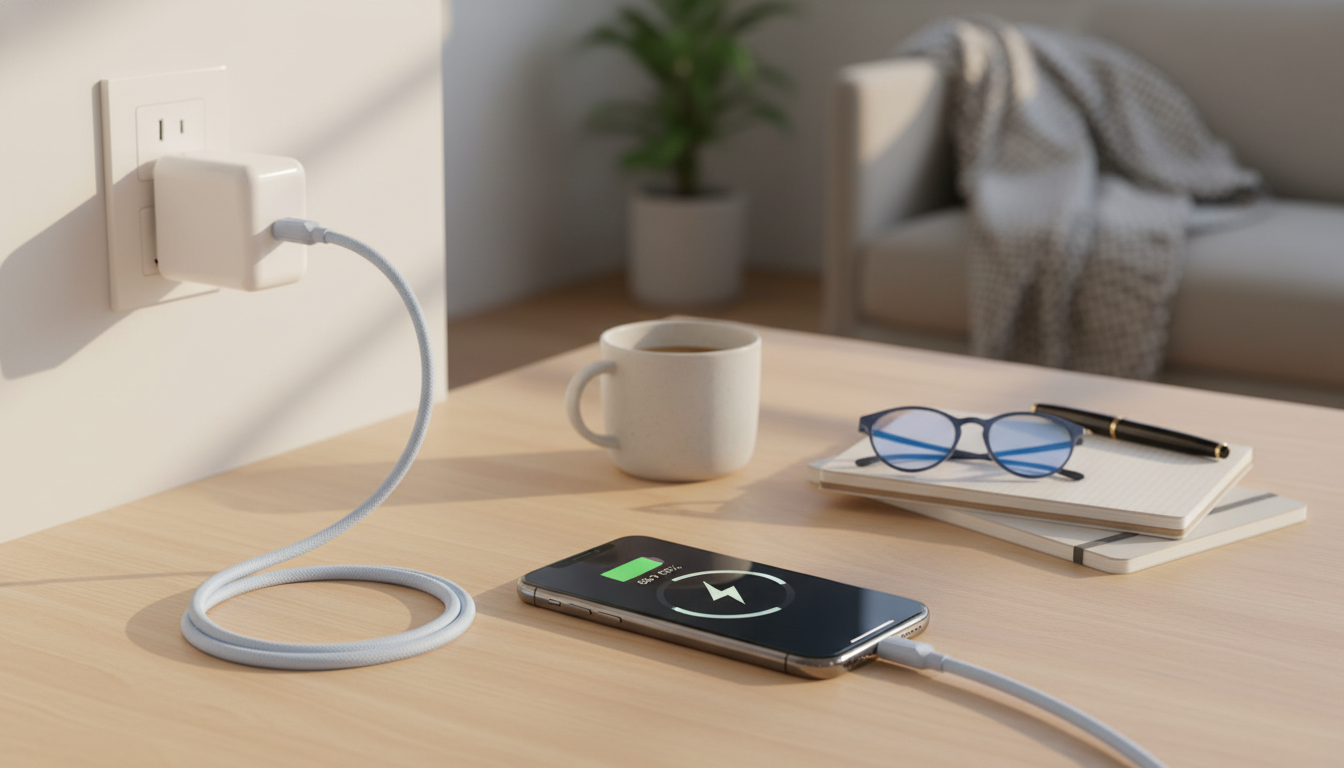
29W Type‑C to Lightning Cable for Faster iPhone Charging
A Type‑C to Lightning cable is the simplest way to pair modern USB‑C chargers with Lightning devices for quicker top-ups and fewer charging bottlenecks. This 29W-rated option is built for everyday charging at home, at a desk, or on the go, while still supporting syncing when connected to a compatible USB‑C port.
What This Cable Is Designed For
USB‑C has become the default on many wall chargers, power banks, laptops, and newer vehicle ports—while plenty of iPhones and accessories still rely on Lightning. A Type‑C to Lightning cable bridges that gap cleanly, without adapters and without juggling older USB‑A bricks.
- Connects a USB‑C power source to a Lightning device for convenient charging and everyday use.
- Helps take advantage of higher-watt USB‑C adapters and power banks where supported by the device.
- Practical upgrade for households shifting to USB‑C chargers while keeping Lightning devices in rotation.
- Useful as a spare cable for travel kits, office drawers, and car charging setups that have USB‑C ports.
Fast Charging Basics (Without the Guesswork)
“Fast charging” isn’t a single feature controlled by the cable alone. It’s the combined result of your iPhone model, the charger’s capabilities, and the connection between them. The good news: USB‑C Power Delivery (PD) standards are designed to negotiate safe power automatically.
- Charging speed depends on the device, the USB‑C power adapter (or power bank), and the cable working together.
- A higher watt rating on a cable does not force extra power into a device; compatible devices negotiate what they can safely accept.
- For iPhone fast charging, a USB‑C Power Delivery (PD) charger is typically required; the device draws only what it supports.
- If charging seems slow, common causes include a low-watt charger, non-PD USB‑C ports, background phone activity, or worn connectors.
For Apple’s guidance on iPhone fast charging, see Apple Support: Fast charge your iPhone. For the underlying standard used by many modern chargers, visit USB-IF: USB Power Delivery.
Compatibility and Key Specs at a Glance
This cable is intended for Lightning devices that charge via Lightning and for USB‑C power sources that can provide stable output. It’s a straightforward way to use newer chargers across older and current gear without changing your routine.
- Works with USB‑C wall chargers, car chargers, power banks, laptops, and USB‑C hubs that provide power output.
- Intended for Lightning devices such as iPhone models with Lightning ports and many Lightning-accessory ecosystems.
- Also supports connecting to a USB‑C computer port for charging and syncing where permitted by the device and computer.
- Best results come from pairing with a reputable USB‑C PD charger and a healthy device battery.
Cable Overview
| Feature | Details | Why it matters |
|---|---|---|
| Power rating | Up to 29W (with compatible USB‑C charger and device) | Enables higher-power charging scenarios when the device supports it |
| Connector (power side) | USB‑C | Matches modern chargers, laptops, hubs, and newer car ports |
| Connector (device side) | Lightning | Fits Lightning iPhones and other Lightning devices |
| Charging support | Charging through compatible USB‑C power sources | Simple plug-and-charge across many USB‑C setups |
| Data use | Charging and syncing when connected to a compatible USB‑C port | Convenient for backups, file transfer, and device management |
| Everyday use case | Home, office, travel, and car | A reliable spare cable prevents downtime when the main cable is unavailable |
How to Get the Best Charging Speed
Small setup tweaks make a big difference. If the goal is the fastest practical top-up, focus on the charger first, then the connection quality, then what your phone is doing while it’s plugged in.
- Use a USB‑C PD wall charger or power bank from a reputable brand; low-quality adapters can limit output or overheat.
- Plug directly into the charger or power bank when possible; some hubs or monitors provide limited power output.
- Keep connectors clean: lint in the Lightning port can prevent full insertion and cause intermittent charging.
- Avoid charging under heavy load (gaming, navigation, hotspot) if the goal is to recharge quickly.
- If using a car charger, confirm the USB‑C port supports PD output rather than basic 5V charging only.
Care Tips That Help a Cable Last Longer
Most cable failures come from stress near the connector or repeated sharp bends. A few habits help maintain a snug connection and stable charging over time.
- Unplug by the connector housing rather than pulling the cable to reduce stress on the strain relief.
- Use gentle bends and avoid tight wraps; sharp kinks can damage internal conductors over time.
- Keep the cable dry and away from high-heat zones (dashboard sun exposure, heaters) that accelerate wear.
- If charging becomes inconsistent, try another USB‑C power source first to isolate whether the issue is the adapter, port, or cable.
When a Type‑C to Lightning Cable Is the Right Choice
In-Stock Picks
- 29W Fast Charging Type‑C to Lightning Cable ($7.01)
- Crystal Moon & Star Car Vent Clips ($10.51) — a simple way to dress up the dash while keeping a clean, organized car setup.
FAQ
Will this cable fast charge any iPhone?
Fast charging depends on the iPhone model and using a compatible USB‑C PD charger; the cable enables the connection, but the device controls how much power it accepts.
Do you need a special wall charger for faster charging?
A USB‑C Power Delivery wall charger (or PD power bank) is typically needed to reach faster charging behavior; basic USB‑C ports may charge at standard rates.
Can it be used for syncing to a computer?
Yes when connected to a compatible USB‑C computer port; syncing behavior also depends on the device and operating system permissions.















Leave a comment