2.5-Inch Retractable Workbench Casters (360° Swivel)
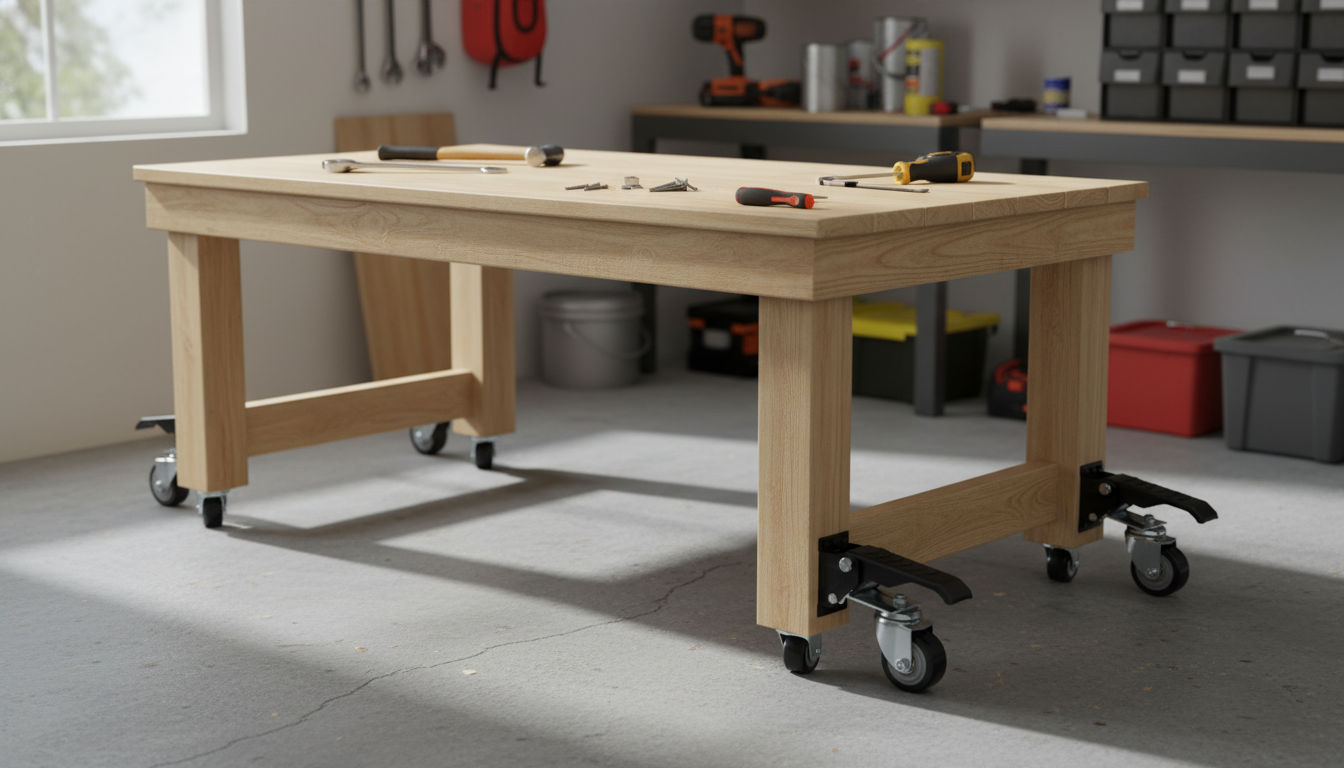
2.5″ Retractable Workbench Caster Wheels Set with 360° Swivel
A retractable caster set makes a heavy workbench easy to reposition without giving up the solid, planted feel needed for sanding, planing, or assembly. With a foot-operated lift-and-roll design and full swivel wheels, this set is built for small shops and garages where the layout needs to change quickly.
What retractable casters change in a workshop
A bench that’s stable enough for hand tools is usually the same bench that’s annoying to move. Retractable casters solve that tradeoff by letting you roll only when you want to—then rest the bench back down on its legs for day-to-day work.
- Move a workbench out of the way for parking, cleanup, or larger projects, then drop it back onto its feet for stability.
- Help avoid dragging legs across concrete or catching on cracks and seams.
- Make it easier to access outlets, wall storage, and back-of-bench clamps.
- Useful for multipurpose spaces where tools share floor area.
If you’re reconfiguring a garage shop frequently, a retractable system tends to feel more “bench-like” than leaving a bench on constant casters, because the load transfers back to the legs when parked.
Design highlights to look for
Retractable caster kits aren’t all the same. A few details determine whether your bench moves effortlessly—or fights you every inch.
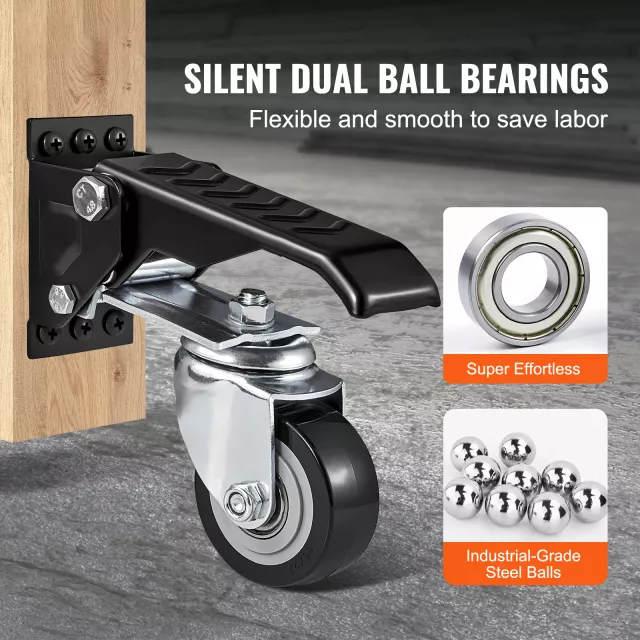
- Retractable lift mechanism: Wheels engage only when needed, allowing the bench to rest on its legs when parked.
- 360° swivel: Improves maneuverability in tight spaces and around other tools.
- Wheel size: A 2.5″ diameter favors smooth rolling on relatively clean, hard floors.
- Mounting hardware fit: Confirm the bracket shape and hole pattern work with the bench frame or legs.
- Foot leverage: A longer pedal/lever typically reduces effort when lifting a loaded bench.
For most home shops, 2.5-inch wheels are a practical middle ground: compact enough to mount neatly on bench legs, but still large enough to roll well when the floor is swept and clear.
Quick specs and buying checklist
Before ordering, take a few fast measurements and do a quick “interference check” so the pedals and brackets won’t collide with stretchers, shelves, or drawer faces.
- Measure leg thickness and clearance under stretchers/aprons.
- Confirm there is room for the lever to swing without hitting shelves or cabinet faces.
- Plan the wheel contact point so the bench lifts evenly and doesn’t rack.
- Match fasteners to bench material (solid wood vs. steel) and consider washers/lock nuts where possible.
At-a-glance details
| Detail | Value |
|---|---|
| Product | 2.5″ Retractable Workbench Caster Wheels Set with 360° Swivel |
| Wheel diameter | 2.5 in |
| Swivel | 360° |
| Type | Retractable / lift-and-roll style |
| Availability | In stock |
| Price | $35.51 |
For a ready-to-ship option, see the 2.5″ Retractable Workbench Caster Wheels Set with 360° Swivel.
Installation notes for a stable, square bench
A good install is less about brute force and more about keeping everything aligned. Small differences corner-to-corner can show up later as a bench that lifts unevenly or rocks when parked.
- Empty drawers and remove heavy items before installation to reduce strain and improve alignment.
- Mock-position each bracket with clamps or tape, then test pedal travel and wheel clearance.
- Install as a matched set: keep offsets consistent so the bench lifts evenly on all corners.
- Tighten fasteners progressively and re-check for wobble; a small twist during mounting can create rocking.
- After mounting, engage/disengage the retract mechanism several times to confirm smooth action and consistent lift height.
Tip: If your bench has a lower shelf, check that the pedal can fully travel without your shoe hitting the shelf edge. A slightly adjusted bracket position can make the mechanism much easier to use.
Using retractable casters day to day
Retractable casters are most satisfying when you treat “rolling mode” as a temporary state. Park the bench on its legs for the work that demands accuracy and zero bounce.
- Engage the wheels only when moving; park the bench back on its legs before precision work.
- Push from a low, sturdy point on the bench to reduce tipping risk when crossing seams or debris.
- Move slowly over cords, thresholds, and expansion joints; clear the path first.
- If the bench feels “springy” while rolling, check that all retract mechanisms are fully engaged and level.
General shop safety guidance (including tool and work area practices) is available from OSHA’s Hand and Power Tools resource.
Floor, load, and safety considerations
How well any caster rolls comes down to floor condition, load, and how abruptly you try to steer. A few habits go a long way toward smoother movement and fewer surprises.
If you’re comparing caster hardware or materials, ASTM’s standards search is a useful starting point for understanding how industrial components are commonly specified and tested.
Maintenance and troubleshooting
In-stock picks
- 2.5″ Retractable Workbench Caster Wheels Set with 360° Swivel ($35.51)
- Spring Plaid Wide Padded Headband – Chic Cotton Blend Hair Accessory ($5.97)
- Crystal Moon & Star Car Vent Clips ($10.51)
FAQ
Do retractable casters keep a workbench stable for hand-tool work?
Yes—when retracted, this style is designed to let the bench rest on its legs rather than on wheels. Stability depends on correct mounting height and making sure all corners contact the floor evenly.
Will 2.5-inch wheels roll well on a garage floor?
They roll best on smooth, clean concrete; cracks, cords, and debris increase rolling effort. Sweep the path first and move slowly over seams, and consider larger wheels if your floor is especially rough.
Where should the brackets be mounted on the bench legs?
Mount each bracket consistently at all four corners so the bench lifts evenly and the pedals have full travel. Check for interference with stretchers, shelves, and drawer faces before drilling.















Leave a comment