29-Piece Bolt Extractor Set: Cr-Mo, 6mm–3/4in
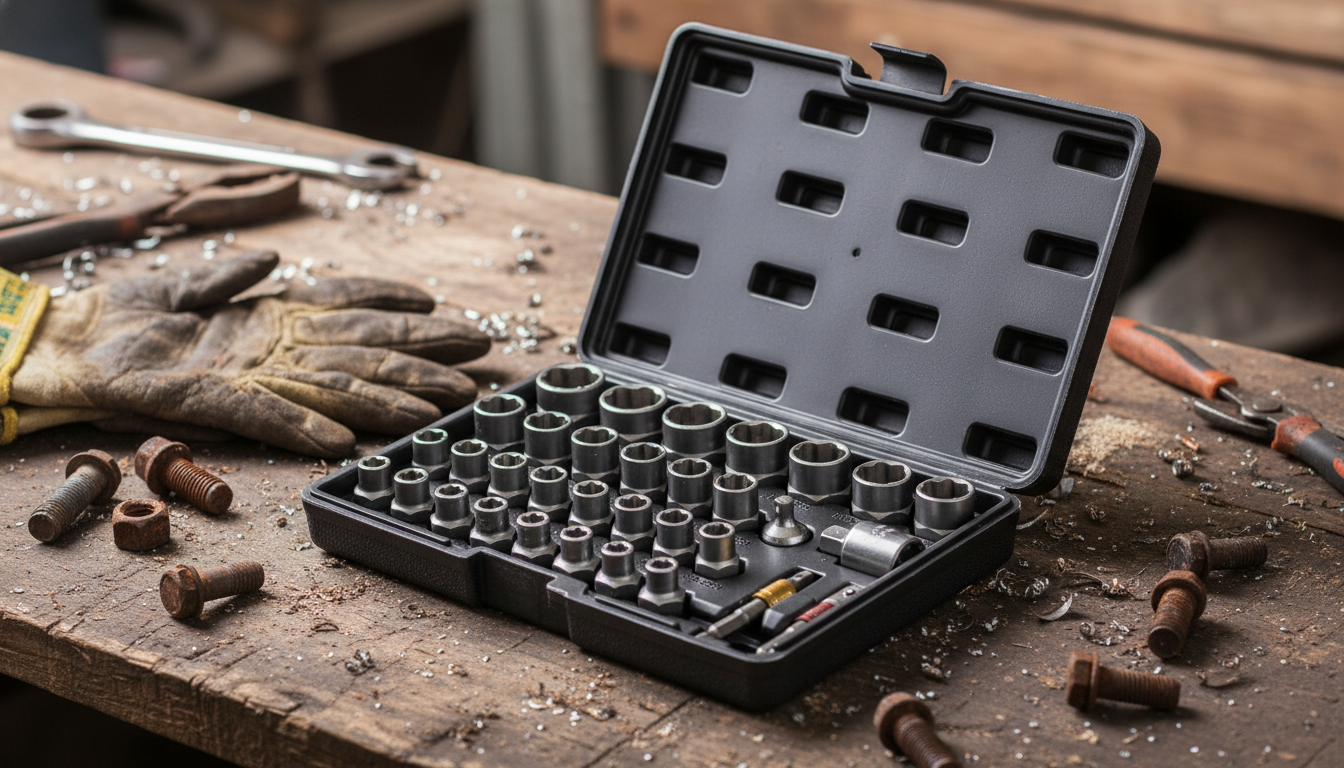
29-Piece Bolt Extractor & Nut Remover Set (Cr-Mo Steel) — 6mm to 3/4″
Rounded bolt heads and seized nuts can stop a repair cold—especially after a standard socket slips, polishes the corners, and turns a manageable job into a headache. A dedicated bolt extractor set is made for these moments: extractor-style sockets use aggressive, reverse-spiral flutes that bite into damaged fasteners and tighten their grip as you apply torque. This 29-piece kit covers common metric and SAE sizes from 6mm to 3/4″, giving you a practical range for automotive work, home repairs, equipment maintenance, and shop tasks where hardware is often rusted, painted over, or previously abused.
What this set is designed to solve
- Removes rounded, rusted, painted-over, or partially stripped hex nuts and bolt heads
- Helps when standard 6-point or 12-point sockets cam out and slip
- Useful for wheel lugs, exhaust and suspension hardware, mower and small-engine bolts, and general maintenance fasteners
- Works as a corrective tool after an impact gun or wrong-size socket has damaged the head
Key features that affect performance
- Reverse-spiral flutes: The flutes bite harder as torque increases, helping the socket “lock” onto rounded flats instead of skating over them.
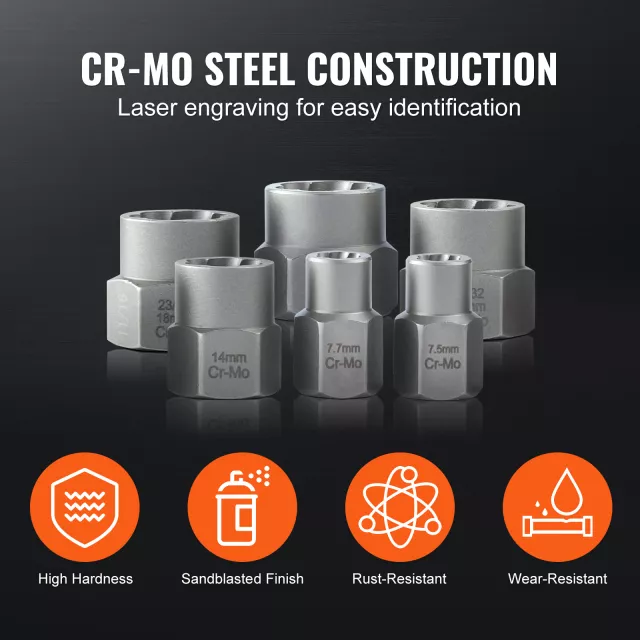
- Cr-Mo (chromoly) steel construction: Built to support demanding, high-torque situations and resist deformation when a fastener finally breaks loose.
- Wide size coverage (6mm to 3/4″): A single kit can handle common metric and SAE hardware, reducing downtime when you’re not sure what size you’re dealing with.
- Less reliance on destructive methods: In many cases, extractor sockets can reduce the need for heat, cutting, or welding—especially on accessible fastener heads.
- Compatible with common drive tools: Intended for ratchets and breaker bars, and in many cases can be used with impact tools when used appropriately and fully seated.
Size range and typical uses
The value of a multi-size extractor set shows up in real-world repairs where hardware varies by vehicle generation, manufacturer, or prior modifications. Smaller fasteners often appear in light assemblies, while larger ones dominate suspension and wheel-related jobs—exactly where corrosion and over-torque are common.
- Smaller sizes (around 6–10mm): Common on interior brackets, small engines, covers, and light assemblies.
- Mid sizes (around 11–17mm): Frequent in automotive bay hardware, mounts, and chassis accessories.
- Larger sizes (around 18–19mm and up through SAE equivalents): Often found on suspension-related hardware and lug-area fasteners.
- Metric + SAE in one case: Helpful when servicing mixed-hardware equipment, older vehicles, or tools that have “mystery bolts” from prior repairs.
Quick size-to-task guide (examples)
| Size band | Common places it shows up | What to watch for |
|---|---|---|
| 6–10mm | Small engine covers, brackets, light hardware | Easy to snap if over-torqued; use steady pressure |
| 11–14mm | Automotive bay fasteners, mounts, accessories | Penetrating oil and a firm seat improve bite |
| 15–17mm | Chassis components, larger bolts on equipment | Use a breaker bar if a ratchet flexes |
| 18–19mm / 3/4″ range | Suspension-related hardware, larger nuts/bolts | High torque—ensure full engagement and stable tool alignment |
How to use an extractor socket safely and effectively
Extractor sockets work best when they can seat deeply and stay aligned. Rushing the setup is the fastest way to slip again—so the small prep steps matter.
- Prep the fastener: Brush off heavy rust, dirt, and paint so the extractor can seat fully.
- Choose the tightest-fitting extractor: The best grip comes from a snug fit that may need to be tapped on.
- Seat it firmly: Tap onto the fastener with a hammer until it bottoms out as much as possible.
- Apply steady torque: Use a ratchet or breaker bar with controlled force; avoid sudden jerks that can slip.
- Keep alignment straight: Side-loading reduces grip and can damage the tool or the fastener head.
- Back out slowly: Once it breaks free, keep turning smoothly to reduce the chance of re-binding.
- After removal: If the fastener is stuck in the extractor, secure the socket and tap the fastener out from the drive end.
When to use penetrating oil, heat, or impact
For a deeper look at how tightening relates to clamp load and why fasteners can seize or deform, see Bolt Science’s torque and preload basics. For broader engineering references and standards, NIST is a widely recognized authority.
Care and storage for long service life
What’s included and who it suits
In-stock picks
- 29-Piece Bolt Extractor & Nut Remover Set – Cr-Mo Steel, 6mm to 3/4″
- Crystal Moon & Star Car Vent Clips
- Spring Plaid Wide Padded Headband – Chic Cotton Blend Hair Accessory
FAQ
Will an extractor socket work on completely rounded bolt heads?
Yes in many cases, as long as you can get a tight size match, seat it fully (often by tapping it on), and apply straight, steady torque. If the head is too tapered or undersized from damage, stepping down a size or adding heat/cutting may be necessary.
Can extractor sockets be used with an impact wrench?
Often yes when the socket is appropriate and fully seated, but controlled torque is usually safer on severely rounded fasteners. Keep the tool aligned and avoid side-loading to reduce the chance of slipping.
How do you remove a nut or bolt that’s stuck inside the extractor socket afterward?
Secure the extractor socket, then tap the fastener out from the drive end using a punch or extension. A small drop of penetrating oil can help if it’s tightly wedged.















Leave a comment