Cactus Cat Tree Tower: Condo, Hammock & Scratch Zones
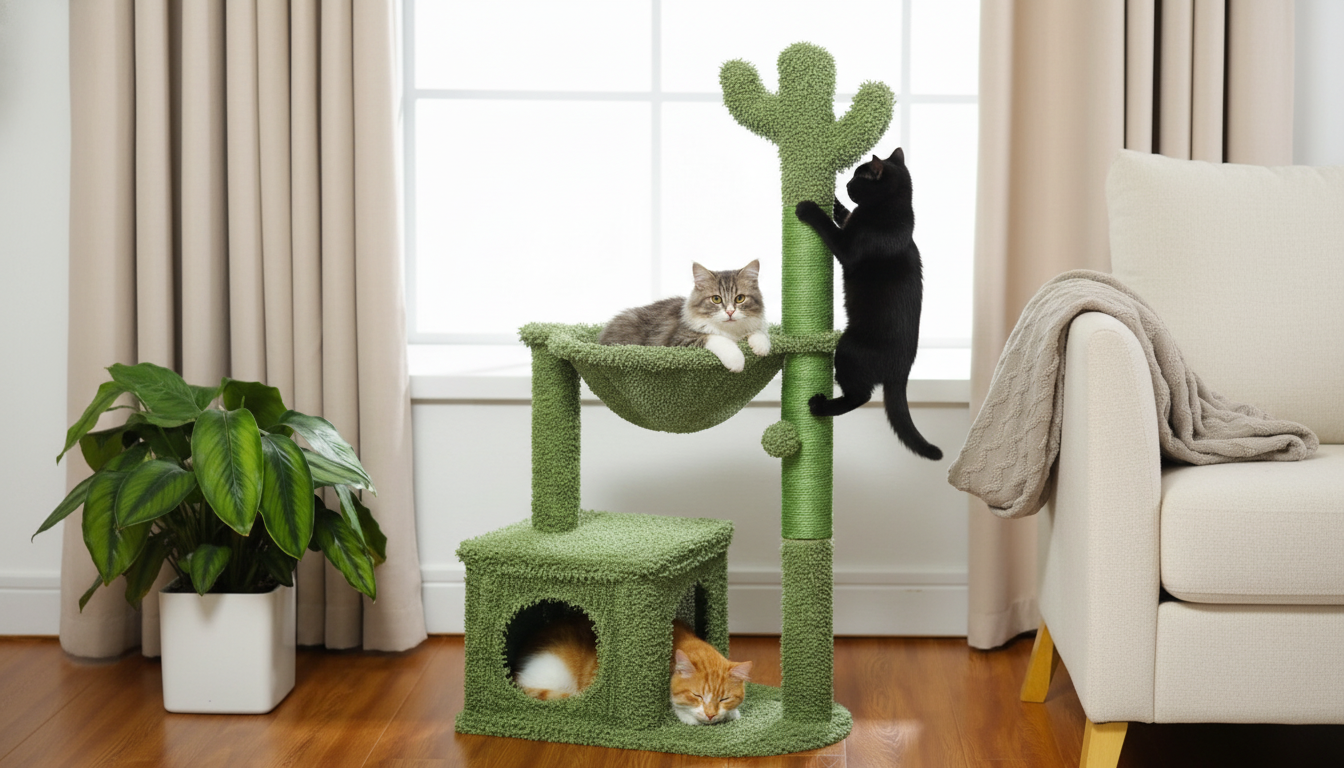
A compact cat tree can turn unused vertical space into a daily routine of climbing, scratching, lounging, and hiding—especially for indoor cats that need more enrichment. This cactus-themed tower combines a condo, a hammock-style perch, and scratching surfaces to help redirect claws away from furniture while giving cats multiple ways to rest and play.
If you’re trying to balance a tidy home with a happier, more active cat, a multi-zone tower like this can create a “scratch, climb, chill” rhythm that fits naturally into the day.
At-a-Glance: What This Tower Includes
- Cactus-inspired look that blends play furniture with home decor
- Condo space for hiding, decompression, and naps
- Hammock-style spot for supported lounging
- Scratching post area to encourage healthy claw behavior indoors
- Designed for indoor cats that benefit from vertical territory
Quick Product Snapshot
| Item | Details |
|---|---|
| Product | Cactus Cat Tree Tower with Condo, Hammock & Scratching Post for Indoor Cats |
| Price | 40.82 USD |
| Availability | In stock |
| Core features | Condo, hammock, scratching post |
| Use case | Indoor play, climbing, scratching, resting |
Why Indoor Cats Benefit from a Multi-Feature Cat Tree
- Scratching support: Provides an appropriate place to scratch, helping protect sofas, rugs, and doorframes. The ASPCA notes scratching is normal cat behavior and a key part of marking and claw maintenance, so offering a designated surface can prevent “wrong place” habits (ASPCA — Cat Scratching Behavior).
- Stress relief: Hiding spaces (like a condo) can help cats feel safer in busy homes, especially with visitors, kids, or other pets. Enrichment that includes hiding and elevated options supports emotional well-being (International Cat Care — Environmental Needs of Cats).
- Exercise and mobility: Climbing up and down builds small, frequent movement into the day—useful for indoor cats that otherwise sprint once and nap for hours.
- Territory and confidence: Vertical perches let cats observe their environment and feel in control without needing more floor space.
- Better co-living: Multiple zones (scratch + nap + hide) can reduce tension in multi-cat homes by giving each cat a “claimable” spot.
And for households weighing claw management options, it’s worth knowing the AVMA emphasizes scratching is a normal behavior and outlines welfare considerations around declawing (AVMA — Declawing of Domestic Cats). Providing appealing scratch surfaces is one of the most practical, cat-friendly steps to take.
Design Breakdown: Condo, Hammock, and Scratching Post
Condo: a quiet “reset” space
The enclosed condo gives cats a sheltered zone that feels den-like. This can be a game-changer for shy cats, newly adopted cats, or any cat that gets overstimulated and needs a calm break. Even confident cats often rotate between being near people and disappearing for a private nap.
Hammock perch: supported lounging
A hammock-style perch creates a gently cradled resting spot, which some cats prefer over a flat platform. The curved shape can feel more secure, especially for cats that like to curl tightly or drape their paws and watch the room from a cozy “bowl” position.
Scratching post: a clear “yes” zone for claws
A dedicated scratching area supports natural claw behavior and helps shift scratching away from furniture. Scratching is also a way cats stretch their shoulders and back, so a stable post becomes part exercise tool, part stress outlet.
Vertical layout: more territory, less footprint
This tower’s climb-and-rest flow suits indoor routines: scratch, climb, survey, snooze. Because the activity is stacked vertically, it can deliver meaningful enrichment without dominating a small room.
Where It Fits Best at Home
- Near a window: Creates a lookout point for bird-watching and sunbathing, which naturally increases use.
- In the main living area: Keeps cats close to family activity while still giving them an “up high” option when they want space.
- Away from litter boxes and feeding stations: Cats typically prefer separation between bathroom zones, meal zones, and sleep zones.
- Beside (not blocking) a couch corner: Placing the scratch surface near an existing scratching hotspot makes it easier to redirect behavior.
- On stable flooring: Position it on an even surface; add a non-slip mat underneath if needed to reduce sliding and build confidence.
Helping Cats Use It Right Away
Care, Cleaning, and Everyday Maintenance
Who This Cactus Tower Tends to Suit
In-Stock Picks to Add to Your Cart
- Cactus Cat Tree Tower with Condo, Hammock & Scratching Post for Indoor Cats
- Crystal Moon & Star Car Vent Clips
- Retro Corduroy Hair Scrunchies & Headbands – Large, Soft & Stylish
FAQ
How do you get a cat to use a new cat tree instead of the couch?
Place the tower near the current scratching hotspot, make the scratching surface enticing with a little catnip (if your cat responds to it), and reward any scratching or climbing right away. If your cat scratches the couch, calmly redirect them to the post and reinforce the correct choice with a treat or a quick play session.
Is a condo on a cat tree useful if a cat already has a bed?
Yes—many cats treat a condo differently than an open bed because it feels covered and protected. It can help with stress reduction, quiet naps, and giving your cat a retreat when the home feels busy.
Where should a cat tree be placed for best use?
A spot near a window or in a central living area typically gets the most consistent use. Keep it away from litter boxes, and if you’re addressing furniture scratching, place it close to where scratching usually happens so the “better option” is easy to choose.















Leave a comment