Modern Etiquette Micro‑Course: Texting, RSVPs, Social Media

Modern Etiquette, Made for Real Life (and Real Screens)
Good manners aren’t about sounding formal or knowing obscure rules. They’re about helping other people feel respected—whether you’re sending a quick text, commenting on a post, or showing up for someone in person. The tricky part is that modern life moves fast, and a small misstep (a vague reply, a public correction, a late RSVP) can create unnecessary tension.
A printable micro-course format makes etiquette feel doable: short, practical reminders you can use in the moment—especially when you’re busy, unsure what’s appropriate, or trying to rebuild confidence in social norms.
What “modern etiquette” really means
- Choose clarity over guessing: Say what you mean, avoid vague or passive replies, and confirm details when plans involve time or money.
- Respect attention: Don’t demand instant responses, and don’t treat notifications as obligations.
- Keep dignity intact: Handle mistakes privately when possible; avoid public call-outs and pile-ons.
- Match the setting: What’s fine in a group chat may feel harsh in a work thread or family text.
Traditional etiquette resources still apply—especially the core ideas of consideration and respect. For a deeper library of scenarios, the Emily Post Institute remains a helpful reference point.
Texting etiquette that reduces misunderstandings
- Response timing: Reply when reasonably able. If you’re delayed, acknowledge it briefly instead of over-explaining.
- Tone control: If a message could be read as sharp, add context—or switch to a call for sensitive topics.
- Double-texting: Follow up once if needed (especially for time-sensitive plans), then pause rather than escalating.
- Read receipts and typing bubbles: Avoid pressure. Assume people are juggling life off-screen.
- Group chats: Don’t spam. Keep off-topic threads contained, and don’t add new people without checking.
Quick fixes for common texting dilemmas
| Situation | What to do | What to avoid |
|---|---|---|
| You can’t make it | Decline clearly and kindly; offer an alternative only if genuine | Ghosting or last-minute disappearing |
| Plans are vague | Confirm time/place and who’s booking/paying | “We’ll see” with no follow-through |
| A message feels rude | Assume neutral intent first; ask a clarifying question | Snarky replies or screenshots shared widely |
| You need an answer today | State the deadline politely: “By 3pm works?” | Multiple pings in a short window |
Social media manners: boundaries, tagging, and sharing
- Before posting: Ask whether the photo/story would embarrass someone later; when in doubt, request permission.
- Tagging etiquette: Don’t tag people in sensitive contexts (kids, locations, medical updates, parties) without consent.
- Commenting: Keep criticism constructive and proportionate; if it’s personal, move it to private messages.
- Direct messages: Open with context, keep requests concise, and accept “no” without negotiation.
- Disagreements: Avoid quote-dunking. Disengage rather than escalating; protect real relationships over online wins.
Social platforms can blur “public” and “private,” which is why boundaries matter. The Pew Research Center’s social media fact sheet highlights how widespread social sharing is—making consent and discretion more important, not less.
RSVPs and invitations: the small courtesy that keeps plans running
- RSVP promptly: Respond as soon as you know; a quick “yes/no” is more helpful than silence.
- Honor the host’s format: If the invitation requests a link or email RSVP, don’t reply via a random channel.
- Plus-ones and kids: Assume they aren’t included unless stated; ask once politely, then accept the answer.
- Food needs: Share allergies early and briefly; avoid turning preferences into a negotiation.
- Cancellations: Give notice as soon as possible; apologize without drama; don’t reschedule unless invited.
When someone hosts, they’re budgeting money, time, and emotional energy. A timely RSVP is a quiet way to say, “I see your effort.”
Everyday politeness that doesn’t feel performative
- Micro-manners that matter: Greet people, use names, say “thanks,” and acknowledge service workers.
- Shared spaces: Keep noise, mess, and personal calls contained; treat lines and queues as agreements.
- Borrowing and returning: Confirm timelines; return items clean and on time; replace what gets damaged.
- Apologies: Name the impact, not your intentions; add a simple repair step when appropriate.
- Gracious receiving: Accept compliments with “thank you,” and accept help without self-criticism.
Using a micro-course format to build better habits
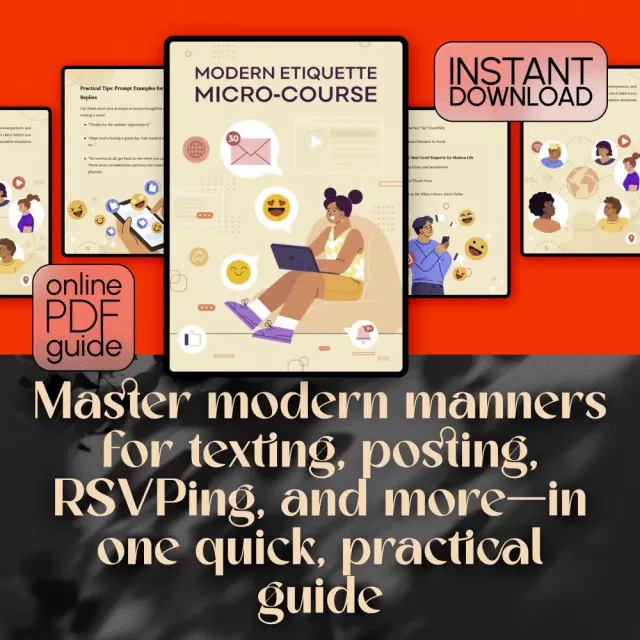
Modern Etiquette Micro‑Course (Printable Digital Guide)
For a clear, modern refresher, the Modern Etiquette Micro‑Course printable guide is designed for quick learning—short lessons that translate into practical choices in real conversations. It covers texting tone, social media boundaries, RSVP expectations, and everyday courtesy, and it’s easy to revisit before events, trips, or busy social seasons.
At a glance
| Format | Focus areas | Best for |
|---|---|---|
| Printable digital guide / micro‑course | Texting, social media, RSVPs, everyday politeness | Students, young professionals, busy hosts, anyone rebuilding confidence in social norms |
If you’re putting these skills into practice for a wedding season, graduation events, or work gatherings, small appearance choices can also reduce social friction—feeling “pulled together” helps many people show up more confidently. A simple accessory like the Spring Plaid Wide Padded Headband – Chic Cotton Blend Hair Accessory can be an easy finishing touch when you’re heading out the door quickly.
FAQ
What’s the best way to respond to an invitation if plans are uncertain?
Reply with what you know right now and give a specific timeframe for confirmation (for example, “I’ll know by Tuesday”). If it’s more likely you can’t attend, send a clear “no” so the host can plan.
How fast is “polite” to reply to a text?
Aim for a reasonable window based on closeness and urgency. If you’re delayed, a brief acknowledgment is enough, and for time-sensitive topics it’s polite to set expectations (or suggest a call).
Is it rude to correct someone’s mistake online?
Private correction is usually the most respectful choice. If it must be public, keep it minimal, factual, and non-shaming so the person’s dignity stays intact.














Leave a comment