Retractable USB Car Charger with LED Voltage Display
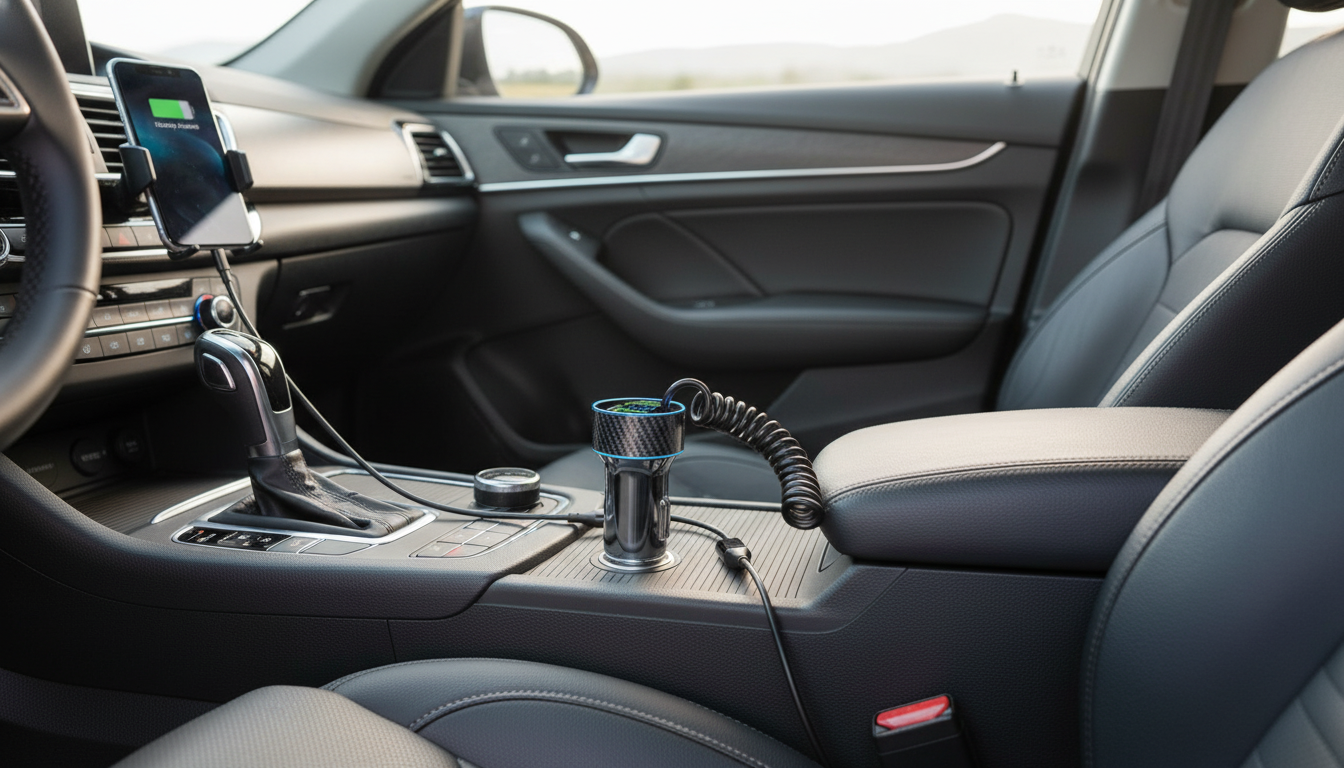
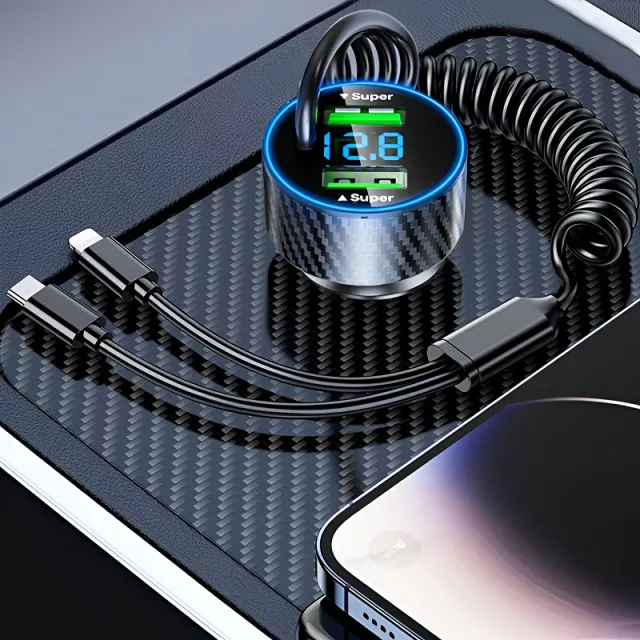
USB Car Phone Charger Adapter with Retractable Cable and LED Voltage Monitor
A compact car charger can do more than top up a phone. With a retractable cable to reduce clutter and an LED voltage display to help spot electrical issues early, this style of adapter is built for everyday commuting, rideshare driving, and long road trips where reliable power matters. Instead of juggling loose cords and guessing whether your battery is acting up, you get a cleaner setup plus a quick glance at the vehicle’s electrical status.
What It Does (and Why It’s Different From a Basic Car Charger)
At the simplest level, a USB car charger adapter turns your vehicle’s 12V socket into a convenient power source for modern devices. Where the retractable-cable, voltage-monitor style stands out is how it reduces daily friction: less cable mess, fewer “where’s the cord?” moments, and more visibility into what your car is doing electrically.
- Provides in-car USB power for phones, earbuds, GPS units, and other small electronics.
- Retractable cable keeps the cabin tidy and reduces snagging around the shifter, cup holders, and center console.
- LED voltage monitor shows the vehicle’s current electrical system voltage at a glance.
- Useful for older vehicles or frequent short trips where battery health can be harder to gauge.
Key Features to Look For
Not all retractable chargers feel the same in day-to-day use. A few design choices make a noticeable difference once you start plugging in during quick stops, night driving, or bumpy roads.
- Retractable cable length and retraction feel: It should extend smoothly and retract without whipping back aggressively. A controlled retraction helps protect the internal spool and reduces wear.
- Port layout: Look for enough ports for driver + passenger, with spacing that won’t block adjacent sockets or interfere with nearby buttons and lids.
- Charging performance: Stable output matters more than headline numbers for consistent navigation, calls, and music streaming—especially when the phone screen is bright and apps are running.
- LED readability: The display should be visible in daylight without being distracting at night. A clean, legible readout is more useful than a flashy one.
- Build and fit: A snug connection in the 12V socket helps avoid disconnects on rough pavement. Loose adapters can cause intermittent charging and heat buildup.
Understanding the LED Voltage Monitor
The voltage display is a small feature that can provide big peace of mind. While it’s not a substitute for professional diagnostics, it can help you notice patterns—like a weak resting voltage or an odd dip when accessories turn on.
- Voltage display helps detect signs of a weak battery or charging-system irregularities before a no-start situation.
- With the engine off, voltage typically reads lower; with the engine running, it typically reads higher due to alternator charging.
- Sudden drops while using accessories (heated seats, defroster, audio) can indicate high load or a battery nearing end of life.
- If the voltage reading seems consistently abnormal, consider a professional inspection rather than relying on a charger display alone.
Typical Vehicle Voltage Ranges (Quick Reference)
| Situation | Common Voltage Range | What It May Suggest |
|---|---|---|
| Engine off (resting battery) | About 12.0–12.6V | Lower readings can indicate a partially discharged or aging battery |
| Engine running (alternator charging) | About 13.7–14.7V | Confirms the charging system is actively supplying power |
| Heavy accessory load (engine running) | May dip slightly from charging range | Small dips are normal; persistent low readings may warrant a check |
For additional battery and vehicle safety guidance, consumer-facing resources from AAA and NHTSA can be helpful. For general background on USB standards and terminology, USB-IF provides reference information.
Everyday Use Scenarios
A retractable charger shines most in the small moments—when you’re getting in and out of the car, sharing power with someone else, or trying to keep a tight cockpit organized.
- Commute setup: Keep the retractable cable extended just enough to reach a dash or vent mount without leaving extra slack to snag on cup holders.
- Rideshare and delivery: Quickly hand a cable to a passenger without digging through a console. When you’re done, retract and reset for the next ride.
- Road trips: Power a phone for navigation while keeping the cabin organized for snacks, maps, and passengers—less cable sprawl across the center console.
- Shared vehicles: Retract the cable after each use to reduce wear and keep the adapter looking neat, especially if multiple drivers use the car.
Compatibility and Fit Notes
Most vehicles use a standard 12V socket, but real-world fit can still vary. Before relying on any charger for daily use, it helps to check the socket’s placement and condition.
Safety and Care Tips
Product Snapshot
Recommended in-stock picks
- USB Car Phone Charger Adapter with Retractable Cable LED Voltage Monitor
- Crystal Moon & Star Car Vent Clips
FAQ
What voltage should a car show on the display when it’s running?
Many vehicles will read roughly in the 13.7–14.7V range while running, but the exact number can vary with temperature, battery condition, and accessory load. If it’s consistently well outside that general range, it’s a good idea to have the battery and charging system inspected.
Will a retractable cable charge as fast as a separate cable?
Charging speed depends on the charger’s output, your phone’s supported charging protocol, and cable quality/length. Retractable designs focus on convenience and tidiness, and real-world speed can vary by device and usage.
Can this be used for devices other than phones?
Yes—many USB-powered items like earbuds, small power banks, GPS units, and some dash cams can work if their power requirements match. Avoid using a USB car adapter as a substitute for high-draw appliances that require a dedicated inverter or higher-power connection.















Leave a comment