Tough Squeaky Wooden Bone Chew Toy for Large Dogs
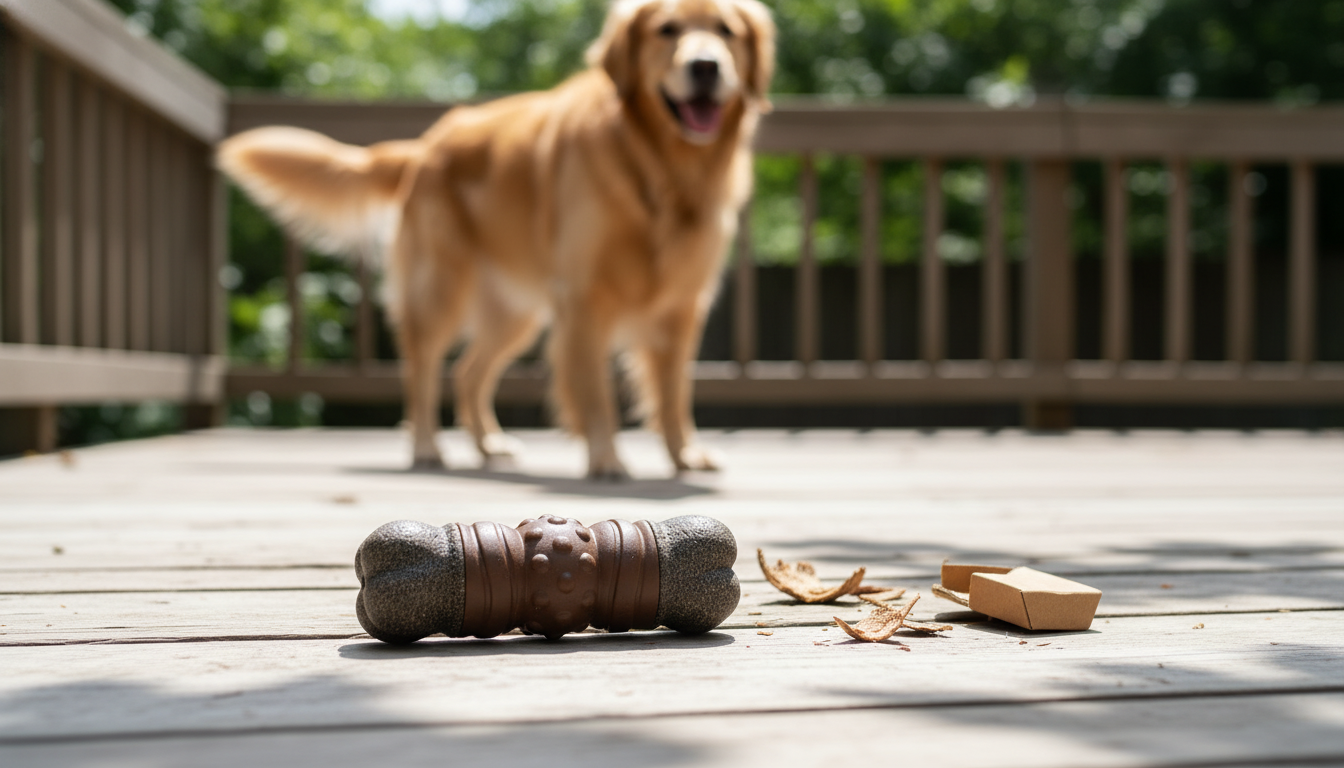
Tough Squeaky Chew Toy for Large Dogs in a Wooden Bone Shape
Power chewers often need a toy that can stand up to strong jaws while still keeping playtime exciting. A rugged squeaker, a grippy bone shape, and a durability-first build can help reduce boredom, support healthy chewing habits, and make solo or interactive play more rewarding—especially for larger breeds that shred lightweight toys quickly. For more guidance, see Hidden Hazards: A Guide To The Potential Dangers Of Pet Toys.
Why a wooden bone shape keeps big chewers engaged
Shape matters more than most pet parents expect. A wooden bone-inspired profile (with familiar curves and thicker ends) helps many large dogs settle into longer, more focused chewing—without the toy constantly slipping away. For further reading, see Pets and Plastic: Unleashing the Truth.
- Bone-inspired curves give dogs a familiar, easy-to-carry form that encourages longer chew sessions.
- Wider ends help with paw bracing, letting dogs stabilize the toy and focus force where they like to chew most.
- A textured, wood-like surface can add interest through grip and mouthfeel, helping prevent quick “toy fatigue.”
- The shape naturally supports tug, fetch, and gnawing without rolling away as easily as round toys.
What “tough + squeaky” should mean for large dogs
For big breeds, “tough” should be about resisting repeated bite pressure while still being usable and safe during everyday play. “Squeaky” should be attention-grabbing without turning the toy into a fragile squeaker capsule that fails after a few minutes.
- Durable outer construction designed to resist punctures and tearing from repeated bite pressure.
- A squeaker that’s integrated to keep attention during play, while the toy remains functional even if squeaking fades over time.
- Balanced firmness: tough enough for chewers, but not so hard that it risks tooth damage when used unsupervised.
- Easy-to-grip profile for large mouths, reducing frustration and encouraging appropriate chewing instead of household items.
Quick fit check: Is this style right for the dog?
| Dog type | Why it works | What to watch for |
|---|---|---|
| Heavy chewer (large breed) | Encourages longer chewing with a sturdier build and engaging squeak | Supervise early sessions to confirm the dog doesn’t immediately shear off chunks |
| High-energy player | Squeak adds excitement; bone shape supports fetch and tug | Rotate toys to prevent overstimulation or obsessive squeak-fixation |
| Bored dog at home | Chewing + sound can help occupy attention | Pair with exercise and training; toys aren’t a substitute for activity |
| Multi-dog household | Can reduce squabbles by offering an appealing outlet | Provide one toy per dog to reduce guarding |
Highlights to look for in a durable squeaky bone toy
If a dog can destroy a toy in one sitting, the fix is rarely “harder plastic.” Better durability usually comes from smarter construction, fewer weak points, and a shape that invites braced chewing instead of frantic shredding.
- Reinforced seams or one-piece construction areas where dogs typically start tearing.
- Textured zones that create grip without sharp edges.
- A squeaker placement that doesn’t create a thin “weak spot” in the center of the toy.
- Washable or wipe-clean surfaces for drool and outdoor grime.
- A size that matches the dog’s mouth so it’s not swallowable and not so large that chewing becomes awkward.
For additional toy-safety guidance, it’s worth reviewing best practices from trusted organizations like the American Veterinary Medical Association (AVMA), the ASPCA, and the American Kennel Club (AKC).
Safe play guidelines for squeaky chew toys
Even a well-built squeaky chew toy should be treated like an interactive tool—not a “set it and forget it” item. The safest routine is simple: supervise, inspect, and retire the toy once it no longer holds up.
- Start with supervised sessions to confirm the dog chews rather than tries to dismantle the toy to reach the squeaker.
- Inspect before and after play; remove the toy if pieces begin to break off or if stuffing/squeaker parts become exposed.
- Avoid leaving squeaky toys unattended with determined “disassemblers,” especially if they swallow fragments.
- Choose the right moment: active play after exercise tends to be safer than frantic chewing when overstimulated.
- If the dog has dental issues or cracked teeth history, choose gentler chew options and consult a veterinarian.
Keeping your dog interested longer
Durability helps, but variety is what keeps a tough toy from becoming “background noise.” A few small habits can extend engagement and reduce destructive chewing around the house.
Product details at a glance
Tough Squeaky Chew Toy for Large Dogs Wooden Bone Shape
| Item | Details |
|---|---|
| Product | Tough Squeaky Chew Toy for Large Dogs Wooden Bone Shape |
| Price | 14.51 USD |
| Availability | In stock |
| Category | Pet Toys |
| Product page | https://adorien.com/tough-squeaky-chew-toy-for-large-dogs-wooden-bone-shape/ |
More in-stock finds
- Crystal Moon & Star Car Vent Clips
- Spring Plaid Wide Padded Headband – Chic Cotton Blend Hair Accessory
- Retro Corduroy Hair Scrunchies & Headbands – Large, Soft & Stylish
FAQ
Is a squeaky chew toy safe for heavy chewers?
It can be, but safety depends on your dog’s chewing style and active supervision. Check the toy often for damage, and remove it if pieces break off or the squeaker becomes exposed; always choose a size your dog can’t swallow.
How long should a tough squeaky toy last with a large dog?
It varies widely based on bite force, chewing intensity, and whether the dog tries to dismantle toys. Inspect routinely, rotate toys to reduce wear, and replace the toy when cracks, torn sections, or loose parts appear.
What if my dog only wants to chew the toy to reach the squeaker?
Use supervised play and practice trading and “drop it” so the toy doesn’t become a squeaker-retrieval mission. For solo time, limit squeaky toys and offer alternative chew outlets that are less likely to be dismantled.















Leave a comment