Safe Space Mapping: Set & Share Boundaries Clearly
How can you use safe space mapping to set and communicate personal boundaries?
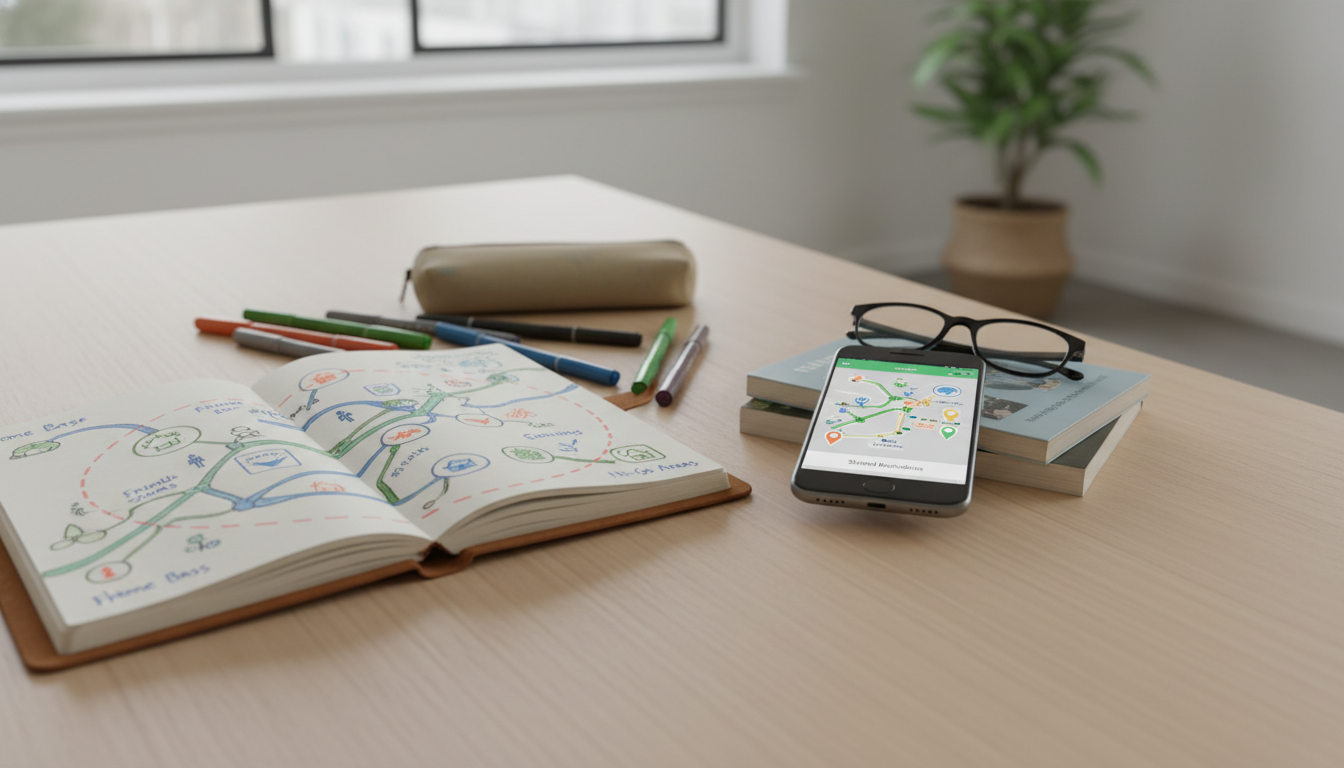
Safe space mapping is a simple, visual way to clarify what helps you feel secure, what drains you, and what you need from others. Instead of relying on vague instincts in the moment, you map your “green zones” (safe), “yellow zones” (caution), and “red zones” (not okay) across common situations—home, work, relationships, online spaces, and social events. The result is a practical reference you can use to set boundaries that are specific and easier to communicate.
Start by mapping what safety feels like for you
Choose a few settings where boundaries matter most and list what supports you there. Examples: quiet time after work, no surprise visits, or needing context before difficult conversations. Then note what triggers discomfort: repeated interruptions, sarcasm during conflict, pressure to share personal details, or last-minute demands. Label each as green/yellow/red to make patterns obvious.
Translate your map into clear boundary statements
A map becomes useful when it turns into language others can follow. Convert each “red” into a firm limit and each “yellow” into a conditional request. For example: “I’m not available for work messages after 7 p.m.” or “If we need to discuss something serious, I do better when we schedule a time.” Specificity prevents misunderstandings and reduces the need to justify yourself.
Use the map to communicate without escalation
Share only what’s relevant and keep the focus on behavior and needs, not blame. Pair boundaries with a brief reason and a next step: “I’m taking a break from group chats tonight to recharge. If it’s urgent, text me directly.” When someone pushes back, refer to the boundary as a standing agreement rather than a debate: “That doesn’t work for me, so I’m going to stick with what I said.”
Revisit and adjust as life changes
Your safe space map isn’t permanent. Review it after stressful periods, new relationships, role changes, or big transitions. Updating your map helps you notice growth, spot new pressure points, and keep boundaries aligned with your current capacity.
For a deeper walkthrough and examples, read the full guide here: https://adorien.com/blog/how-can-you-use-safe-space-mapping-to-set-and-communicate-personal-boundaries/.
FAQ
What should you do if someone repeatedly ignores your boundaries?
Restate the boundary once, then shift to consequences you can control, such as ending the conversation, limiting access, or changing plans. Consistency matters more than intensity, and repeated violations are data about what limits you may need to strengthen.
Recommended for you

How can you use safe space mapping to set and communicate personal boundaries?
Safe space mapping is a simple, visual way to clarify what helps you feel secure, what drains you, and what you need from others. Instead of relying on vague instincts in the moment, you map your “green zones” (safe), “yellow zones” (caution), and “red zones” (not okay) across common situations—home, work, relationships, online spaces, and social events. The result is a practical reference you can use to set boundaries that are specific and easier to communicate.
Start by mapping what safety feels like for you
Choose a few settings where boundaries matter most and list what supports you there. Examples: quiet time after work, no surprise visits, or needing context before difficult conversations. Then note what triggers discomfort: repeated interruptions, sarcasm during conflict, pressure to share personal details, or last-minute demands. Label each as green/yellow/red to make patterns obvious.
Translate your map into clear boundary statements
A map becomes useful when it turns into language others can follow. Convert each “red” into a firm limit and each “yellow” into a conditional request. For example: “I’m not available for work messages after 7 p.m.” or “If we need to discuss something serious, I do better when we schedule a time.” Specificity prevents misunderstandings and reduces the need to justify yourself.
Use the map to communicate without escalation
Share only what’s relevant and keep the focus on behavior and needs, not blame. Pair boundaries with a brief reason and a next step: “I’m taking a break from group chats tonight to recharge. If it’s urgent, text me directly.” When someone pushes back, refer to the boundary as a standing agreement rather than a debate: “That doesn’t work for me, so I’m going to stick with what I said.”
Revisit and adjust as life changes
Your safe space map isn’t permanent. Review it after stressful periods, new relationships, role changes, or big transitions. Updating your map helps you notice growth, spot new pressure points, and keep boundaries aligned with your current capacity.
For a deeper walkthrough and examples, read the full guide here: https://adorien.com/blog/how-can-you-use-safe-space-mapping-to-set-and-communicate-personal-boundaries/.
FAQ
What should you do if someone repeatedly ignores your boundaries?
Restate the boundary once, then shift to consequences you can control, such as ending the conversation, limiting access, or changing plans. Consistency matters more than intensity, and repeated violations are data about what limits you may need to strengthen.













Leave a comment