56-Piece Pocket Hole Jig Kit: Clean, Strong Joints Fast
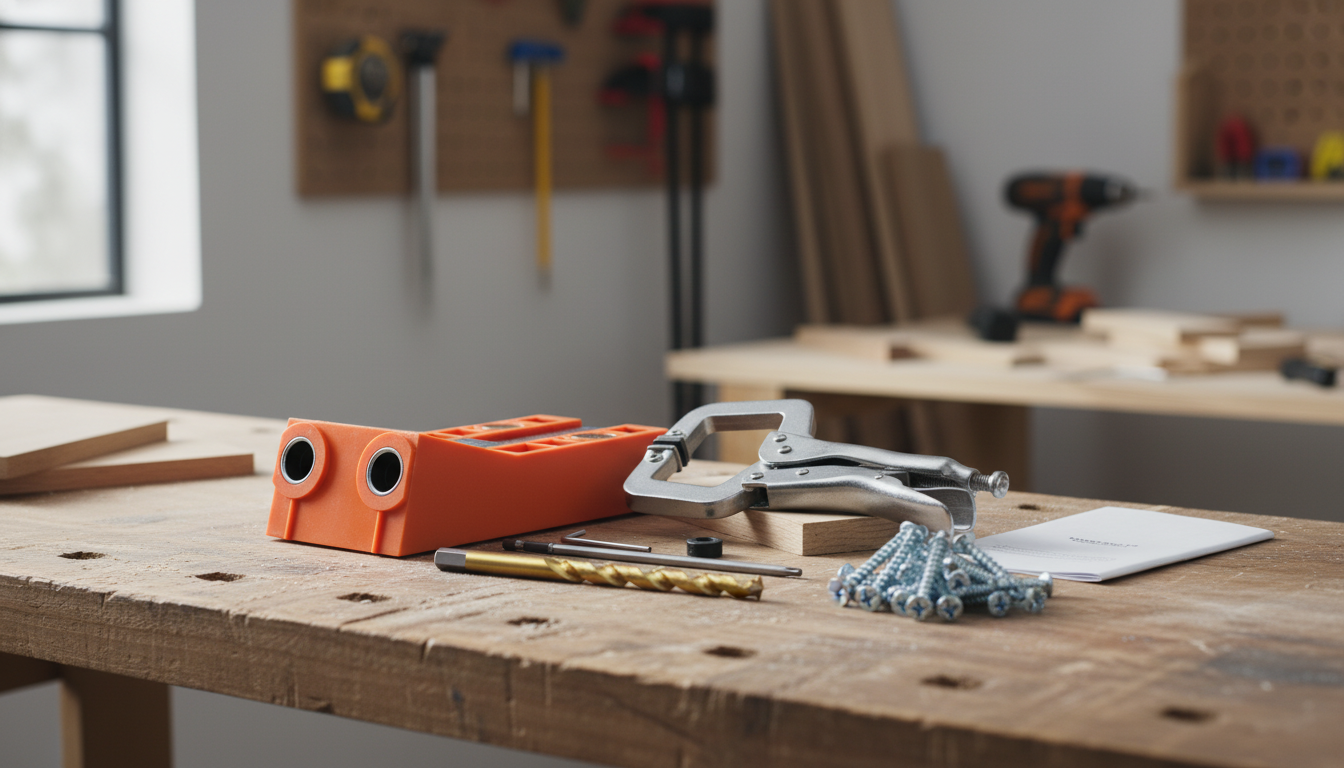
56-Piece Pocket Hole Jig Kit with C-Clamp, Drill, Stop Ring & Bit
Pocket-hole joinery is one of the quickest ways to build sturdy wood projects with clean, repeatable screw placement—especially for cabinets, face frames, small furniture, and quick repairs. A complete kit with a jig, stepped drill bit, stop ring, and clamping support helps reduce tear-out, keeps hole angles consistent, and speeds up assembly for beginners and experienced DIYers alike.
If you’re ready to start making strong, tidy joints without complicated setups, the 56-Piece Pocket Hole Jig Kit with C-Clamp, Drill, Stop Ring & Bit is a practical, all-in-one option for everyday shop builds.
What this pocket hole jig kit helps you build
Pocket holes create angled pilot holes for pocket screws, allowing boards to pull together tightly without complex clamping or long glue cure times. That makes the method ideal when speed and repeatability matter.
- Creates angled pilot holes so pocket screws draw boards together firmly and reliably.
- Works well for cabinet boxes, face frames, drawer supports, simple tables, shelves, and bed slats.
- Helps with repairs where hidden reinforcement looks cleaner than visible brackets or mending plates.
- Supports repeatable results when making multiple identical joints (rails/stiles, frames, shelf ladders).
Kit components and what each one does
A pocket-hole joint is only as consistent as its drilling angle, depth control, and stability. This kit’s core pieces focus on those three factors.
Quick guide to the main pieces
| Part | Purpose | Setup tip |
|---|---|---|
| Pocket hole jig | Sets the drilling angle and hole location | Align the jig consistently from the same reference face for repeatable offsets |
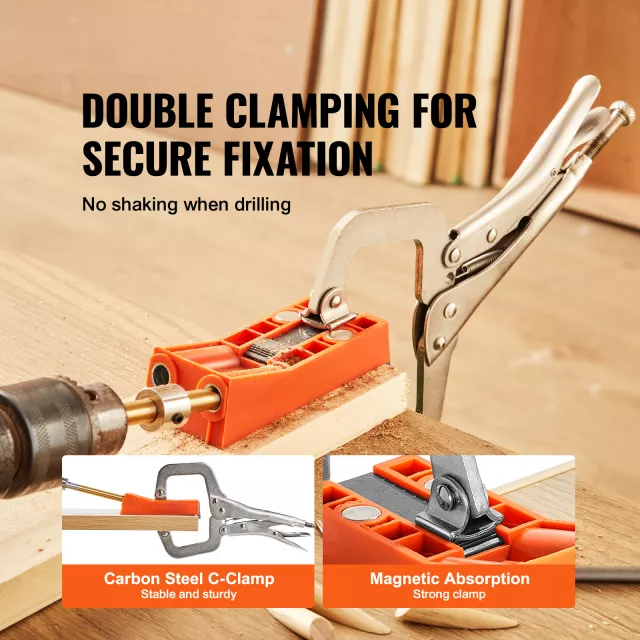
| C-clamp | Locks jig + workpiece to prevent shifting | Clamp firmly, but avoid crushing soft wood fibers near the edge |
| Stepped drill bit | Drills pocket + pilot in one step | Clear chips often to reduce heat and burning |
| Stop ring (drill collar) | Limits drilling depth | Tighten the set screw securely; recheck after several holes |
| Driver bit | Drives pocket screws squarely | Use steady pressure and avoid over-torquing to prevent stripping |
Setting up: depth, alignment, and clamping
The difference between “good enough” and “clean, furniture-ready pockets” usually comes down to setup. Take a minute to set depth, pick a consistent reference face, and clamp in a way that prevents drift.
- Match drilling depth to material thickness: the stop ring controls how far the bit can travel, helping prevent blowout on the far side.
- Choose a reference face: mark the “show face” of each board and always register the jig from the correct side to keep offsets consistent.
- Use a smart clamp order: clamp the jig to the workpiece first, then clamp boards together before driving screws to reduce shifting.
- Run a scrap test: drill 1–2 practice pockets in offcuts of the same thickness to confirm depth and screw length.
Step-by-step: drilling clean pocket holes
With the jig set and clamped, drilling should feel controlled and repeatable. The goal is a clean pocket “shoulder” and a centered pilot path so the screw pulls straight instead of pushing the joint around.
- Mark joint locations: light pencil marks help keep spacing uniform, especially on long rails or stiles.
- Secure the jig: position it at the mark and tighten the C-clamp so the jig can’t rock.
- Drill in controlled bursts: start slow to establish the cut, then drill steadily; pull out once or twice to clear chips.
- Stop at the collar: let the stop ring contact the guide surface—don’t force beyond it.
- Inspect the pocket: look for a smooth shoulder and a pilot hole centered in the pocket channel.
Driving screws and getting tight, flush joints
Pocket screws do two jobs at once: they clamp the joint and fasten it. That means technique matters while driving—especially on narrow parts where even a slight shift is easy to see.
- Clamp the joint flush: the fastest fix for misalignment is simply clamping both boards flat and even before driving screws.
- Match screw thread to wood: coarse threads tend to bite softwoods well; fine threads are typically preferred for hardwoods when available.
- Use your drill/driver clutch: lower torque reduces over-driving, stripping, and “jack-out” (when the board slides as the screw grabs).
- Add glue when appropriate: screws alone can be fine for utility builds, while glue often adds stiffness for furniture joints.
- Respect edge distance: keep pocket holes away from ends and very narrow strips to reduce splitting risk.
Common mistakes and quick fixes
Care, storage, and keeping results consistent
Project ideas that fit pocket-hole joinery
Recommended items from our store
- 56-Piece Pocket Hole Jig Kit with C-Clamp, Drill, Stop Ring & Bit
- Crystal Moon & Star Car Vent Clips
- Spring Plaid Wide Padded Headband – Chic Cotton Blend Hair Accessory
Safety and technique resources
For deeper technique tips and safe tool handling, these references are helpful: Kreg Tool — Pocket-Hole Joinery Basics, Woodworkers Guild of America — Pocket Hole Joinery Tips, and OSHA — Hand and Power Tools Safety.
FAQ
What does the stop ring do on a pocket-hole drill bit?
The stop ring (collar) limits drilling depth so the stepped bit stops before breaking through the show face. Tighten the collar’s set screw firmly and confirm the setting with a quick test hole in scrap of the same thickness.
Do pocket-hole joints need glue as well as screws?
Not always—pocket screws alone can work well for utility builds and quick shop projects. Glue often improves stiffness and long-term durability for furniture or cabinets, especially when parts can be clamped flush during assembly.
How do you prevent boards from shifting when driving pocket screws?
Clamp the boards flush before driving screws, then use controlled torque (a drill/driver clutch helps) to avoid “jack-out.” Also verify correct screw length and a clean, centered pilot path so the screw pulls straight into the joint.















Leave a comment