Faster Dog Baths: Silicone Brush with Soap Dispenser
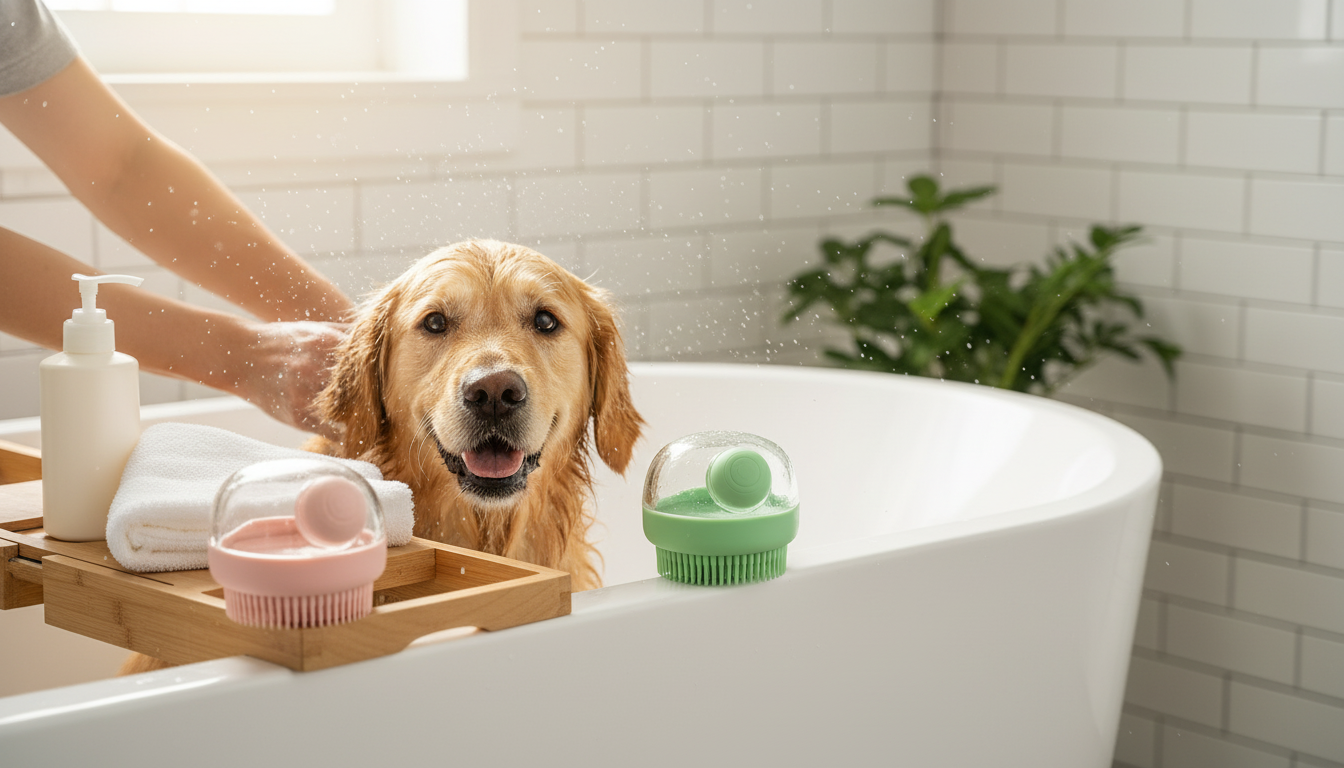
Silicone Dog Bath Brush with Built-In Soap Dispenser
A bath goes smoother when scrubbing and lathering happen in one step. A silicone brush with an integrated soap reservoir helps distribute shampoo evenly while the soft bristles lift loose fur and massage the skin, making rinsing faster and reducing product waste. For many dogs, that steady, consistent pressure also feels less startling than switching between a bottle, sponge, and brush.
What makes a built-in dispenser brush different
A dispenser brush streamlines the “apply shampoo, then scrub” routine into a single tool. That simple change can matter when a dog is wiggly, nervous, or simply too large to manage with two hands constantly swapping products.
- Combines shampoo application and scrubbing, so one hand can steady the dog while the other washes.
- Silicone bristles flex to follow body contours (neck, shoulders, hips) without harsh scratching.
- Dispensing soap as needed helps avoid overpouring shampoo directly onto the coat.
- Useful for quick touch-ups after muddy walks or full baths.
At-a-glance features and everyday benefits
This style of brush works especially well for routine baths, deshedding during shampooing, and gently working product down to the skin. The dispenser top also reduces clutter in the tub or shower area, and soft silicone is typically easier to rinse clean than fabric mitts or sponges.
Feature-to-benefit guide
| Feature | What it helps with | Practical tip |
|---|---|---|
| Built-in soap reservoir | More controlled lathering | Pre-dilute shampoo (if recommended) to improve flow and rinsing |
| Silicone bristles | Gentle scrubbing and massage | Use light pressure on bony areas like spine and elbows |
| One-handed grip design | Better control for wiggly dogs | Keep the other hand free for reassurance and positioning |
| Quick-rinse material | Less buildup and odor | Rinse immediately after use and air-dry bristles facing down |
How to use it for a calmer, faster bath
Using a dispenser brush is straightforward, but the order of operations makes a noticeable difference—especially for thicker coats and dogs prone to post-bath itchiness.
- Prep: brush out tangles before getting the coat wet (especially for medium/long coats).
- Wet thoroughly: use lukewarm water; avoid spraying directly into ears and face.
- Fill the reservoir: add dog shampoo and follow label guidance (some formulas should be diluted).
- Work methodically: start at the neck and move toward the tail; dispense small amounts while scrubbing in circles.
- Go gentler on tender zones: use lighter strokes on belly, armpits, and groin; avoid irritated skin.
- Rinse well: rinse until water runs clear and the coat feels squeaky-clean; leftover shampoo can cause itching.
- Dry and finish: towel dry, then do a final brush-through after the coat is mostly dry.
For general bathing frequency guidance, the American Kennel Club’s overview is a helpful baseline (individual needs vary by coat, lifestyle, and skin health): https://www.akc.org/expert-advice/health/how-often-should-you-bathe-your-dog/.
Coat types, shedding, and when it helps most
- Short coats: helps loosen dander and distribute shampoo evenly without needing a separate sponge.
- Double coats: works best during the shampoo phase to lift loose undercoat, but detangling should be done before the bath.
- Curly or long coats: a gentle lathering tool; avoid aggressive circular scrubbing that can create tangles—use shorter, controlled passes.
- Sensitive skin: choose a mild dog shampoo and use lighter pressure; stop if redness increases.
- Post-park cleanups: a quick rinse plus a small amount of shampoo can target paws, legs, and undercarriage.
If skin looks inflamed, flaky, or persistently irritated, it can be a sign of an underlying issue. For a broad, vet-reviewed overview of common canine skin problems, see the Merck Veterinary Manual: https://www.merckvetmanual.com/dog-owners/skin-disorders-of-dogs/overview-of-skin-disorders-of-dogs.
Cleaning and care to keep it hygienic
- After each bath, flush the dispenser with clean warm water to remove residual shampoo.
- Remove remaining product if the brush won’t be used for a while to reduce clogging and odor.
- Air-dry fully; avoid storing wet in a sealed container.
- Inspect the dispensing opening for buildup and clear gently with warm water (avoid sharp tools that can damage the port).
For more everyday grooming best practices (including brushing and coat care), the ASPCA’s dog grooming tips are a solid reference: https://www.aspca.org/pet-care/dog-care/dog-grooming-tips.
Safety and comfort tips during bathing
When a dispenser brush may not be the best tool
In-stock picks
- Silicone Dog Bath Brush with Built-In Soap Dispenser
- Retro Corduroy Hair Scrunchies & Headbands – Large, Soft & Stylish (a handy way to keep hair back during baths and rinses)
- Crystal Moon & Star Car Vent Clips (a small refresh for the car after park runs and grooming errands)
FAQ
Can human shampoo be used in the dispenser?
It’s best to use dog-formulated shampoo because canine skin has a different pH than human skin. Only use a non-dog product if a veterinarian specifically directs you to, and avoid heavily fragranced or harsh detergent-based formulas.
How is the soap dispenser cleaned if shampoo stops flowing?
Empty the reservoir, then flush the brush and dispenser channel with warm water. If needed, briefly soak the opening, press/pump to move warm water through, and air-dry; avoid sharp objects that could damage the dispensing port, and consider diluting thicker shampoos if the label allows.
Is a silicone bath brush safe for puppies and older dogs?
Generally yes, since silicone bristles are typically gentle, but use light pressure and keep sessions short at first. Avoid sore joints or irritated skin, and stop if your dog shows discomfort; consult a vet for ongoing skin issues.
















Leave a comment